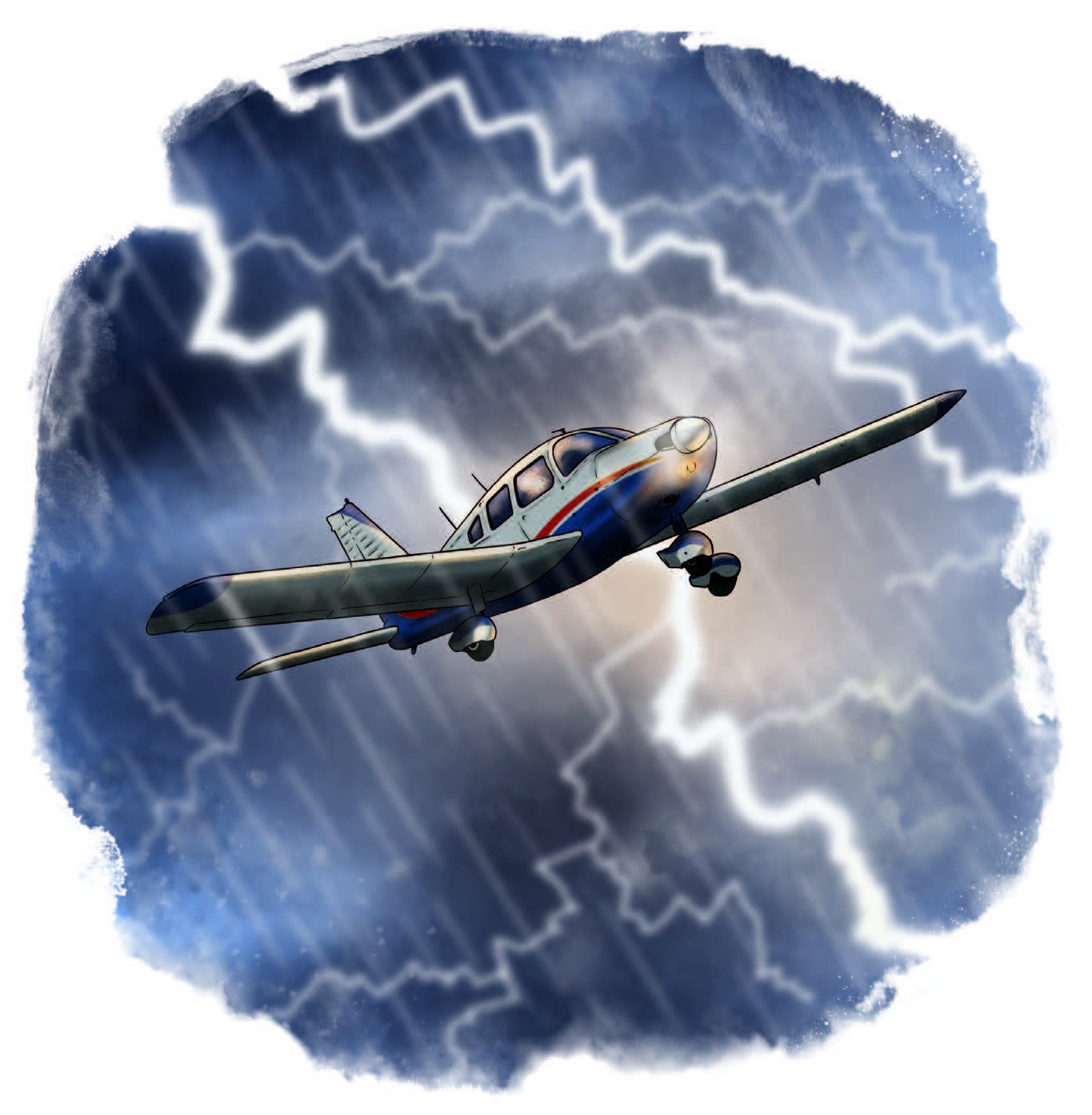
If storms are organized into anything resembling a line, or moving fast, it's best to find a nice pilot’s lounge and wait them out. [Image: Joel Kimmel]
Key Takeaways:
A newly instrument-rated pilot in 1979 inadvertently flew into an unforecast, intense thunderstorm cell due to the lack of modern in-cockpit weather technology, experiencing extreme turbulence and instrument disorientation.
The pilot credits his survival to the rigorous instrument flight training received from a demanding instructor, which allowed him to maintain control of the aircraft during the severe buffeting.
Despite advancements in cockpit weather technology today, the author still emphasizes traditional "see and avoid" methods and extreme caution when dealing with thunderstorms in general aviation due to their rapid development and potential data latency.
It was March 1979. I was a 25-year-old newly instrument-rated pilot flying from Charleston, South Carolina (KCHGS), to Langley AFB (KLFI near Hampton, Virginia. I was flying a 1976 Piper Cherokee Archer that was part of the AFB Aero Club.
CREATE A FREE ACCOUNT
Sign up to keep reading
Create a free account to continue. Already a member? Sign in below.