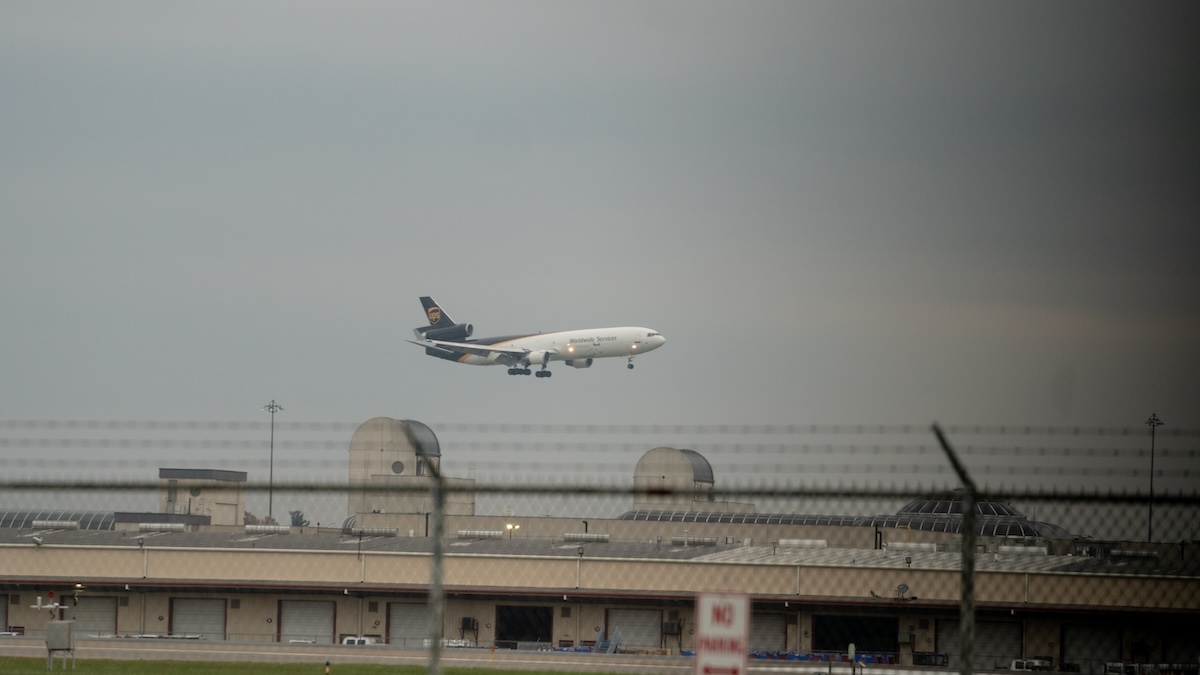
The NTSB's preliminary investigation into the crash of UPS Flight 2976 focuses on fatigue cracking within the left engine pylon structure.
The MD-11F crashed shortly after takeoff from Louisville, Kentucky, when the No. 1 engine and pylon separated from the wing, killing all three crewmembers and 11 people on the ground.
NTSB investigators found evidence of fatigue cracking on multiple fracture surfaces of the left pylon’s aft-mount lugs and observed a circumferential fracture of the spherical bearing connecting the aft mount to the wing.
Following the accident, UPS grounded its MD-11 fleet, and the FAA issued emergency airworthiness directives for MD-11 and DC-10 aircraft due to similar pylon configurations, referencing the 1979 American Airlines Flight 191 crash.
The National Transportation Safety Board says fatigue cracking within the left engine pylon structure is a key focus of its investigation into the crash of UPS Flight 2976, according to a preliminary report released Thursday.
Ryan is Group President of Firecrown Media’s Aviation Group, overseeing a portfolio that includes FLYING, AirlineGeeks, AVweb, Plane + Pilot, KITPLANES, and AircraftForSale.com. He founded AirlineGeeks.com in February 2013 and has more than a decade of experience across aviation media, airport operations, airline workforce planning, and Part 135 regulatory compliance. His experience ranges from time behind the yoke of a Cessna 172 to interviewing aviation industry executives. Ryan holds a B.S. in Air Transportation Management and an MBA from Arizona State University and is an adjunct instructor at Embry-Riddle Aeronautical University.