














NTSB Says ALERT Act Falls Short of Safety Goals

Agency officials cite lack of ADS-B requirement.

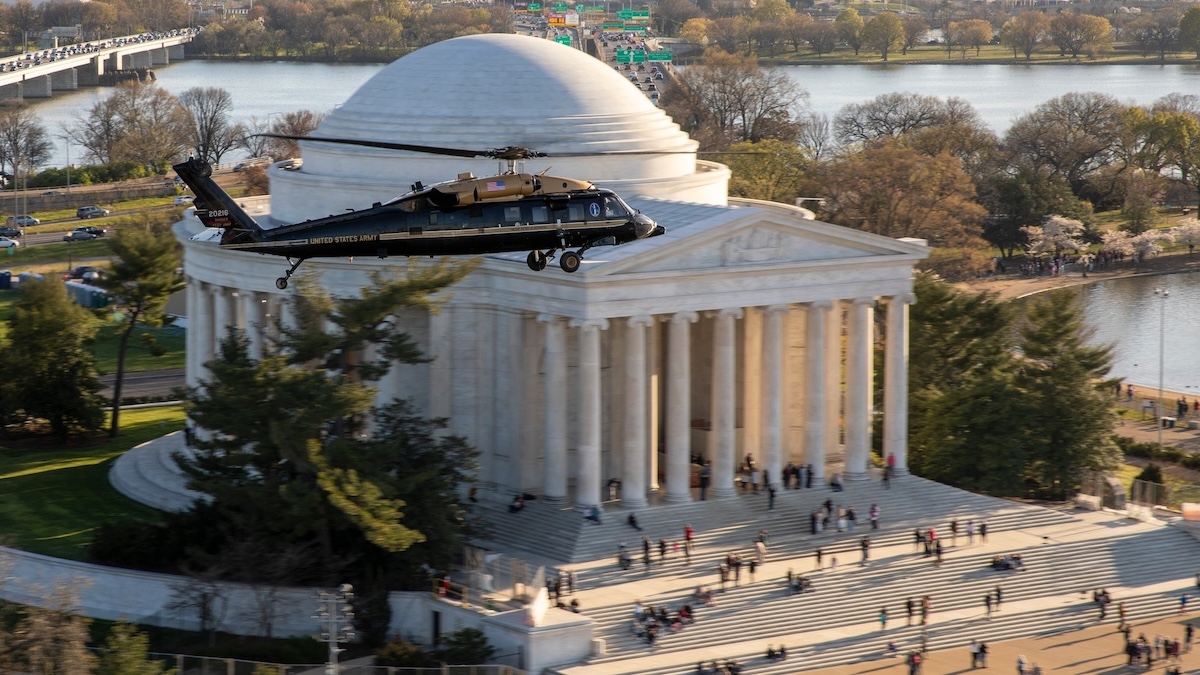
Black Hawk helicopter over Washington
Black Hawk helicopter over Washington [Credit: U.S. Air Force/Nicholas A. Priest]
Gemini Sparkle

Key Takeaways:

  • The National Transportation Safety Board (NTSB) leadership announced it cannot support the ALERT Act, an aviation safety bill proposed by House Republicans.
  • The NTSB states the bill incorporates only some of its safety recommendations and falls short of fully implementing key provisions, specifically criticizing its failure to mandate ADS-B In for all aircraft.
  • Both the ALERT Act and the previously failed ROTOR Act were drafted in response to a fatal midair collision that killed 67 people.
  • NTSB Chair Jennifer Homendy, along with the Air Line Pilots Association (ALPA) and victim families, has strongly criticized the ALERT Act for providing exemptions to crucial collision avoidance technology.
See a mistake? Contact us.

The leadership of the National Transportation Safety Board (NTSB) said Thursday that it cannot support the ALERT Act, an aviation safety bill advanced by Republicans in the U.S. House of Representatives.

In a letter addressed to House Transportation and Infrastructure Committee Chair Sam Graves and Armed Services Committee Chair Mike Rogers—both major backers of the ALERT Act—NTSB officials said the bill incorporates some but not all of the safety recommendations included in the agency’s investigation of the fatal midair collision in Washington, D.C., one year ago.


Both the ALERT Act and the ROTOR Act, which cleared the Senate last year, were drafted in response to the crash, which killed 64 people on board an American Airlines passenger jet and three occupants of a U.S. Army Black Hawk helicopter.

The ROTOR Act failed in the House earlier this week.

“Based on our evaluation of the ALERT Act as introduced, while we believe that the bill would address a few of our recommendations, many key provisions fall short of fully implementing all of the NTSB’s recommendations,” the letter said. “This includes requiring all aircraft operating in airspace where ADS-B Out is required to also be equipped with ADS-B In. The NTSB values its working relationship with the committee, and we appreciate your commitment to aviation safety and to the families who lost loved ones on January 29, 2025.

“However, we cannot support the ALERT Act in its current form because it is not fully responsive to the NTSB’s recommendations.”

The letter was signed by NTSB Chair Jennifer Homendy, members Michael Graham, Thomas Chapman, and J. Todd Inman, managing director Dana Schulze, deputy managing director for investigations Brian Curtis, and Office of Aviation Safety director Timothy LeBaron.

NTSB Chair Jennifer Homendy testifies before the U.S. Senate Commerce Committee [Courtesy: U.S. Senate]

The ALERT Act calls for the adoption of collision avoidance technology on aircraft and would instruct the FAA to set up a rulemaking committee including manufacturers, passenger and cargo carriers, air traffic controllers, and other elements of the aviation industry to govern implementation.

Backers of the ROTOR Act, which included requirements for the use of ADS-B Out and ADS-B In on almost all civilian and military aircraft, have argued that the ALERT Act gives too much leeway to operators, including the military.

Before the ROTOR Act failed to pass, the Air Line Pilots Association (ALPA) and families of those killed on Flight 5342 released statements advocating against the ALERT Act. After the vote on Tuesday, ALPA said it will shift its focus to making sure that an ADS-B In mandate is added to the ALERT Act.

Supporters of the ALERT Act said the ROTOR Act would have made it easier for adversaries to track U.S. military aircraft.

The Pentagon also came out against the ROTOR Act, citing “significant unresolved budgetary burdens and operational security risks.”

Homendy supported the ROTOR Act. She took to X on Tuesday to criticize the ALERT Act and pushed back on the argument from some lawmakers that it is more responsive to the NTSB’s recommendations.

“Let me set the record straight,” she wrote. “The ALERT Act—in its current form—does not implement our most CRITICAL safety recommendations. It doesn’t; in fact, it provides exemptions to lifesaving technology, technology that provides pilots and flight crews with information they need and deserve to ensure safety, technology that would’ve saved lives that night.”

It is not clear when the House will schedule a vote on the ALERT Act.

Zach Vasile

Zach Vasile is a writer and editor covering news in all aspects of aviation. He has reported for and contributed to the Manchester Journal Inquirer, the Hartford Business Journal, the Charlotte Observer, and the Washington Examiner, with his area of focus being the intersection of business and government policy.

Ready to Sell Your Aircraft?

List your airplane on AircraftForSale.com and reach qualified buyers.

List Your Aircraft
AircraftForSale Logo | FLYING Logo
Pilot in aircraft
Sign-up for newsletters & special offers!

Get the latest stories & special offers delivered directly to your inbox.

SUBSCRIBE
