













Register

Nonstandard Alternate Minimums

Gemini Sparkle

Key Takeaways:

  • Non-standard alternate minimums are published when an approach's "no-light" minimums exceed standard alternate minimums (600-2 for precision, 800-2 for non-precision) to prevent planning to minimums below the actual approach limits.
  • These non-standard minimums are calculated by adjusting the highest minimums for each approach category for inoperative lighting, using a specific table.
  • A key principle is that alternate minimums will never be lower than the published circling minimums, even for precision approaches.
  • When applying circling minimums, if a component (e.g., visibility) is lower than the standard alternate minimum, the higher standard value is used; otherwise, the circling minimums are used as-is.
See a mistake? Contact us.

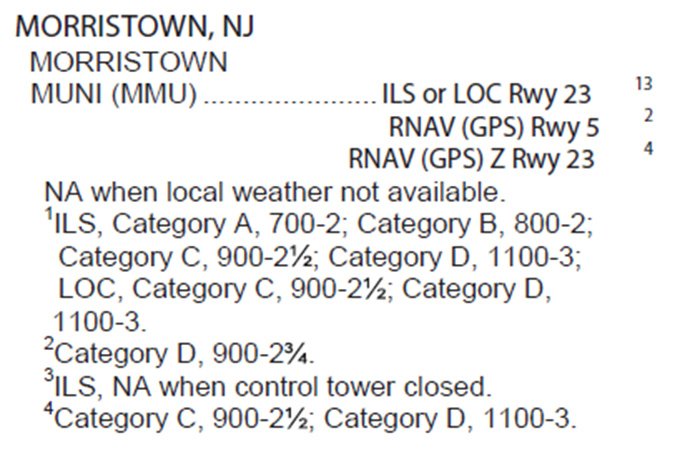
The article covered how procedures can be unavailable for alternate planning, but what about those that are available, but require non-standard alternate minimums? The standard alternate minimums are simple: 600-2 for precision approaches, and 800-2 for non-precision approaches. But non-standard alternate minimums can seem quite complicated.

Non-standard alternate ceilings and/or visibilities are published for an approach whenever the no-light approach minimums (using the local altimeter setting) exceed the standard alternate minimums. This makes sense—you wouldn’t want the alternate minimums to lure you to an approach that was below its approach minimums.


Ready to Sell Your Aircraft?

List your airplane on AircraftForSale.com and reach qualified buyers.

List Your Aircraft
AircraftForSale Logo | FLYING Logo
Pilot in aircraft
Sign-up for newsletters & special offers!

Get the latest stories & special offers delivered directly to your inbox.

SUBSCRIBE