











NOAA Takes Delivery of New Special Mission King Air 350CER
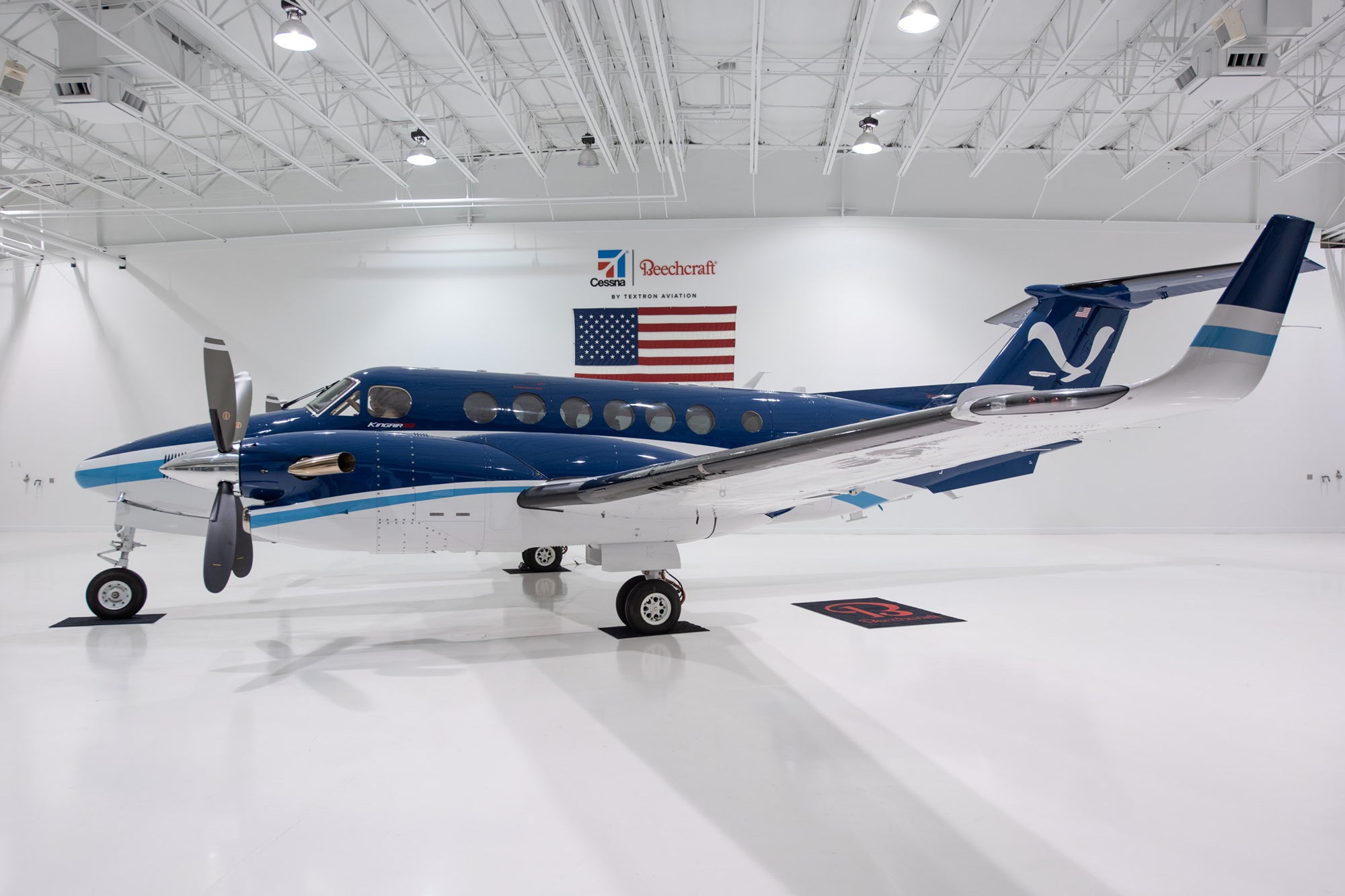
NOAA’s new King Air 350CER can remain aloft as long as eight hours. Textron Aviation
Gemini Sparkle

Key Takeaways:

  • Textron Aviation delivered a new Beechcraft King Air 350CER turboprop to the Department of Commerce’s NOAA Office of Marine & Aviation Operations.
  • This aircraft will support NOAA's mission to understand and predict changes in climate, weather, oceans, and coasts, and will be used for critical aerial survey and emergency response missions.
  • It joins a similar King Air 350CER delivered in 2009, which has been vital for coastal mapping and responding to natural disasters like hurricanes and earthquakes.
  • The King Air 350CER is an extended-range aircraft capable of remaining airborne for up to eight hours, featuring dual-sensor ports for simultaneous data collection.
See a mistake? Contact us.

Textron Aviation recently delivered a mission-ready Beechcraft King Air 350CER turboprop to the Department of Commerce’s National Oceanic and Atmospheric Administration (NOAA) Office of Marine & Aviation Operations (OMAO). NOAA’s mission is to understand and predict changes in climate, weather, oceans and coasts and conserve and manage coastal and marine ecosystems and resources.

The new aircraft joins another King Air 350CER aircraft delivered to NOAA in May 2009 that has since been used for coastal mapping and aerial survey missions, as well as critical emergency response missions, including photographic survey after earthquakes, oil spills, and numerous blizzards, tornados, floods and named hurricanes.

The King Air 350CER aircraft is an extended-range version of the King Air 350i twin-engine turboprop aircraft configured with an optional cargo door, adding enhanced mission flexibility. The aircraft is powered by two Pratt & Whitney Canada PT6A-60As, or optional factory installed PT6A-67A turboprop engines, with Hartzell four-blade propellers, and a fully integrated Collins Aerospace Pro Line Fusion digital avionics suite with touchscreen controls.

With extended range capabilities, NOAA’s King Air 350CER aircraft can collect critical information while remaining airborne for up to eight hours. The dual-sensor port modification allows simultaneous data collection from multiple on-board sensors. Optical grade glass plates in the sensor ports allow the cabin to remain pressurized or the optical plates can be removed, and the aircraft operated unpressurized. NOAA’s fleet of manned aircraft is operated, managed and maintained by the Aircraft Operations Center (AOC), part of the agency’s Office of Marine and Aviation Operations, located at Lakeland Linder Regional Airport in Lakeland, Florida.

Rob Mark

Rob Mark is an award-winning journalist, business jet pilot, flight instructor, and blogger.

Ready to Sell Your Aircraft?

List your airplane on AircraftForSale.com and reach qualified buyers.

List Your Aircraft
AircraftForSale Logo | FLYING Logo
Pilot in aircraft
Sign-up for newsletters & special offers!

Get the latest stories & special offers delivered directly to your inbox.

SUBSCRIBE



