













Register

Looking at the Physics of STOL Drag

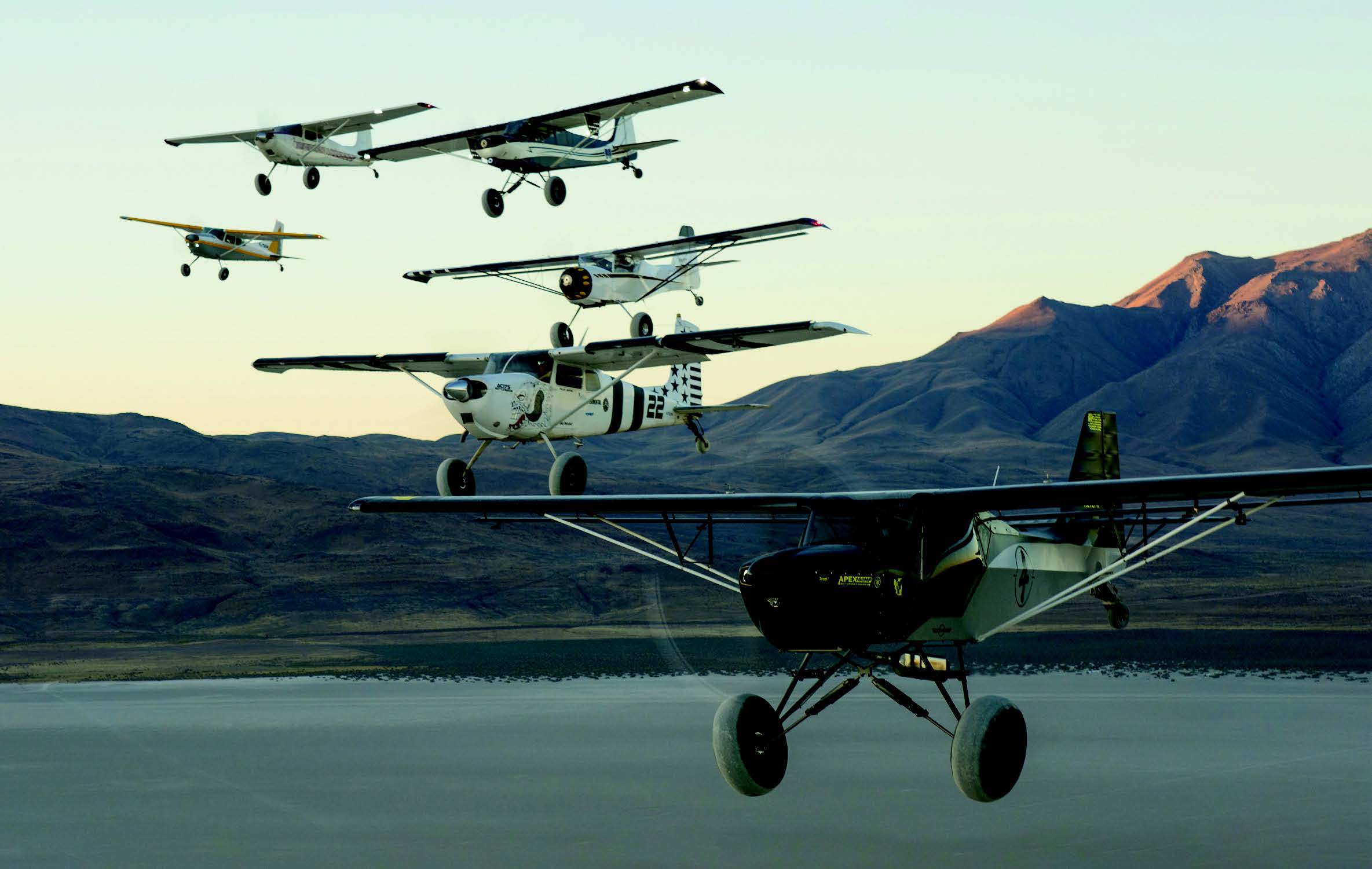
Racing circuit's airplanes requires starting and stopping twice while flying less than a mile.

High wings and a tailwheel are taken for granted on STOL airplanes for a lot of practical reasons. [Leonardo Correa Luna]
Gemini Sparkle

Key Takeaways:

  • STOL Drag racing is a competition where aircraft take off, fly 2,000 feet, land, come to a full stop, turn around, and repeat the process, with the winner being the first to stop at the finish line.
  • Success hinges on extreme initial acceleration, maximizing airborne speed, and precise deceleration tactics, including complex slipping maneuvers and optimal wheel braking immediately after touchdown.
  • Top competitors use heavily modified, lightweight aircraft featuring powerful, turbocharged engines and large propellers, enabling initial accelerations of 2Gs or more for extremely short takeoffs and landings.
  • The races demand exceptional pilot skill in managing the complex dynamics, particularly the timing of deceleration, and the author speculates on future purpose-built aircraft designs optimized for this unique sport.
See a mistake? Contact us.

At a point in my meandering journalistic career, I found myself behind the wheel of a Porsche 911 Turbo on a Southern California racetrack. One of the turns was a 90-degree elbow of essentially zero radius that came at the end of a long straightaway on which the sports car would reach 120 mph or so. The problem—which resembled the game of chicken in the 1955 film Rebel Without a Cause and which I was shamefully slow to master—was to use maximum braking just in time to arrive at nearly zero speed right at the corner, but not a moment sooner.

Slowing down matters as much as accelerating in most auto racing, and the same is true of STOL Drag racing. Unlike traditional Reno-style pylon racing, which involves no slowing down whatsoever, STOL Drag requires starting and stopping twice while flying less than a mile.

Peter Garrison

Peter Garrison taught himself to use a slide rule and tin snips, built an airplane in his backyard, and flew it to Japan. He began contributing to FLYING in 1968, and he continues to share his columns, ""Technicalities"" and ""Aftermath,"" with FLYING readers.

Ready to Sell Your Aircraft?

List your airplane on AircraftForSale.com and reach qualified buyers.

List Your Aircraft
AircraftForSale Logo | FLYING Logo
Pilot in aircraft
Sign-up for newsletters & special offers!

Get the latest stories & special offers delivered directly to your inbox.

SUBSCRIBE
