IFR Magazine

Logging vs. Being PIC

You are an instrument-rated private pilot. Your friend is working on the rating and you have acted as her safety pilot while she practices under the hood. Shes doing great. Today ceilings are high but below final approach fix altitudes. You feel comfortable filing IFR as pilot in command while she flies, so you file and off you go in the clubs 172. No hood for your friend today. She does all the flying. Two approaches, with 12 minutes in actual instrument conditions. She did well.

Read More »

Ceiling and Visibility

These early pilots depended on a network of rotating beacon towers at four-mile intervals, like lighthouses in the sky. These facilities, operated by the federal government, used lamps powered by cylinders of acetylene. Simply by following the route from beacon to beacon, a pilot could arrive safely at the destination. Weather could be avoided because the planes flew at low altitudes, and illuminated diversion airfields were placed at frequent intervals. If the pilot felt things were deteriorating, he could be on the ground in less than 10 minutes.

Read More »

Briefing: March 2019

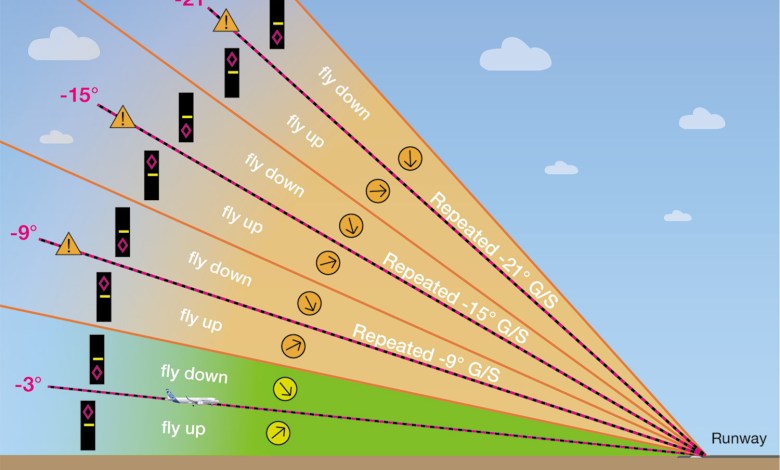
The Airbus A220 became the smallest airliner to be approved for 180-minute extended diversion time operations (EDTO), formerly ETOPS, and that could open up lucrative transoceanic routes outside of the normal hubs. The former Bombardier CSeries program, which was acquired by Airbus in July of 2018, targets the 100-150-seat niche and the approval by Transport Canada widens the scope of operations for the highly regarded fly-by-wire airliner. The aircraft was also approved for steep approaches of up to six degrees last summer and with EDTO approval, direct flights from London City Centre Airport to the east coast of North America would be allowed. The approval will also allow the aircraft to be used between Hawaii and the western U.S.

Read More »

Exploring Every Angle

What happens if you depart on the original IFR squawk? In a word: confusion. While, you are technically VFR-you voided your clearance by departing VFR-ATCs radar doesnt know that. Itll still detect that IFR squawk and tag you up on the scope as if you were on that IFR clearance. An unexpected IFR target popping up amidst their other IFR traffic is a real distraction to a controller, especially if its an aircraft who was expected to hold for release.

Read More »

Overlay Approaches

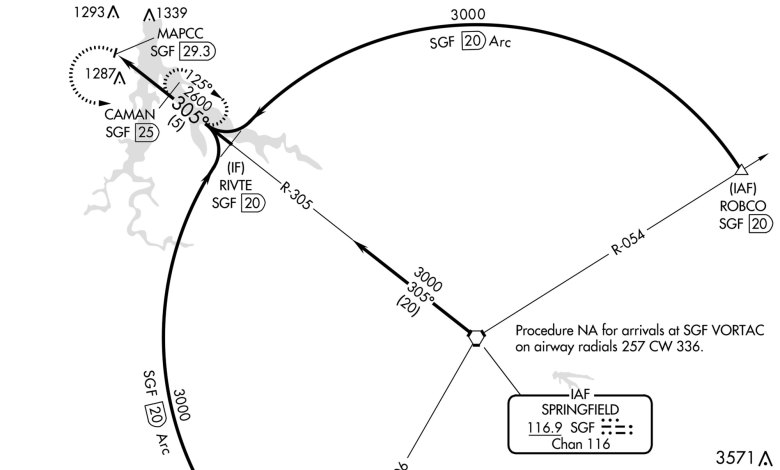
Lets connect some dots. In 1969, NARCO (now defunct) introduced the CLC-60 VORTAC Offset Control Panel that allowed navigation to a phantom fix defined as a distance and direction (rho-theta) from an existing VORTAC. It was touted as the first RNAV system. In the 80s, Bendix/Kings KNS-80 Integrated Navigation System might be considered the first practical RNAV navigator (it had VOR, LOC, DME, RNAV, and GS). Like the CLC-60, it could electronically move a VORTAC and was IFR certified.

Read More »

Readback: March 2019

The answer to Question 5 in your December Quiz says, Circling approaches require left-hand turns unless the approach procedure explicitly states otherwise. Is this still a true statement when the runway youre landing on is published right traffic? Ive found that the AC and the regs dont address this clearly. I believe that the intent is that the required direction of turns is in accordance with the published traffic pattern (absent requirements to the contrary on the approach procedure), but Ive been unable to get a satisfactory answer.

Read More »

Old Friends

Look around the ramp and in hangars at almost any GA airport in the country, and youll find some amazing aircraft. Youll also find some once-amazing aircraft that have been neglected and nearly abandoned for years, rendering them useless place holders. Sadly, one of those in the latter group belongs to my wife and me. (Its a Beechcraft Skipper we got for my wife to fly after we invested in the Cessna 340 Ive talked so much about.)

Read More »

Flying High

Ever wonder how the FAA came up with 91.211 requiring oxygen use above 12,500 feet MSL for more than 30 minutes and any time over 14,000 feet MSL? The answer is geography, not physiology. When these rules were written, oxygen systems were expensive and heavy. General aviation wanted to fly anywhere in the U.S. without oxygen, and you can fly any mountain pass in the 48 contiguous U.S. states in less than 30 minutes between 12,500 feet and 14,000 feet MSL.

Read More »

Download The Full February 2019 Issue PDF

You already have a transponder that transmits a dumb and blind signal in response to interrogation from other sources. Well, its not entirely dumb in that you can enter a four-digit base-eight (no 8s or 9s) code on the instrument and when the transponder responds to an interrogation, it puts that code and even your present altitude (to the nearest 100 feet) onto its outgoing signal. ADS-B Out keeps that but takes it a bit further.

Read More »
Pilot in aircraft
Sign-up for newsletters & special offers!

Get the latest stories & special offers delivered directly to your inbox.

SUBSCRIBE