















IATA: Growth in SAF Production Set to Slow in 2026

Trade group blames mandates in the U.K. and Europe.

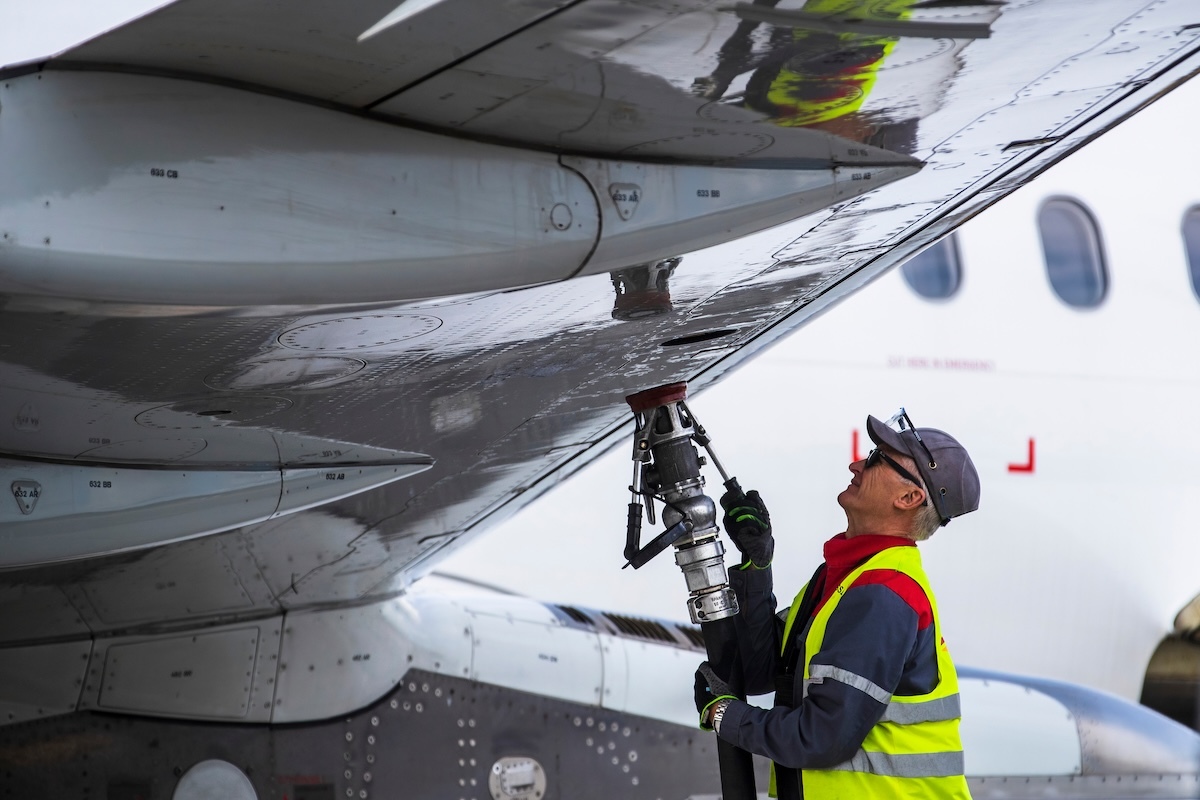
Aircraft fueling
An employee of a ground service company refuels an aircraft. [Credit: Shutterstock/Karolis Kavolelis]
Gemini Sparkle

Key Takeaways:

  • Sustainable aviation fuel (SAF) production is projected to fall short of 2025 estimates and slow in 2026, according to the International Air Transport Association (IATA).
  • IATA attributes the shortfall and increasing costs (up to five times more than conventional jet fuel) to "poorly designed" SAF mandates and policy frameworks in Europe and the U.K.
  • The organization urges governments to shift their focus from mandates to production incentives to increase the global supply of SAF, drive down prices, and prevent airlines from having to reevaluate their decarbonization commitments.
See a mistake? Contact us.

Growth in the production of sustainable aviation fuel (SAF) will fall short of projections this year and slow down in 2026, the International Air Transport Association (IATA) reported this week.

The trade group estimates that SAF production will reach 1.9 million metric tons in 2025, almost double the amount made in 2024. But that figure will fall short of IATA’s initial estimates for the year, and in 2026, growth in production is expected to slow to 2.4 million metric tons.


IATA officials placed the blame on “poorly designed” SAF-related mandates and policy frameworks enacted in the U.K. and Europe.

Europe’s ReFuelEU Aviation, for instance, has sharply increased costs, and airlines are now paying up to five times more for SAF than conventional jet fuel, the group said.

“Europe’s fragmented policies distort markets, slow investment, and undermine efforts to scale SAF production,” Willie Walsh, IATA’s director general, said in a statement. “Europe’s regulators must recognize that its approach is not working and urgently correct course.”

The trade association said governments should focus their efforts on production incentives, rather than mandates, to increase the global supply of SAF and drive down prices.

SAF is a renewable alternative to conventional jet fuel made from nonpetroleum feedstocks. According to the U.S. Department of Energy, it can be developed from food and yard waste, woody biomass, agricultural waste, cooking oils, animal fats, and algae.

Fuel trucks at an airport.
A fuel truck at an airport. [Credit: Adobe Stock]

SAF is a “drop in” fuel, meaning it can be blended with traditional jet fuel and used in existing aircraft engines without requiring modification. Its use can reduce lifecycle carbon emissions by up to 80 percent.

Many airlines and private aviation companies now use SAF, and some have set targets for a gradual transition away from conventional jet fuel. IATA said that, as a result of increasing costs, airlines that have pledged to use 10 percent SAF by 2030 will be “forced to reevaluate these commitments.”

“SAF is not being produced in sufficient amounts to enable these airlines to achieve their ambition,” Walsh said. “These commitments were made in good faith but simply cannot be delivered.”

Zach Vasile

Zach Vasile is a writer and editor covering news in all aspects of aviation. He has reported for and contributed to the Manchester Journal Inquirer, the Hartford Business Journal, the Charlotte Observer, and the Washington Examiner, with his area of focus being the intersection of business and government policy.

Ready to Sell Your Aircraft?

List your airplane on AircraftForSale.com and reach qualified buyers.

List Your Aircraft
AircraftForSale Logo | FLYING Logo
Pilot in aircraft
Sign-up for newsletters & special offers!

Get the latest stories & special offers delivered directly to your inbox.

SUBSCRIBE
