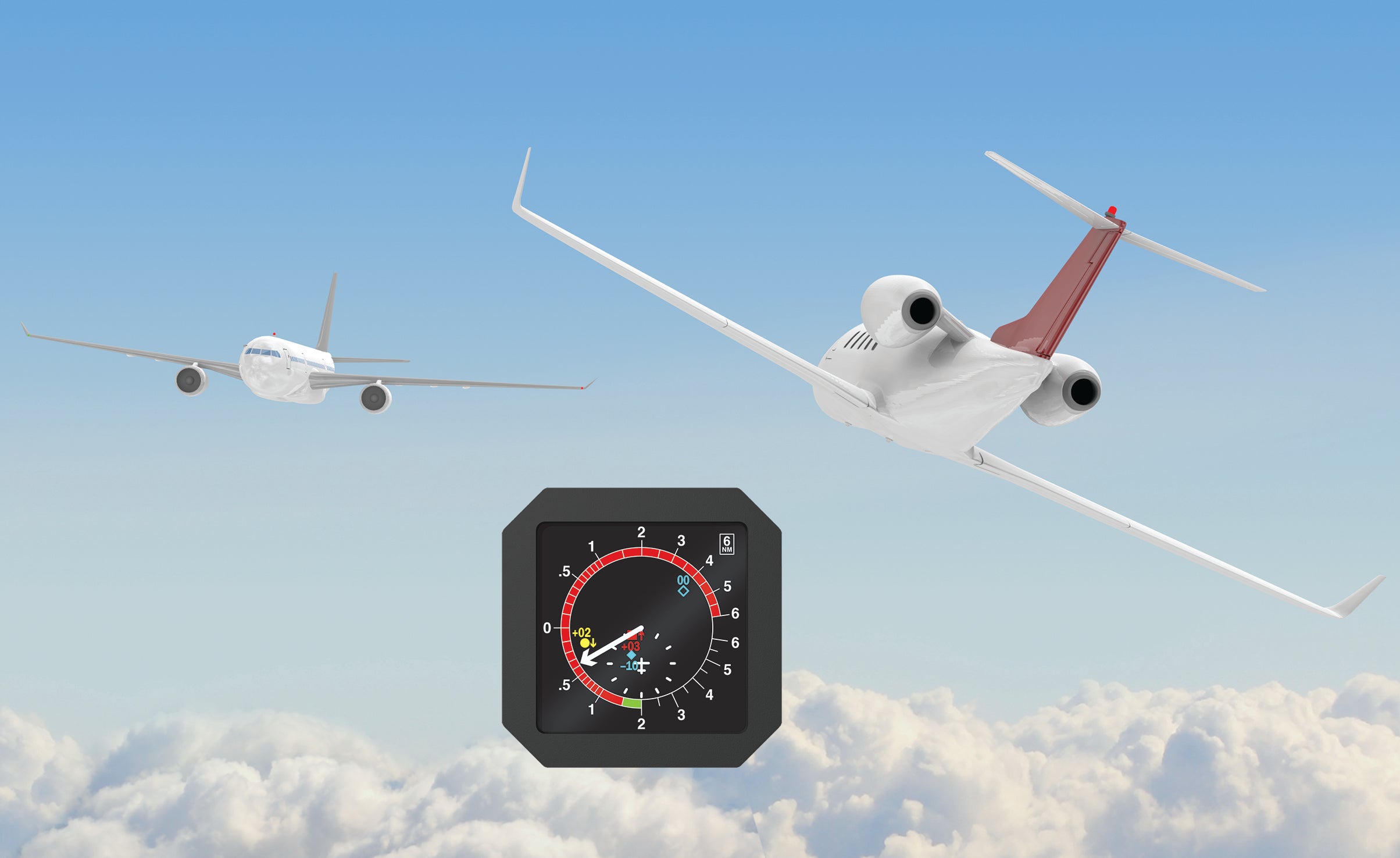
How It Works: TCAS II

The new software Change 7.1 allows the TCAS II to reverse a climb or descent order if a target airplane isn't following the expected trajectory. Bryan Christie Design
Gemini Sparkle

Key Takeaways:

  • TCAS II is an advanced aviation safety system that uses radio signals to create a 3D map of surrounding air traffic.
  • It provides resolution advisories (RAs), such as "climb" or "descend," to pilots, coordinating with conflicting aircraft to prevent mid-air collisions.
  • The Change 7.1 software enhances TCAS II by allowing advisories to be reversed, issuing "level off" alerts, and monitoring terrain to prevent unsafe descent commands.
  • For TCAS II to function properly and provide accurate advisories, all involved aircraft must be equipped with an operating transponder.
See a mistake? Contact us.

For the past 30 years, aviation has benefited from traffic collision avoidance systems (TCAS) installed in large airplanes. The newest version of this safety technology, TCAS II, provides aural and visual warnings to pilots as well as resolution advisories instructing, for example, one airplane to climb and another to descend to avoid a midair collision. Here’s how TCAS II works:

Radio Interrogation

Aircraft equipped with TCAS send out and ­receive radio signals several times per second over two frequencies. Signals received in the 1.03 GHz radio frequency from the transponders aboard other aircraft provide a constantly changing 3-D map of the traffic picture, which allows TCAS to perceive and react to target threats. At the same time, TCAS sends out signals over the 1.09 GHz frequency that can be received and ­interpreted by other nearby TCAS-equipped aircraft.

Resolution Advisory

The resolution advisory, or RA, is what sets TCAS II apart from the original version of the technology, known as TCAS I. From the 3-D map of traffic it stores and constantly updates in its memory, TCAS II can instruct a crew to climb or descend in response to a target threat while negotiating with the offending airplane to take the opposite course of action. A protected volume of airspace surrounds each TCAS II-equipped aircraft. If an ­intruder aircraft enters this bubble, the system will provide traffic advisories and, if a midair collision is likely, an instruction such as “climb, climb” or “descend, descend.”

Change 7.1 Software

In recognition that TCAS II technology is imperfect, newer software, called Change 7.1, was created as a safety ­enhancement. The software allows the TCAS to reverse a climb or descent order if it sees a target airplane isn’t following the expected trajectory. It can also provide a “level off” aural alert if that’s what makes sense for a given situation, and it monitors terrain and obstacle data to ensure it doesn’t command a descent at too low an altitude. It is important to note that for TCAS to function properly, the target airplane must be equipped with an operating transponder.

Ready to Sell Your Aircraft?

List your airplane on AircraftForSale.com and reach qualified buyers.

List Your Aircraft
AircraftForSale Logo | FLYING Logo
Pilot in aircraft
Sign-up for newsletters & special offers!

Get the latest stories & special offers delivered directly to your inbox.

SUBSCRIBE