Departure Separation: Waiting on Your Turn at the Runway

Try not to worry too much if you’re waiting a while to take off even though it’s not fun.

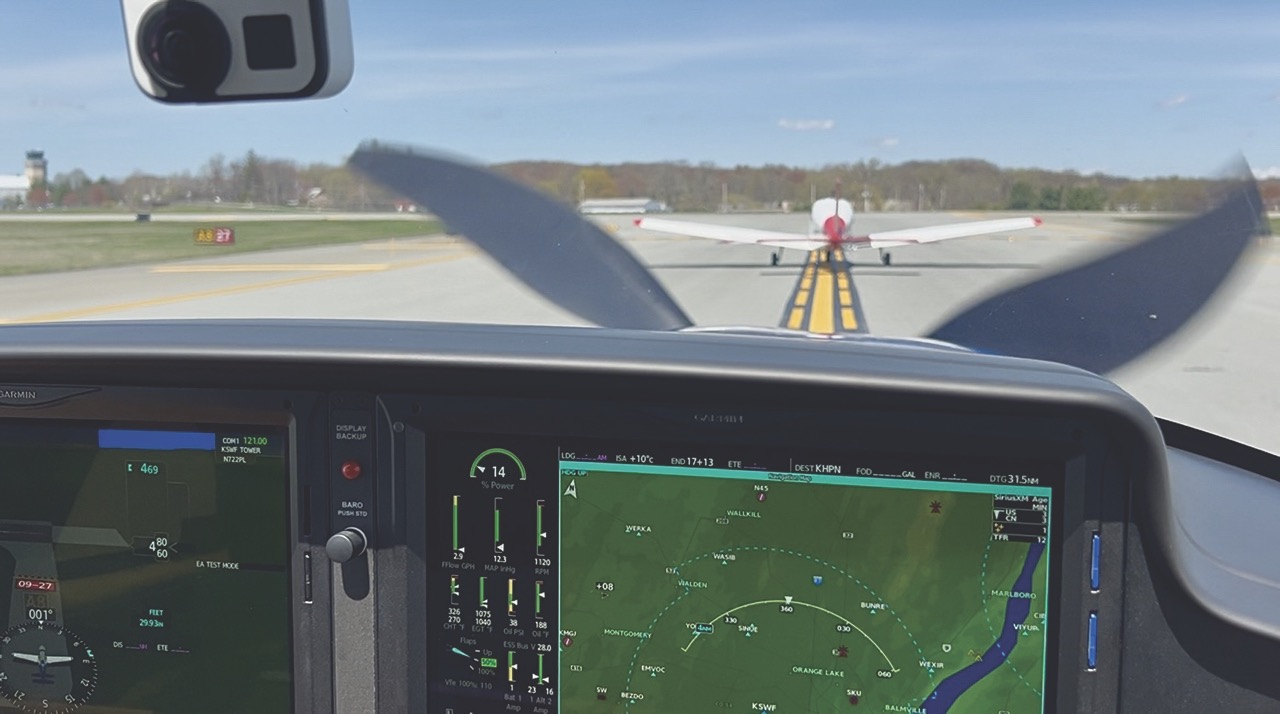
Runway separation is incredibly important for successive VFR/VFR departures. [Credit: Larry Anglisano]
Gemini Sparkle

Key Takeaways:

  • Air traffic control (ATC) prioritizes aircraft separation and safety above "first come, first served," influencing departure sequences, especially when mixing VFR and IFR traffic.
  • Controllers categorize departures (VFR/VFR, IFR/VFR, IFR/IFR) and apply specific separation rules, often launching faster aircraft first for efficiency, particularly for IFR flights requiring radar separation.
  • To optimize flow during busy times, ATC utilizes tools like offering intersection departures (pilot's choice), using multiple runways, implementing Line Up And Wait (LUAW), and employing "fan headings" for successive IFR departures.
  • Pilots are encouraged to be patient and flexible with ATC suggestions, provided safety is not compromised, as controllers strive to maintain efficiency while adhering to strict safety protocols.
See a mistake? Contact us.

Most of us have experienced taxing out, running up (if needed), then waiting a long time for the tower to clear you. If you’re IFR, you may think, “What is taking so long?”

But what if you’re flying a C182 instead of the C560? “Now all the jets are going ahead! What the heck?!?” (I’ve actually heard this on frequency.) 

This Article First Appeared in FLYING Magazine

If you're not already a subscriber, what are you waiting for? Subscribe today to get the issue as soon as it is released in either Print or Digital formats.

Subscribe Now

Throw in a couple VFRs, and you start to wonder even more. All of these jets are going, and you’re chilling in your Skyhawk wondering how far the Hobbs meter will go before getting your turn. I’ve personally been there, done that, got the shirt, and got it cut. With everything going up in price, I will do anything in my power as an air traffic controller (ATC) to get airplanes out as fast as possible, regardless of whether they are IFR or VFR. 

Pilots may or may not have heard of air traffic control’s “first come, first served” operational priority, but wonder where that goes when they are No. 1 ready to go, yet await their turn. In front of the operational priority, ATCs have our duty priority, which is: “Separate aircraft and issue safety alerts.” 

So, what’s the thought process on how we mix these two requirements to stay efficient and keep the customers happy? I’m glad you asked.

VFR, IFR, or Both

When I have the challenge of multiple departures, I categorize them into three groups—VFR/VFR, IFR/VFR, and IFR/IFR. In doing this, I can prioritize who goes where while ensuring both priorities are satisfied.

Most of the airports where I’ve worked had large run-up areas, so smaller airplanes were out of the way during the run-up. Add the fact that when I do get an IFR release, I only have three minutes to get them “tagged up” on the radar. 

For successive VFR/VFR departures, I start with “runway separation.” I wrote an article on that a while back, but long story short, I need either 3,000, 4,500, or 6,000 feet based on the type of airplanes involved. Once I have that, I only need to make sure they don’t touch. It should be obvious to VFR pilots, but sometimes we’ll say “maintain visual,” which means keep the other aircraft in sight. That’s it. They can both go their own way with no issue.

Now let’s talk about IFR/IFR. Even in working a VFR tower, I still have IFR rules—primarily do what approach control says. If it says, “Released!” I can clear an aircraft for takeoff. If it gives me a heading and/or altitude other than standard, I pass it along verbatim.

With departure separation, I need to ensure the radar controller has their required radar separation. How do I do that? Well, let’s just say I don’t launch an IFR C172 then a Gulfstream on the same heading without waiting a few minutes. 

Controllers don’t have every type memorized, but we are expected to know the general performance profiles by type. Piston singles aren’t very fast by comparison. Twins are a little faster, and jets (while they vary by type) are a lot faster. Launching successive IFR departures is a simple timing game. In general, IFR aircraft need 1,000 feet of vertical separation or 3 nm of lateral separation. 

In most of the facilities I’ve worked at, IFR departures were given runway heading. With different types, I will normally launch the faster one first. A C560 will get up to altitude and 250 knots within a minute, compared to a C172 that would take a few minutes to get up a couple thousand feet. Imagine a scooter and a powerful motorcycle at a drag race, but you have multiple scooters and motorcycles to get down the strip as fast as possible. It’s the same concept—putting the fast ones first is most efficient. Now if I were to have two 172s, both IFR and I have a release on both, I’d need to wait until the first one is about 2.5 miles out before launching the second, so when the second one tags up, the radar controller has their required 3 miles of lateral separation. 

It’s the same with jets. If I had two similar jets, I would launch one, wait until it rotates, then launch the second. It may seem close, but I’ll always be able to provide the radar controller the required separation. Let’s not forget that if I launch something larger in front of something small, I also must consider wake-turbulence separation.

Now let’s talk about IFR/VFR. What separation do you think I need? Obviously, there’s runway separation and wake turbulence (if it applies), but what about airborne? This mirrors VFR/VFR since I don’t have any airborne minima to comply with except “don’t touch.” Say I launch an IFR jet and a VFR King Air wants to go right behind him. I’d need my 6,000 feet of runway separation and would have to wait two minutes (assuming the same departure point) if the jet was a heavy. 

Past that, I wouldn’t be too worried about the King Air catching the jet in any direction. So I’d launch them back to back. As soon as the jet is rolling, “King Air, cleared for takeoff.” If this were backward and the King Air was IFR with a VFR jet in front, I’d launch them back to back, and if they’re going the same direction, I’d tell the jet to keep the King Air in sight, then let the jet worry about right-of-way rules as needed. 

Other Options?

Runway time is premium when it’s busy. Having 10 airplanes needing to depart, half IFR, half single-engine pistons, three at an intersection, it sounds complicated, but it’s not. If the runway isn’t being used, we aren’t helping ourselves or the pilots who pay for every minute on the Hobbs. Plus there are a couple of tools we have to help keep things efficient during a busy time.

We could try utilizing another runway (if applicable and usable with winds). A second runway can increase the output by at least 50 percent. On some airports with parallel runways and connecting taxiways, the controller might do several different things to keep traffic moving. This also depends on how wide the taxiway is and how big the run-up area is. 

Small taxiway, no run-up? Not easy to keep departures moving. With a larger main taxiway/run-up, it’s easy to move things around. When utilizing any of these options, it has to make sense. Taxiing around the airport to another runway just to depart a couple minutes earlier, especially with airplanes in front of you, doesn’t make sense in general and adds to controller workload. 

But if I can get you to another surface quickly and easily, I’ll do it. Back in the day, I would personally use runway crossings to get airplanes out faster. I had to pay a little extra attention, but it worked pretty well. Since the NAS currently has a trend of wrong surface landings and runway incursions, I’ve opted out of conducting runway crossings for the time being. 

Another tool is intersection departures. The 7110.65, 3-7.1.d. does allow ATC to solicit intersection departures, so if you see a line, you might get asked. At the end of the day you are the PIC, so you can decline this request and utilize full length. Without sacrificing safety, try to see the big picture though. If you’re departing a 4,000-foot runway with a density altitude of 4,000 feet on a hot day, don’t feel obligated at all. 

But with a 10,000-foot runway and cooler temps, if the intersection gives your C172 7,000 feet, yeah, you could make that happen with 6,000 feet leftover. Again, it’s the pilot’s choice, but try to help if you’re able. 

With sufficient staffing, I can also utilize LUAW (line up and wait). I’ll bet you didn’t know that during the day and with departure points in sight, a tower (if authorized by SOPs) can put a jet LUAW full length and clear a different airplane at an intersection in front of the jet. It might sound crazy, but it works when the time is right. 

The last tool that some facilities have built in and others can still make work is “fan headings.” There’s nothing pilots can do about this as it’s strictly an ATC tool. 

For successive IFR departures, I can launch them back to back with course differences of at least 15 degrees between each. Fan headings being plus-or-minus 15 from normal or runway heading on the side of the departure could look like a fan on the radar. 

Let’s assume launching off of Runway 36 for a second. If I had five departures with two of them being props (and in the middle of the line), I could launch the jets 330 or 345, and launch the props 015 or 030. Assuming the departure controller has given me permission and the releases, I could just say cleared for takeoff until they’re all gone without waiting. Without fan headings, I’d have to stay on standard procedure (runway heading at my current facility) and time it right.

There’s one important item to remember about these tools. Whether you are trying to help the controller or they are trying to help you, there’s almost always something else the controller is doing besides thinking about this. Some controllers are limited by their SOP and can’t do any of these things, so don’t feel bad if you ask and they say no. Most of the time ATC says, “Unable,” just like a pilot would tell ATC if needed, it is for flight safety reasons.

Patient and Safe

Try not to worry too much if you’re waiting a while for your turn. I know it’s not fun.

On occasion, I’ll have 10 waiting to go, but I’ll do everything I can to keep the line moving. Try to be flexible if options are available (intersection departure, different runway, etc.), but don’t think it’s the only way and sacrifice safety.

You know the old sayings: “Safe and sound, and on the ground,” or “I’d rather be on the ground wishing I was flying, than the other way around.”


This feature first appeared in the July Issue 960 of the FLYING print edition.

Elmer Hawkins

ATC specialist Elmer Hawkins is a regular contributor to IFR Magazine.

Ready to Sell Your Aircraft?

List your airplane on AircraftForSale.com and reach qualified buyers.

List Your Aircraft
AircraftForSale Logo | FLYING Logo
Pilot in aircraft
Sign-up for newsletters & special offers!

Get the latest stories & special offers delivered directly to your inbox.

SUBSCRIBE