















Charter Company Sues GE, Bombardier Over Florida Highway Crash

Two pilots were killed and three other occupants were injured in a 2024 Hop-A-Jet accident.

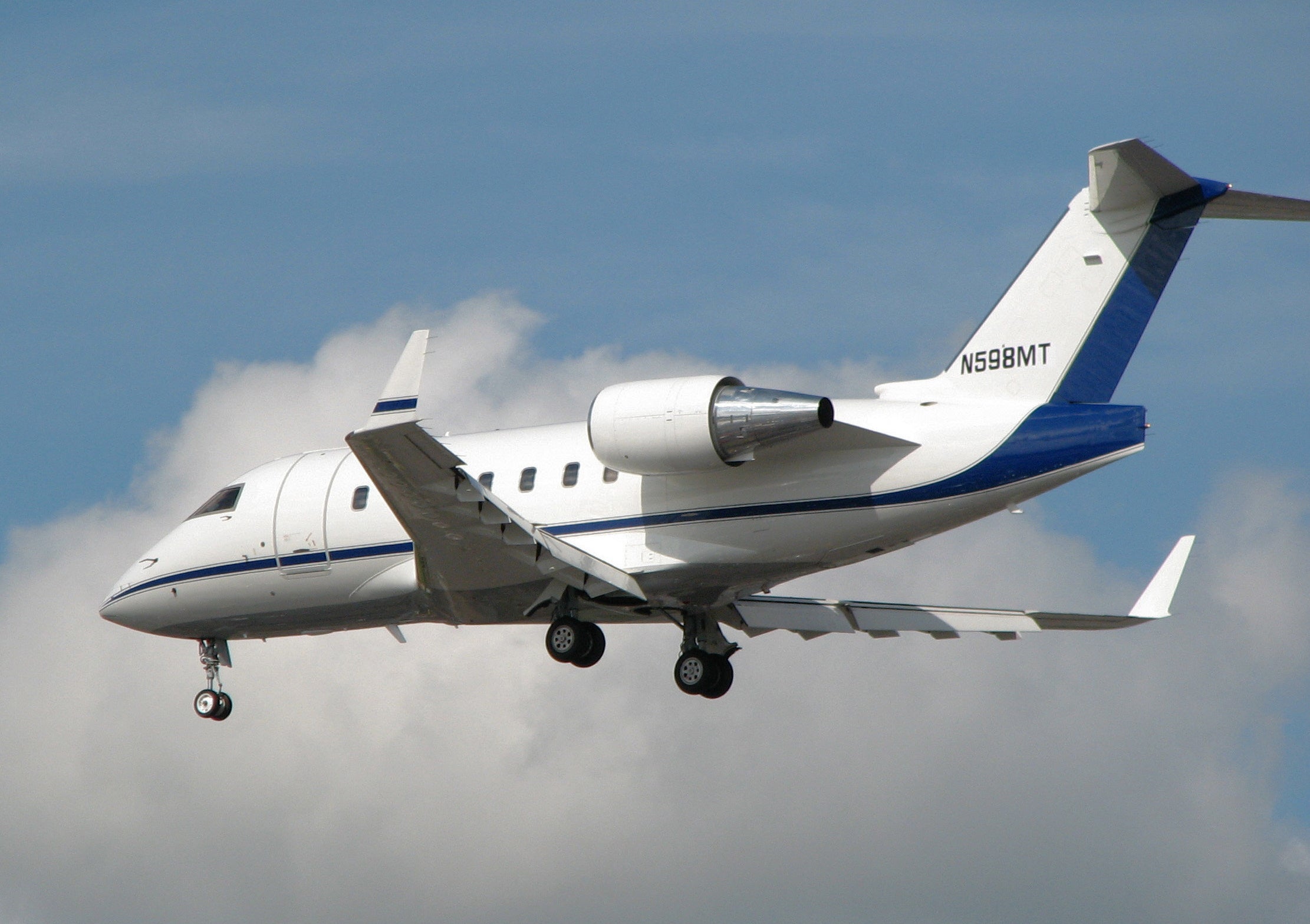
A Bombardier Challenger 600.
Bombardier Challenger 600 [Credit: Adrian Pingstone/Wikimedia Commons]
Gemini Sparkle

Key Takeaways:

  • The owner of a business jet involved in a fatal highway crash in Florida is suing GE Aerospace and other companies, alleging an inherent design defect in the GE CF34 engines caused the dual engine failure.
  • The lawsuit claims GE Aerospace was aware of recurring corrosion issues in the CF34 engine's variable guide vane system, failed to adequately inform operators, and may have concealed evidence of the defect.
  • Evidence cited includes the NTSB's preliminary finding of corrosion, along with prior "hung start" incidents and an in-flight shutdown in other CF34-powered aircraft, for which GE's advisories are deemed insufficient by the plaintiffs.
See a mistake? Contact us.

The owner of a business jet that crash-landed on a highway in Florida, killing its two pilots and injuring three other occupants, is suing companies involved in the aircraft’s manufacture and maintenance.

Charter service Hop-A-Jet and two of its subsidiaries filed a complaint in the U.S. District Court for the Southern District of Florida in September. The document places most of the blame for the crash on GE Aerospace, which makes the CF34-3B engines used by Bombardier’s Challenger 600 series.


The National Transportation Safety Board (NTSB) is still investigating the crash, which occurred in February 2024, but a preliminary report identified corrosion in multiple engine components. Attorneys for the plaintiffs said corrosion is a recurring problem in the CF34 family and that GE is aware of it.

“The Hop-A-Jet pilots’ heroic landing undoubtedly saved the lives of the two passengers and Hop-A-Jet flight attendant on board and countless drivers and pedestrians on the makeshift landing strip,” the lawsuit states. “It is now evident that this engine failure was caused directly by an inherent defect in this family of GE engines. Much worse, GE knew about this specific engine defect (corrosion to this family of engines) for many years, and in fact, took efforts to cover it up by hiding incriminating evidence (such as video of the GE secret inspection).”

The complaint also alleges that GE failed to inform operators of the CF34’s possible problems and revised its service contracts to exclude full corrosion coverage.

“We are deeply saddened by the accident and extend our heartfelt sympathies to the families and loved ones of those involved,” GE Aerospace said in a statement provided to WWSB-TV in Sarasota, Florida. “Safety is our first priority, and our technical teams are supporting our customer and the National Transportation Safety Board’s ongoing investigation.”

The other named defendants in the case are Bombardier, Learjet, Turbine Engine Specialists, and Duncan Aviation.

‘Dangerous Conditions’

The Bombardier Challenger 604 at the center of the accident departed Ohio State University Airport (KOSU) in Columbus bound for Naples Municipal Airport (KAPF) in Florida. Shortly before landing, the two pilots reported a loss of both engines.

“We are cleared to land, but we are not going to make the runway,” one told an air traffic controller.

wreckage at the crash site
The wreckage of the Hop-A-Jet flight, annotated by the NTSB. [Credit: NTSB]

The aircraft touched down on Interstate 75 in Naples, crossed the breakdown lane into a grassy shoulder area, and crashed into a concrete sound barrier. The two pilots, Edward Daniel Murphy and Ian Frederick Hofmann, were killed.

According to the NTSB’s report, the flight attendant saw that the cabin and emergency exits were blocked by fire, and she guided the two passengers out of the airplane through the baggage compartment door.

Hop-A-Jet’s lawsuit argues that GE Aerospace is mostly responsible for the crash because parts of the CF34’s variable guide vane (VGV) system were prone to corrosion, difficult for inspectors and maintenance workers to access or work on, and subject to “on condition” inspection rather than set intervals.

The complaint points to instances of “hung starts” in 2018 and 2023 involving aircraft powered by the CF34. In a hung start, an engine starts but fails to accelerate to its normal idle speed.

GE investigated and found that the hung start from 2018 was likely caused by corrosion induced by saltwater and coastal environments. The company released a service bulletin related to the incidents, but attorneys for Hop-A-Jet argued that the advisory was too narrowly tailored and “ineffective compared to the gravity of the issue.”

In the 2023 hung start, GE inspectors found “extensive corrosion,” but no immediate cause was listed.

Another worrying incident took place in August 2021, when a CRJ1000 commercial aircraft experienced an in-flight shutdown of one of its CF34-8 engines. GE investigated and found corrosion in the engine’s VGV system. A high-priority service bulletin was issued advising commercial operators to inspect and repair components of the VGV system, but as Hop-A-Jet’s lawyers pointed out, business jet operators did not receive this warning.

In January 2024, the Hop-A-Jet Challenger that would crash in Florida one month later experienced hung starts in both engines. GE Engines Services helped troubleshoot the problem and recommended engine fuel filter changes. Fuel collected from the engines was sent for testing and showed no anomalies.

Both engines were successfully started over the next several days, and the aircraft was returned to service.

The lawsuit argues that Bombardier knew or should have known about deficiencies in CF34 engines. Learjet, Turbine Engine Specialists, and Duncan Aviation were named as defendants because each one allegedly inspected the engines on the incident aircraft with a video borescope, “missed indicators of the defects and/or dangerous conditions within the engines,” and “certified and represented the subject aircraft as safe for flight.”

Hop-A-Jet did not say how much it is seeking in compensation for the crash.

Zach Vasile

Zach Vasile is a writer and editor covering news in all aspects of aviation. He has reported for and contributed to the Manchester Journal Inquirer, the Hartford Business Journal, the Charlotte Observer, and the Washington Examiner, with his area of focus being the intersection of business and government policy.
Pilot in aircraft
Sign-up for newsletters & special offers!

Get the latest stories & special offers delivered directly to your inbox.

SUBSCRIBE
