













Casual Decision Turns Deadly for Pilot

Maybe it was engine trouble, or maybe it was just a bad guess.

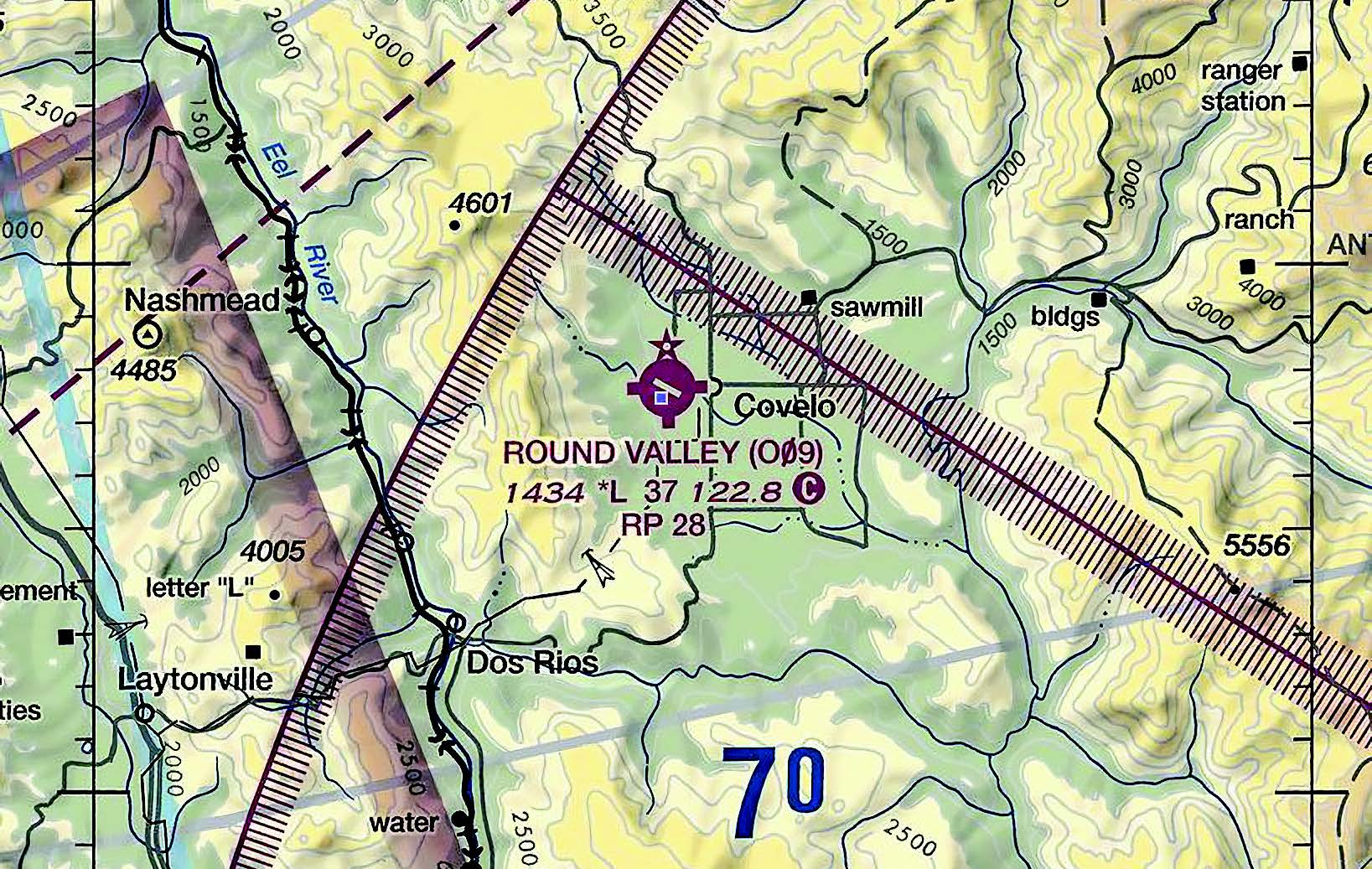
The author naturally wonders whether the crash was the result of the pilot merely overestimating his airplane’s ability to clear the hill. [Google Maps]
Gemini Sparkle

Key Takeaways:

  • An A36 Bonanza, piloted by an experienced captain, crashed after an unusually low takeoff from Round Valley Airport, with witness accounts conflicting on engine issues but consistent on the aircraft's low altitude and steep bank into terrain.
  • NTSB analysis found no engine malfunction, indicating the accident likely stemmed from pilot decisions rather than mechanical failure, specifically the choice to depart on a runway direction (28) known to lead towards challenging, higher terrain.
  • The article underscores the unreliability of witness testimony and emphasizes the critical importance of pilots prioritizing the safest departure path and thoroughly assessing terrain and aircraft performance, especially when a clear alternative exists.
See a mistake? Contact us.

The testimony of witnesses to crimes is notoriously unreliable. The testimony of witnesses to airplane accidents is even more so, because most people are poor judges of heights, angles, distances, and speeds.

Besides, they don’t know what airplanes ought to look and sound like and how they might be expected to behave—or misbehave. Accident investigators have to pick and choose among testimonies to construct a physically plausible scenario.

This Article First Appeared in FLYING Magazine

If you're not already a subscriber, what are you waiting for? Subscribe today to get the issue as soon as it is released in either Print or Digital formats.

Subscribe Now

That was the case after the crash of an A36 Bonanza at Round Valley Airport in California (O09) in October 2023. Two eyewitnesses described the fatal takeoff similarly but with one or two significant differences.

Both witnesses were standing between the departure end of the runway and the hill 2,000 feet away where the Bonanza went into the treetops just 70 feet above the runway elevation. The witness who was closer to the runway reported that the airplane lifted off near the runway’s end and was so low as it passed him that his kids waved to the pilot, and the pilot waved back. That witness also reported that the engine at first sounded “smoother,” but then made a “popping” noise and “sounded like no power.” The airplane was slow, he said, and its “nose was up.”

The second witness, a few hundred feet farther along the airplane’s brief flight path, also reported that the airplane was unusually low, so low that he too could see into its windows and discern the people inside. But he did not report any unusual engine sounds. He did report, however, that after passing him and clearing nearby trees by about 20 feet the airplane banked steeply to the left—using a model airplane, he illustrated a 70- or 80-degree bank—before descending into the woods on a nearby hill.

The A36 and its two occupants, a 20,000-hour JetBlue A320 captain, 54, and his friend, had flown four hours from Heber City, Utah (KHCR), to Shelter Cove (OQ5) on the Northern California coast. Shelter Cove may have been overcast when they arrived, because radar showed them turning back inland and landing at Round Valley. There, they put 90 gallons of fuel into the airplane before taking off again.

Runway 28 at Round Valley is 3,670 feet long. The airport was unattended, and there was no way to know where the takeoff roll began, but if the Bonanza began its takeoff from the intersection nearest the fuel island, it would have had only 2,400 feet available. The report of the first witness that the airplane did not break ground until it was near the end of the runway suggests that it may have started at the intersection. The POH performance charts call for a ground roll of 2,600 feet under the existing conditions of no wind, nearly gross weight, and 3,500-foot density altitude. 

It’s possible that the pilot, himself a father of four, seeing kids waving to him, stayed low in order to wave back. It’s also possible that the fact that the kids were on his left caused him to bank to the left—which, for that matter, would have been the default turn for a standard pattern departure. But it was also a turn toward higher terrain—the hills to the right were lower. The first order of business, then, was to climb.

However, the second witness, who was located 1,500 feet past the departure end of the runway, said that the Bonanza was as “close as we’ve ever been to a plane in the sky.” So even at that point, 1,500 feet from the end of the runway, the airplane cannot have been very high. It then banked steeply and began to lose altitude before colliding with the hill.

The National Transportation Safety Board (NTSB) examined the heavily damaged engine and found nothing to suggest a failure. The bank angle implied by the radius of the curving flight path was 51 degrees, assuming an indicated airspeed of 84 knots, which would be close to the best angle-of-climb speed but also, ominously, quite close to the stalling speed at that angle of bank. Nevertheless, investigators thought the shallow angle of descent at which the airplane entered the trees was more consistent with controlled flight than with an inadvertent stall.

One naturally wonders whether the crash was the result of the pilot merely overestimating his airplane’s ability to clear the hill, or of a loss of power, as the first witness’ report of an unusual engine sound could suggest. That question could not be answered. The NTSB interviewer carefully questioned the second witness about the engine sounds mentioned by the first, but the second witness recalled nothing out of the ordinary. Both witnesses did say, however, that it was unusual to see an airplane take off in that direction. Normally, they departed toward the southeast.

The NTSB faulted the FAA’s chart supplement handbook for failing to adequately describe the peaks and valleys off the end of Runway 28. The FAA evidently took heed, because the present edition of the chart supplement, replacing omission with exaggeration, reads, “Arpt in valley; high mts and trrn and ridge srnd arpt. Mt flying experience strongly rcmdd.” In fact, Round Valley is not surrounded by high terrain. There is high terrain only at one end of the runway, and that is the reason pilots rarely take off in that direction. 

In broad daylight the hills west of the runway do not require mention in the chart supplement—they are in plain sight. What is not so plain to a pilot at the gas pump is how close they are, how high they are, and, most significantly, what the flight path of the departing airplane will look like relative to them. The pilot has to guess at those things. The distance to clear a 50-foot obstacle that is published in the POH tells us nothing about what we will need to clear a 200-foot obstacle or a 1,000-foot one.

Assuming he was of normal conscientiousness, the pilot most likely took the hills into account and judged that he could clear them. He may have been influenced by the fact that using the opposite runway would require a half-mile taxi. He may also have underestimated the amount of runway he would need to get airborne.

In the final analysis, all we know for sure is that the airplane went into the trees. We also know, to a near certainty, that, whether the airplane’s engine faltered or not, if it had taken off in the opposite direction, the outcome would have been different.

Pilots develop the necessary habit of ignoring small risks. An undiscriminating anxiety does not make a better pilot. But when a risk can be removed by a small adjustment—for instance, taking off one way rather than the other—why not make that adjustment?


This column first appeared in the July Issue 960 of the FLYING print edition.

Peter Garrison

Peter Garrison taught himself to use a slide rule and tin snips, built an airplane in his backyard, and flew it to Japan. He began contributing to FLYING in 1968, and he continues to share his columns, ""Technicalities"" and ""Aftermath,"" with FLYING readers.

Ready to Sell Your Aircraft?

List your airplane on AircraftForSale.com and reach qualified buyers.

List Your Aircraft
AircraftForSale Logo | FLYING Logo
Pilot in aircraft
Sign-up for newsletters & special offers!

Get the latest stories & special offers delivered directly to your inbox.

SUBSCRIBE
