











Aviation Safety

Just Out Of Annual

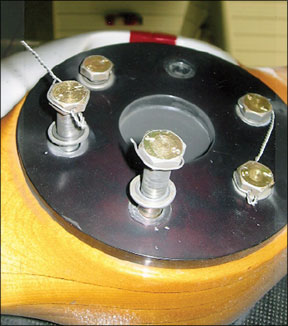
Wisdom in aviation, if there is such a thing, seems to be the sum total of bad experiences, hangar flying lies, magazine articles and direct advice from various characters who may or may not fit the description of “mentor.” At some point in my flying career, one of these old salts advised me to be wary of flying an airplane freshly out of annual. “It probably worked okay when you brought it in, but it probably wont when you get it back,” he used to say. I took the advice to heart, so my standard procedure in doing the first pre-flight after annual was to uncowl the airplane and have a good, long look at the engine room and at the airframe in general. I once found an unsafetied oil filter-no big deal, really, but satisfying to have detected and drawn it to an embarrassed mechanics attention. When I got busy instructing, I waxed and waned on this inspection habit. Sometimes Id do it and then, well, Id get in a hurry and not bother. After all, I really hadnt found that much before, so how much risk could there possibly be in skipping the check?

Read More »

Odds And Ends

For years, NASAs Aviation Safety Reporting System (ASRS) has been an invaluable, timely source of information for researchers and observers interested in how our national airspace system works. Granting limited immunity to those who complete an ASRS form and send it in is one of the few things the FAA has done right in the enforcement arena. In addition to maintaining a detailed database of submitted incidents (which likely didnt make even the trade press), the organizations Web site (asrs.arc.nasa.gov), includes free and immediate access to a wide variety of research papers and other resources to anyone interested in learning more about the “real world” of aviation.

Read More »

Cracking And Sticking

The crew heard a noise when the landing gear was retracted. The left landing gear remained in a partially retracted position, unable to retract or extend. A successful gear-up landing ensued. The l/h landing gear actuator body (p/n 128101-3) had cracked at the forward mounting bolt hole, allowing the actuator bore to open enough that the piston would not engage the pivot sector gear sufficiently to move the landing gear.

Read More »

The Spin Im In

I just read your article on different LSA engines (“LSA Engine Safety,” May 2008). An aircraft mechanic friend of mine has experimented with different lubricants for the two-strokes such as the Rotax and similar. He finds the life expectancy of these engines is almost directly related to the oil type. He notes those using the [IMGCAP(1)]cheaper oils find lower life expectancy and he rebuilds a lot of these engines. Thus an article on tribology, the science and technology of interacting surfaces in relative motion, might be worthwhile. Another friend has had several deadstick landings in the last two or three years in aircraft with these two-strokes. The engines failed mainly because of seizing from loss of lubrication. These failures are not part of the stats because most of these failures occurred over a field and successful landings were accomplished. Another friend tore down an O-200 after running it on 100LL for about 600 hours and found the valve guides were all split. Thus, how one deals with fuels and lubricants has a direct impact on aircraft safety.

Read More »

April 1, 2008, El Cajon, Calif., Cessna 152

At about 1500 Pacific time, the airplane experienced a hard landing and sustained substantial damage during a post-crash fire. The solo student pilot was not injured. Visual conditions prevailed. After making six successful touch-and-go landings, the student noticed the winds were increasing. During the seventh approach, winds were variable and started to gust. While maintaining 55 knots over the approach end of the runway, the airplane suddenly drifted to the left. The student used ailerons and corrected to the centerline, but the airplane touched down hard and bounced. After the airplane came to rest, he saw smoke and fire, and evacuated the airplane.

Read More »

April 3, 2008, New York, N.Y., Cessna 750 Citation

The airplane departed the right side of JFKs Runway 13L at 2014 Eastern time during the landing rollout. Night visual conditions prevailed; the airplane received substantial damage. The airline transport rated pilot-in-command and co-pilot (CP) reported no injuries. After touchdown, the CP stated he did not have nosewheel steering, brakes or any feeling of engine thrust reverse at approximately 80 knots. The crew applied emergency air brakes, and the airplane veered off the runway to the right with visible skid marks present on the runway. The airplane collided with a dirt divider, sheared off the left main landing gear, buckled the nosegear and the left wing dug into the sand before the airplane came to a complete stop. Prior to the landing, the crew encountered problems with the “A” hydraulic system and performed checklist procedures.

Read More »

April 4, 2008, Alturas, Calif., Piper PA-28-236

The private pilot was on the final leg of a cross-country flight and landing on Runway 21 at his destination airport. The pilot reported that while landing he struck a “few” landing lights and initiated a go-around. The pilot reported that when he applied engine power the airplane rolled to the left and the wing struck the ground. The airplane received structural damage to both wings and empennage. The wind at the time of the accident was from 240 degrees at 20 knots, with gusts to 32 knots. No mechanical malfunctions were reported.

Read More »

April 7, 2008, Paducah, Texas, Piper PA-28-180

At approximately 1450 Central time the airplane sustained substantial damage after a section of propeller blade separated in cruise flight. A forced landing to a wheat field ensued. The private pilot and passenger were not injured. Visual conditions prevailed.

Read More »

April 7, 2008, Tucson, Ariz., Cessna 152

The 101-hour student pilot was practicing landings. While maneuvering for the last landing, the control tower reported a wind gust of 14 knots. The student pilot stated that after he landed “…the airplane went back in the air and I lost control.” The airplane subsequently impacted the runway surface in a nose-low, left-wing-low attitude, resulting in substantial damage.

Read More »

April 12, 2008, Stevensville, Del., Piper PA-28-151

The solo private pilot said he made a straight-in approach to land, but was too high and fast, and did a go-around. He reported that on the next landing approach, he felt that he got behind the airplane, and again approached too high and fast, but landed anyway. He said the airplane ran off the end of the runway, and into a barrier. The pilot reported that there were no mechanical anomalies with the airplane prior to the accident. He said the airplane received damage to the nose and windshield.

Read More »
Pilot in aircraft
Sign-up for newsletters & special offers!

Get the latest stories & special offers delivered directly to your inbox.

SUBSCRIBE
