











Register

Accident Probes

Weathering Heights

Pilots are a self-sufficient lot. The pilot in command has ultimate authority for the safety of the flight, and there are few pilots who can resist the slight smirk that comes with ultimate authority.

A skilled pilot has confidence in his or her ability to fly the airplane, certainly, but also to make the judgment calls that ensure the flight ends safely. But as experience increases, sometimes the judgment gets harder.

An interesting thing happens with a lot of pilots. As their skill improves, so does their equipment. A young pilot may think a set of wings, an engine and a fuselage just dandy. But as the logbook grows, so does the desire for more capability. For a pilot who likes to…

Read More »

Sole Man

Sidle up to any pilot you see at the airport. Ask about his or her attitude toward safety. Whether flying the latest and greatest corporate jet or propping the most tired tube-and-fabric antique, that pilot will give the same answer.

Sure, Im a safe pilot. After all, its my behind thats riding just aft of the instrument panel.

Few people like to admit that they have shortcomings as pilots. And when they do, its usually tempered with some mitigating circumstance that demonstrates that bad things only happen to the other guy.

They dont fly instruments, but theyre conservative about the weather. They dont fly often, but when they do theyre extra careful. They skimp on mainte…

Read More »

A Desperate Plea

Not many people would justify the time and expense involved in being a proficient general aviation pilot without their spouse supporting the activity. While many spouses are pilots themselves, a great number are merely participants who enjoy the travel and other benefits of flying, without having been bitten by the flying bug itself.

These preferred passengers share a few traits. Theyre usually willing and able to help with some of the housekeeping chores like folding maps, watching for traffic and looking up frequencies. Some may take a pinch-hitter course or a bit of flight instruction in case the pilot someday gets a bad batch of oysters. Virtually all describe their pilot-in-command…

Read More »

Mystery Machine

Although pilots do their best to minimize the risk they assume every time they switch on the magnetos, somewhere in the back of most pilots heads is a tiny voice urging them to watch out for the unexpected. Some may consider this self-doubt and banish it from their consciousness. Others embark on a near-manic attempt to silence it through endless training, hardware and conservative decision-making.

Though most pilots generally fall somewhere in the middle, there are those occasional flights where almost anyone may be tempted to shout down the doubt or defer the flight because something doesnt feel right. Usually those flights pass without incident. Occasionally they dont.

The voic…

Read More »

Falling Star

Confront a pilot with a statement like, You pilots are a smug bunch and you probably wont get much argument. Truth is, ego is part of the game.

As the pages in the logbook accumulate, the feelings of been there, done that grow too. Not quickly, perhaps, but insidiously. The eye of experience heralds the look of confidence.

While experience sometimes leads to complacency, most pilots take their responsibility seriously – even enjoy it and the ongoing training and quest for proficiency that comes with the pilot certificate. Conscientiousness may be admirable, but sadly it sometimes is not enough. Mistakes do happen, and sometimes they happen at the worst possible time.

The owner…

Read More »

Tiny Culprit

Aviation, its been said, is intolerant of carelessness or neglect. Most pilots are concerned about their safety, at least to some extent, and pay more than lip service to keeping their skills sharp and their airplane worthy.

As human beings, however, its impossible to know everything about the airplane, the pilot, the trip and the weather. Trust is an inherent part of flying. You trust your mechanic to have competently maintained the airplane. You trust the briefer to provide you with a reasonably accurate picture of the weather en route. You trust controllers to sequence you safely and FAA technicians to properly maintain nav aids.

While many people think of flying as you against…

Read More »

Jersey Inferno

Confidence is a double-edged sword. On the one hand, confidence eliminates the uncertainties that make decisions harder. On the other, confidence can lead you into believing bad things only happen to other people.

Sometimes, bad things happen to skilled people. Confidence can be a magic cloak that wards off disaster, but it can also be an inviting smell that brings misfortune in for a closer look.

On a relatively balmy November morning last year, a pilot and two members of his family said goodbye to a fourth family member. It was the Friday after Thanksgiving, and the family had been together for the holiday.

The pilot had flown his 1964 Bonanza S35 from his home in Bethesda, Md.,…

Read More »

Unnatural Reaction

The anniversary of one of the most publicized general aviation accidents ever came and went, and almost on cue the NTSB released its official report on the crash that killed John F. Kennedy Jr. Together, they made a powerful reminder that one of the earliest identifiable pitfalls of flying is still with us today. Aptly named the graveyard spiral, it has taken its toll of lives since the invention of the airplane.

Like its cousin the tailspin, the entry is insidious – resulting from spatial disorientation – and the conclusion is often fatal. The entry pattern associated with either maneuver is similar, but the resultant maneuvering track quite different. Real-life testing and experience,…

Read More »

A Game of Inches

A look at accident statistics can be a bit haunting. The NTSB has determined that about 80 to 85 percent of general aviation accidents are caused by human error. While some kind of equipment failure or weather problem may contribute to the accident, the fact remains that bad judgment and lousy decisions are what usually lead to bent metal and broken lives.

Many times the pilots mistakes are induced by outside pressures. The desire to get home, make a meeting, meet a schedule, beat weather or impress someone can lead to shortcuts and risky maneuvers. Often the pilot gets away with it, which reinforces the possibility that it will happen again. Sometimes, however, the pilots luck runs ou…

Read More »
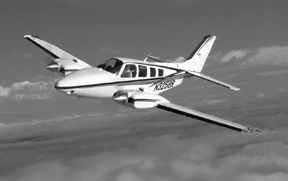
Pilot in aircraft
Sign-up for newsletters & special offers!

Get the latest stories & special offers delivered directly to your inbox.

SUBSCRIBE