













…And Avoid

Seriously? That’s all we get? Our only takeaway is to watch for other traffic? I want more.

Gemini Sparkle

Key Takeaways:

  • A mid-air collision occurred at Watsonville Airport in August 2022 involving a Cessna 340 and a Cessna 152, resulting in the deaths of all three pilots.
  • The NTSB concluded the accident was due to the Cessna 340 pilot's "failure to see and avoid," a finding the author criticizes as inadequate and lacking deeper insight into contributing factors.
  • The author suggests overlooked contributing factors, including the 340's high approach speed (180 knots), insufficient specific communication between the aircraft, and the 152 continuing in the pattern despite the rapidly approaching 340.
  • The core lesson, according to the author, is that minor procedural changes by either pilot could have prevented the tragic accident.
See a mistake? Contact us.

Watsonville, California, has a nice airport just inland from California’s Monterey Bay. It’s a busy, nontowered (uncontrolled?) airport with extensive flight training, transient, and corporate traffic. Years ago I based my Cessna 340 there.

Watsonville (KWVI) has two runways. The main runway is 2/20 as the wind is almost always off Monterey Bay, favoring Runway 20. The crosswind runway, 9/27, sees less use.


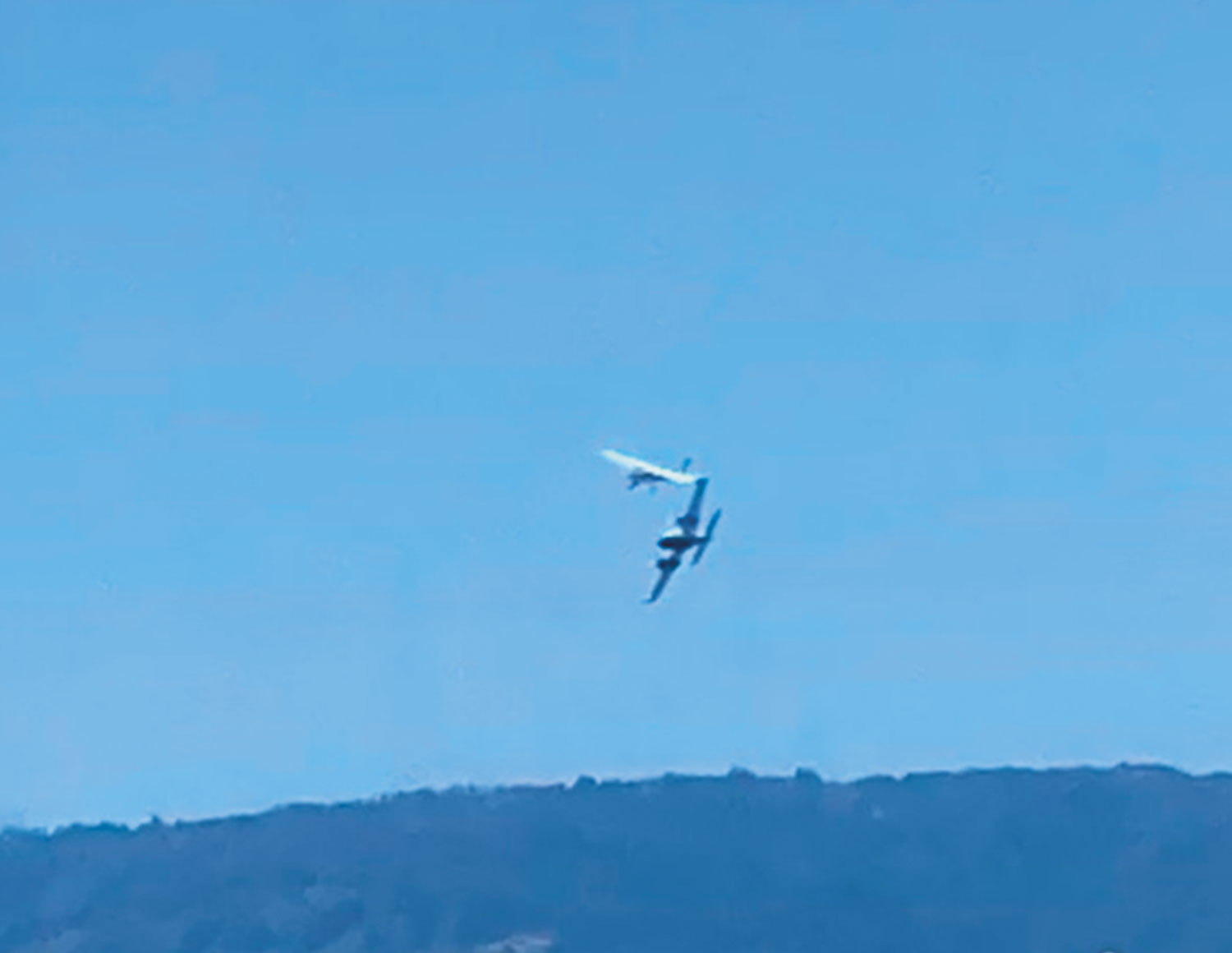
Some of this might be familiar because on the clear day of August 18, 2022, a Cessna 340 on a long, straight-in final to Runway 20, and a Cessna 152 in the pattern for touch and goes on Runway 20, collided. Both aircraft were destroyed, killing the lone pilot of the 152 and the two occupants of the 340. My Remarks in our October 2022 issue discussed that crash. The image here of the 152’s remains even appeared in those Remarks.

Why discuss it again? The NTSB issued its findings at the end of March; I find them inadequate. In my October 2022 remarks, I avoided speculating other than to state the obvious underlying cause being a failure to see and avoid—the crash wasn’t avoided. Duh! Now, armed with the facts, the NTSB insightfully identified the cause as, “The failure of the pilot of the multi-engine airplane to see and avoid the single-engine airplane while performing a straight-in approach for landing.”

Seriously? That’s all we get? Our only takeaway is to watch for other traffic? I want more. Okay, there is a bit more. The NTSB stated that the 340 “maintained a ground speed of about 180 knots throughout the approach until the collision occurred, which may have reduced the time available for him to see and avoid the single-engine airplane.” Gee, ya think? That only tells us the 180-knot 340 was the hitter and the 152 was the hittee.

To be fair, NTSB reports are factual, not speculative, without blame, which is even stated in the report. But it’s common for these accident reports to cite contributing factors. That might have included the speed of the 340, about 20 knots above initial flap speed and 40 knots above gear speed, all on short final at about 150 feet above the ground.

Nor did they point out that while the 340 pilot made position reports, he did not address the 152. Did he know the 152 was there? Another unidentified possible contributing factor could have been the 152 continuing in the pattern in spite of knowing of the 340’s rapid approach. At least the 152 pilot did acknowledge that the 340 was getting too close, too fast: “…you are coming at me pretty quick, man.”

Maybe that’s our job in GA, forming our own conclusions. Well, perhaps my sparse prose here is a start. Or, perhaps all we can get from this I already stated in closing my October 2022 Remarks, “…it appears that either could have made a minor change to their procedures that day and had an uneventful flight. Sadly, neither did.”

Ready to Sell Your Aircraft?

List your airplane on AircraftForSale.com and reach qualified buyers.

List Your Aircraft
AircraftForSale Logo | FLYING Logo
Pilot in aircraft
Sign-up for newsletters & special offers!

Get the latest stories & special offers delivered directly to your inbox.

SUBSCRIBE