Airbus Experiments With 3D Printing Aircraft Parts

New method allows for production of large structural components.

A350
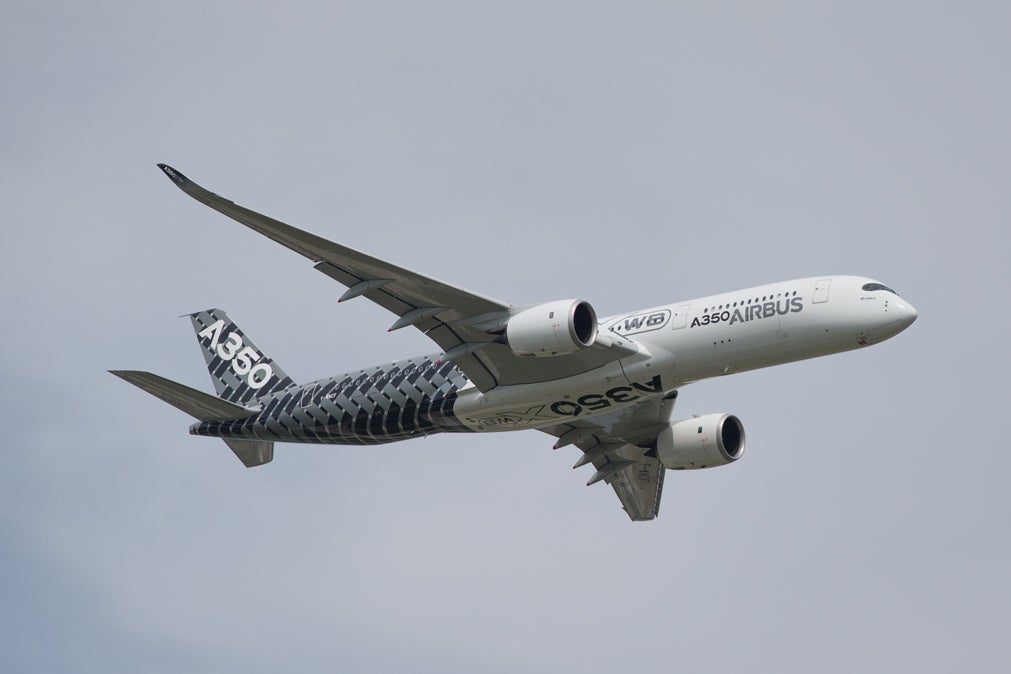
An Airbus A350 [Credit: Airbus]
Gemini Sparkle

Key Takeaways:

  • Airbus is integrating 3D printed aircraft parts into its manufacturing process, specifically utilizing wire-directed energy deposition (w-DED) technology.
  • The w-DED method allows for agile design and construction of large structural titanium components (over 23 feet long), significantly reducing material waste compared to traditional forging.
  • Parts produced using w-DED are already being integrated into the A350's cargo door surround area, with Airbus planning continued experimentation and evaluation.
See a mistake? Contact us.

Airbus is experimenting with 3D printing aircraft parts and has begun integrating some printed products into its manufacturing process.

The European aerospace giant is investigating a particular type of 3D printing known as wire-directed energy deposition, or w-DED. The method allows for more agile design and construction and cuts down on material waste, Airbus said this week.

In w-DED, a multi-axis robotic arm holds and moves a spool of titanium wire. An energy beam is focused onto the wire, melting and fusing it layer by layer onto a surface known as a “blank.” The finished product undergoes a brief machining to match the exact dimensions of the part’s design.

3D printing blank
3D printing [Credit: Airbus]

3D printing, also known as additive manufacturing, has been around for years, and has mostly been used to make smaller components. But w-DED can be used to make structural titanium parts over 23 feet long, according to Airbus.

And because w-DED effectively “grows” parts into their final form, there is little if any waste. This is a significant break from traditional forging in the aircraft industry, where between 80 and 95 percent of titanium originally purchased will have to be recycled.

Airbus recently began integrating w-DED-produced parts into the A350’s cargo door surround area. The pieces were printed by a qualified supplier, inspected by Testia Bremen, and then machined and installed in Airbus factories, officials said.

Airbus said it will continue experimenting with w-DED and testing various energy sources, including plasma, arc welding, and electron and laser beams. Management will also evaluate whether certain parts should be outsourced to suppliers for printing or printed in-house.

Zach Vasile

Zach Vasile is a writer and editor covering news in all aspects of aviation. He has reported for and contributed to the Manchester Journal Inquirer, the Hartford Business Journal, the Charlotte Observer, and the Washington Examiner, with his area of focus being the intersection of business and government policy.


Ready to Sell Your Aircraft?

List your airplane on AircraftForSale.com and reach qualified buyers.

List Your Aircraft
AircraftForSale Logo | FLYING Logo
Pilot in aircraft
Sign-up for newsletters & special offers!

Get the latest stories & special offers delivered directly to your inbox.

SUBSCRIBE