











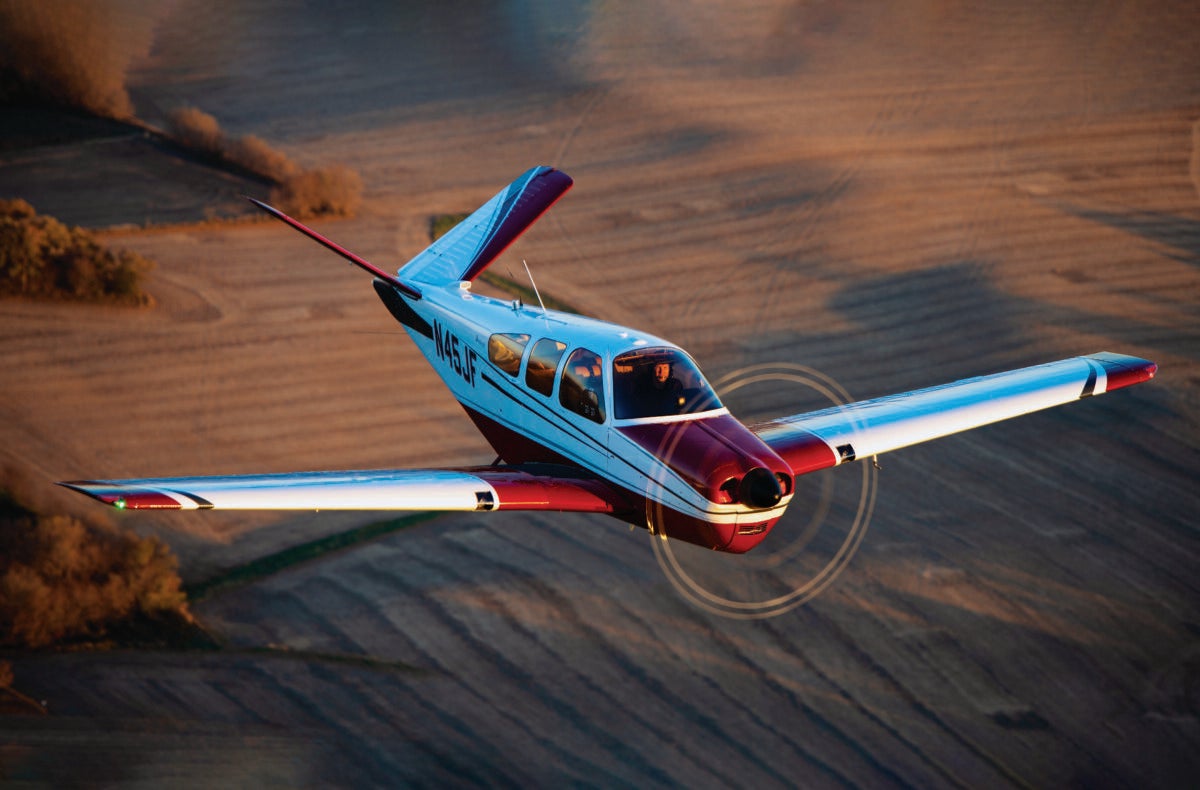


The epitome of a cross-country flyer, the Beechcraft Bonanza Model 35 series—with its distinctive V-tail—debuted in 1947, produced in Plant II at the Beechcraft manufacturing facility at Beech Factory Field (K BEC) on the east side of Wichita, Kansas. The company had already made its name with the stately Beech 18 and Beech 17 Staggerwing—but it was ready to enter the modern, post-World War II era with an airframe that would incorporate all of the latest advancements in instrumentation, aerodynamics, and reliability. And, it would have a tricycle-gear configuration novel to the times—but clearly the wave of the future for pilots operating out of improved strips. Retracting that gear would also allow them to gain the most in speed advantage at the same time.
The early Bonanza 35s started off as four-seat single-engine piston designs with reasonable cargo carrying space—but always more attuned to the business trip or family cruise as opposed to hauling a lot of stuff. That would come later, as Beechcraft built on the model’s popularity. The V-tail versions spoke to greater aerodynamic efficiency—and attracted the pilot looking for a distinctive ride. Yet the company went back to the conventional tail with the 36 model series that would take its place starting in 1968—as well as that of the 33 models. Why that happened is just one element of determining which Bonanza would be right for you. With more than 17,000 Bonanzas of all flavors built—and a high percentage still flying—there’s quite a selection to choose from, and they retain great value on the market to this day, more than 75 years later.

