













Register

The Right Way

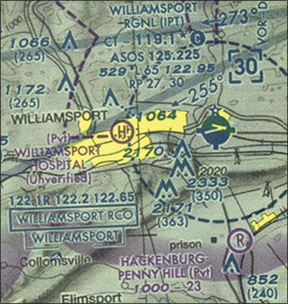
Ive always liked visiting unfamiliar airports; one can learn a lot by watching how other pilots deal with each facilitys different quirks. Its educational. At least the watching is-arriving at an unfamiliar airport can be nerve-racking. Or worse. My favorite unfamiliar airport story involves the Williamsport (Penn.) Regional Airport (IPT). This night flight was long enough ago that the Piper Aircraft Company still had a manufacturing presence on the field. I was a mere private pilot, working on my instrument rating. Although I was night-current, I took some extra precautions for this flight. I had plenty of fuel, for one thing, along with current VFR charts. Since I also was an instrument student, I brought along a set of approach plates, opened to IPTs airport diagram. I had reviewed the runway layout, made sure someone would be there to greet me and my passenger, and was well within the airplanes weight and balance limitations. The flight went smoothly and soon we were letting down through a clear night sky with the citys lights beckoning. Like a moth to the flame.

Gemini Sparkle

Key Takeaways:

  • The author's night landing at an unfamiliar airport became hazardous due to an assumed standard left-hand traffic pattern that conflicted with a significant terrain ridge.
  • A crucial lesson learned was that traffic pattern directions (e.g., right-hand traffic) are not depicted on standard airport diagrams and must be explicitly confirmed in resources like the Airport/Facility Directory (A/FD).
  • Thorough pre-flight planning, including verifying specific airport procedures and terrain awareness, is vital for safety when flying to unfamiliar airfields, especially at night.
See a mistake? Contact us.

Ive always liked visiting unfamiliar airports; one can learn a lot by watching how other pilots deal with each facilitys different quirks. Its educational. At least the watching is-arriving at an unfamiliar airport can be nerve-racking. Or worse.

My favorite unfamiliar airport story involves the Williamsport (Penn.) Regional Airport (IPT). This night flight was long enough ago that the Piper Aircraft Company still had a manufacturing presence on the field. I was a mere private pilot, working on my instrument rating. Although I was night-current, I took some extra precautions for this flight. I had plenty of fuel, for one thing, along with current VFR charts. Since I also was an instrument student, I brought along a set of approach plates, opened to IPTs airport diagram. I had reviewed the runway layout, made sure someone would be there to greet me and my passenger, and was well within the airplanes weight and balance limitations. The flight went smoothly and soon we were letting down through a clear night sky with the citys lights beckoning. Like a moth to the flame.

Today, the airport has a tower; back then, it either had closed for the night or hadnt been commissioned yet. As we descended, I maneuvered to enter the downwind to Runway 30, which the winds favored, noting the runway layout. As I

288


Ready to Sell Your Aircraft?

List your airplane on AircraftForSale.com and reach qualified buyers.

List Your Aircraft
AircraftForSale Logo | FLYING Logo
Pilot in aircraft
Sign-up for newsletters & special offers!

Get the latest stories & special offers delivered directly to your inbox.

SUBSCRIBE