











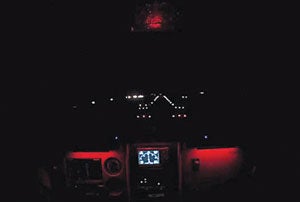

(March 2012) When I opened my eyes, an immediate instrument scan of the Remos GX‘s Dynon PFD revealed that we were in a steep climb and right bank, losing airspeed. As I made the scan, I simultaneously took the controls and initiated recovery from the unusual attitude in which my instructor, First Landings Aviation‘s Chris Esposito, had placed us. This flying by sole reference to instruments was turning out to be quite the eye-opener for me. For one thing, I was surprised to learn that when under the hood with my eyes closed I could make only a blind guess at what the airplane was doing — my usual “Spidey senses” couldn’t tell me the answer. Not only did the hood work show me how relying on the instruments versus the senses can significantly improve the chances of keeping things from going bad fast in the event of an inadvertent foray into IMC, but it also gave me an added layer of awareness about the importance of controlling the airplane as precisely as possible during my usual day-VFR flying, even on the best of clear days. The focus required to keep the instrument scan moving gave me a hint at the more relaxed approach with which I had been flying headings, for example.
It had been just a little more than a year after receiving my Sport Pilot certificate when I had decided to pursue the Private certificate and had begun ticking off the necessary aeronautical requirements. And truthfully, it always had been part of my plan to acquire at least some of the required hood work and night-VFR training, even if I decided to remain a sport pilot. The Sport Pilot certificate suited my type of flying, after all — recreational, local flights in light airplanes — but I reasoned that entering that training into my logbook could only be a good thing.

