













Register

Technicalities: That Reminds Me

Gemini Sparkle

Key Takeaways:

  • The article recounts real-world aviation emergencies, including a successful turnback by a Long-EZ pilot and the author's own harrowing experience with faulty homemade mufflers leading to partial engine failure and a cockpit fire.
  • It explains the Coanda Effect, describing it as the tendency of a high-velocity fluid jet to adhere to a nearby surface, and provides examples of its application in aeronautics, such as blown wings and NOTAR helicopter systems.
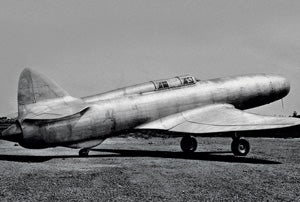
  • The author delves into the history of Henri Coanda and the "motorjet" engine concept, a transitional propulsion system that combined a reciprocating engine driving a compressor with jet-like exhaust, ultimately proving impractical compared to pure jet designs.
See a mistake? Contact us.

There used to be a Grumman Albatross — a 2,800 hp, 28,000-pound flying boat — at the airport where I keep my airplane. Its occasional takeoffs began with a growl echoing among the hangars and swelling to a smooth, leonine roar. I would gaze after the straining sound as it faded eastward. Nothing. I would always think, “There, finally, it’s happened; he put it down in the gravel pits.” And then at last the tip of the fin would appear, and the wing and finally the hull would rise slowly above the buildings in the middle distance. I never saw so much noise yield so little vertical motion.

Last week, when I was at the airport working on my airplane, I heard the sound of an airplane taking off and I turned to watch, as I always do, partly from curiosity and partly just in case. This time it was a Long-EZ that was taking off, and it was well above the trees and the hangars when I first saw it. But then its engine seemed to lose power, then regain it, then lose it again. The airplane was about 300 feet above the ground, I think, and not far past the departure end, when the pilot made the decision to turn back. He did a good job, banking steeply, keeping the nose down, rolling smoothly from a 230-degree right turn to a 50-degree left one. When he disappeared behind the hangars, it was evident that he would make the runway comfortably.

Peter Garrison

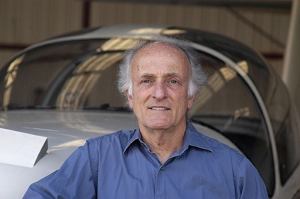
Peter Garrison taught himself to use a slide rule and tin snips, built an airplane in his backyard, and flew it to Japan. He began contributing to FLYING in 1968, and he continues to share his columns, ""Technicalities"" and ""Aftermath,"" with FLYING readers.

Ready to Sell Your Aircraft?

List your airplane on AircraftForSale.com and reach qualified buyers.

List Your Aircraft
AircraftForSale Logo | FLYING Logo
Pilot in aircraft
Sign-up for newsletters & special offers!

Get the latest stories & special offers delivered directly to your inbox.

SUBSCRIBE
