











Register

Cirrus Receives First Ever Nall Safety Award
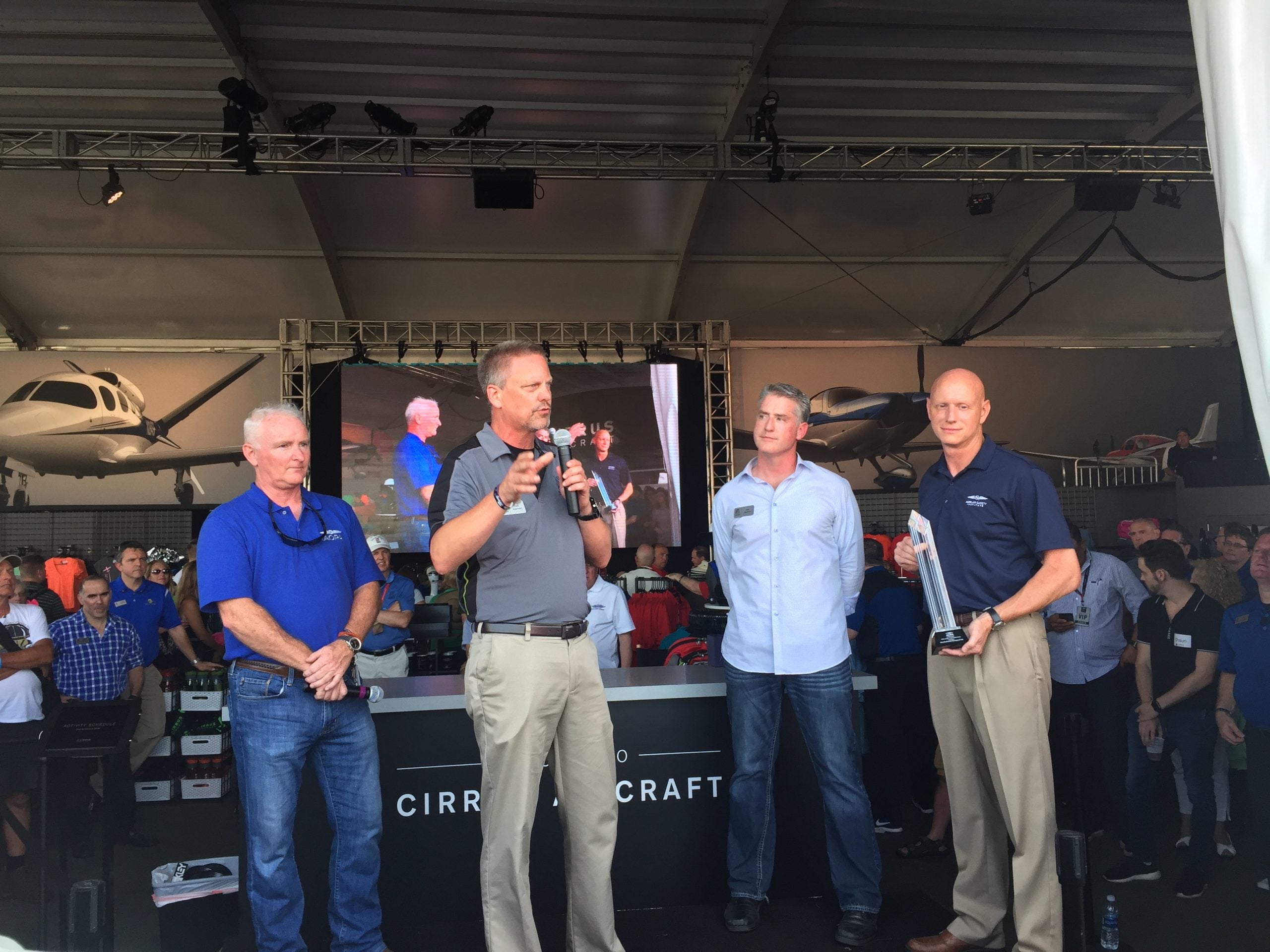
From left to right: AOPA President Mark Baker, Cirrus CEO Dale Klapmeier, Cirrus' Pat Waddick and ASI's George Perry talk about Cirrus' commitment to safety at Oshkosh this week. Stephen Pope
Gemini Sparkle

Key Takeaways:

  • Cirrus Aircraft received the inaugural Joseph T. Nall Safety Award for its significant efforts to reduce fatal accidents among its aircraft.
  • Initially, despite equipping aircraft with the Cirrus Airframe Parachute System (CAPS), fatal accidents persisted due to pilots not deploying the parachute in emergencies.
  • Cirrus addressed this through the "Cirrus Approach" training program, which educated pilots on when to deploy CAPS, and by cultivating a culture that encouraged and celebrated its use.
  • These initiatives dramatically increased CAPS deployments and led to a substantial reduction in fatal accidents, with Cirrus's accident rate now less than half the industry average.
See a mistake? Contact us.

The AOPA Air Safety Institute (ASI) recognized Cirrus Aircraft’s efforts to stem the tide of fatal accidents by awarding the Duluth, Minnesota, company the first ever Joseph T. Nall Safety Award.

With the SR20 and SR22, Cirrus became the first mainstream manufacturer to deliver products from the factory with a rocket-propelled airframe parachute as an integral part of the aircraft design. If the pilot found himself or herself in a dire situation — airframe icing, engine failure at night or even a flight control failure — the trusty Cirrus Airframe Parachute System (CAPS), with an easy-to-reach deployment handle in the cabin ceiling, sat there ready to save lives when needed. The system worked well, many times.

But there were other fatal Cirrus accidents that left the aircraft builder and safety experts scratching their heads, wondering why the pilot failed to deploy the parachute. At its worst in 2011, Cirrus aircraft were involved in 16 fatal accidents. The company realized it was time for action.

The key to changing the Cirrus’ accident record focused on a type-specific training program called the Cirrus Approach that taught pilots to decide when to use the Cirrus Airframe Parachute System (CAPS), long before it was needed, similar to the pre-takeoff briefings conducted by professional pilots. At the same time, the company, working closely with the Cirrus Owners and Pilots Association (COPA), set out to create a culture in which pilots who pulled the chute were applauded — not criticized or second-guessed — for their actions.

The results have been nothing short of spectacular, on par with some of the dramatic improvements in the airline world. The number of CAPS pulls in 2014 alone quadrupled as a result of the new training. In 2015, with more than 6,000 Cirrus aircraft flying, the number of fatal accidents involving the aircraft builder’s products fell to its lowest level since 2001, when fewer than 300 of the aircraft were flying.

“Cirrus has doubled down on safety, working with its owners group and making investments in training and transition courses, to lower the accident rate for Cirrus aircraft to less than half the industry average,” said ASI Senior Vice President George Perry.

Rob Mark

Rob Mark is an award-winning journalist, business jet pilot, flight instructor, and blogger.

Ready to Sell Your Aircraft?

List your airplane on AircraftForSale.com and reach qualified buyers.

List Your Aircraft
AircraftForSale Logo | FLYING Logo
Pilot in aircraft
Sign-up for newsletters & special offers!

Get the latest stories & special offers delivered directly to your inbox.

SUBSCRIBE



