











Empty Weight Empty weight is defined as the total weight of an aircraft including all fixed ballast, unusable fuel, undrainable oil, total quantity of engine coolant and total quantity of hydraulic fluid, and excluding crew, payload, usable fuel and drainable oil.
Everything Explained: Weight and Balance

Key Takeaways:
- The article defines various aircraft weight categories, including Empty Weight, Basic Operating Weight, and Useful Load, with the Maximum Allowable Zero Fuel Weight (MZFW) serving as a critical structural limit for fuselage weight to prevent destructive wing-bending stress.
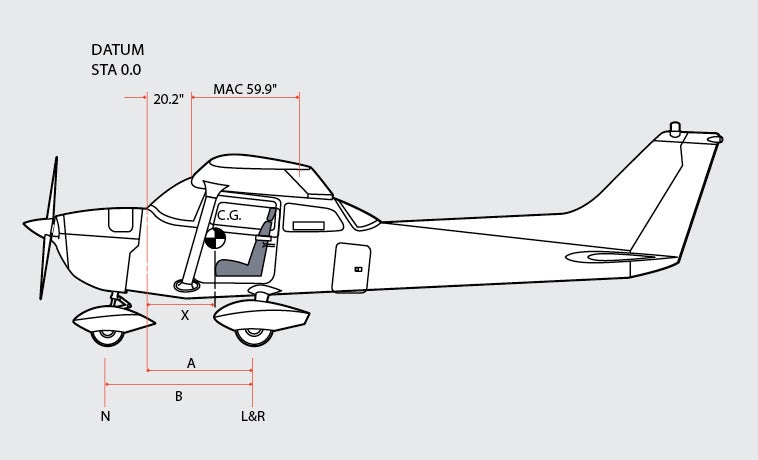
- Aircraft balance is determined by calculating the Center of Gravity (CG) using a system of datum, arm (distance from datum), and moment (weight x arm); this CG must remain within specified forward and aft limits, often expressed as a percentage of the Mean Aerodynamic Chord (MAC), for safe flight operations.
Key takeaways sponsored by Aviator Pro | Start Your Training ->
See a mistake? Contact us.

