











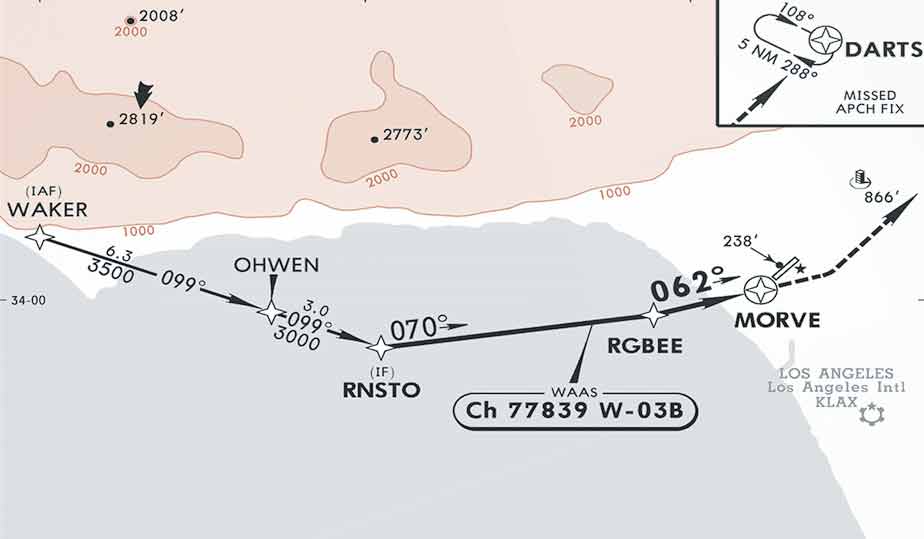
The RNAV GPS Z approach to Runway 3 at Santa Monica is so new (April 2017), many pilots might not yet even be aware of its existence. (Two additional approaches to SMO were commissioned at the same time.) This new approach comes with a handful of restrictions, many of which are significant enough to demand a pilot closely scrutinize the approach plate before the first attempt. Expect speed, climb, approach minimums and time-of-day restrictions, just for starters. It’s also an LP, not an LPV, approach, which translates into a more traditional non-precision-approach procedure. It’s worth noting the prevailing winds are coming from the west, putting the airplane in a tailwind at the completion of the approach.
Chart Wise: Training and Technique

Key Takeaways:
- The RNAV GPS Z approach to Santa Monica Runway 3, introduced in April 2017, is an LP (non-precision) approach characterized by numerous significant restrictions.
- Key limitations include its prohibition at night, specific missed approach speed and nonstandard leg requirements, variable minimums based on climb capability, and an offset final approach course.
- Pilots must meticulously review the approach plate due to its complexity, which involves converting climb rates and addressing potential safety concerns for single-engine aircraft flying at low altitude over water.
Key takeaways sponsored by Aviator Pro | Start Your Training ->
See a mistake? Contact us.

