











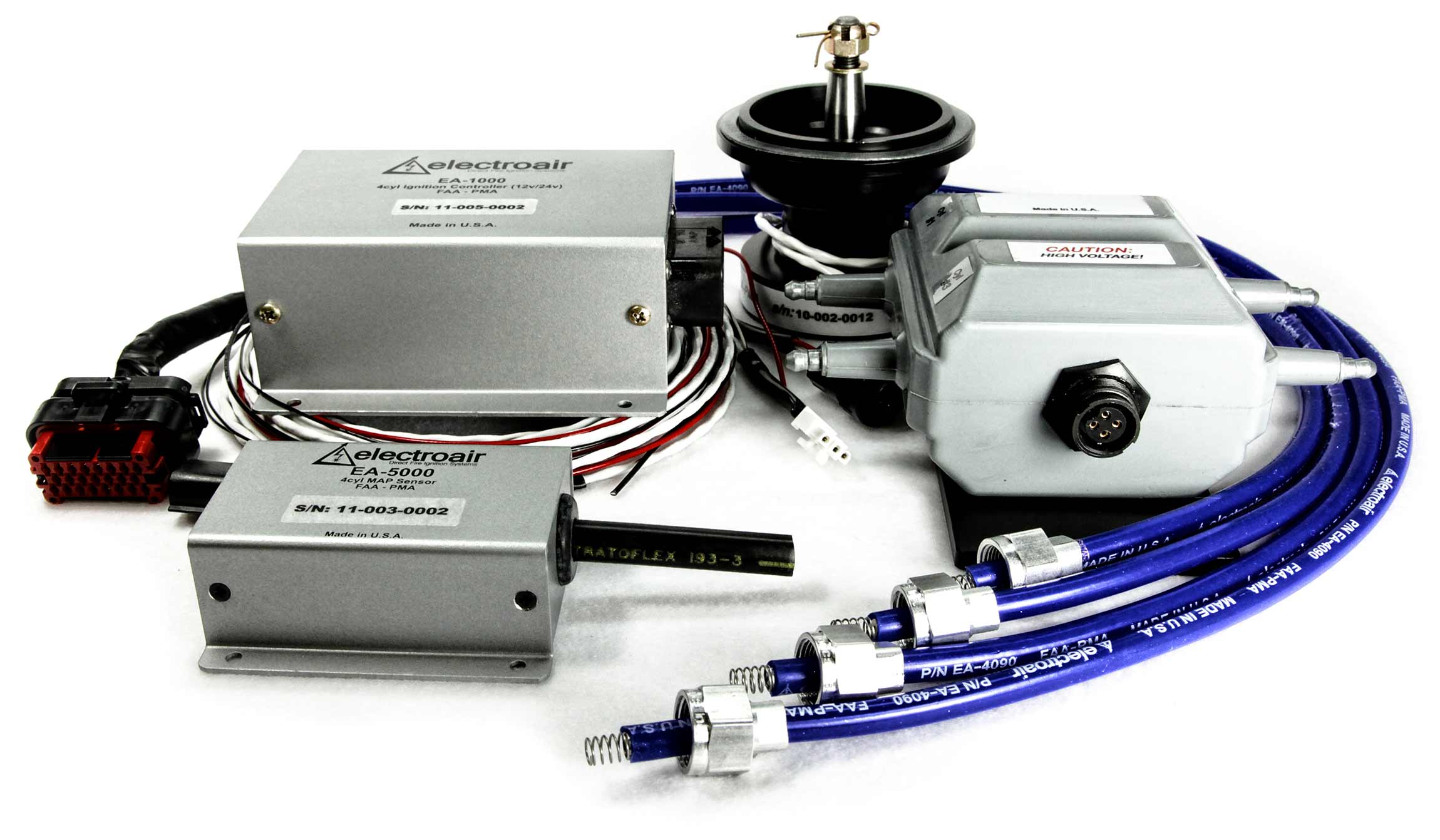


Since the introduction of the internal combustion engine, engineers and entrepreneurs alike have searched for ways to squeeze more horsepower from each gallon of fuel. Despite those efforts, the traditional two-magneto system that provides the spark for combustion in an aircraft piston engine has remained essentially unchanged since World War II. In pairs, magnetos have proved reliable when properly maintained. As mechanical devices, however, their disadvantage is many moving parts subject to failure, made worse when an engine is exposed to a wide variety of temperatures.

How it Works: Electronic Ignition
Key Takeaways:
- Traditional aircraft magnetos are an outdated, mechanically complex ignition system that lacks adaptability to changing atmospheric conditions, leading to inefficient combustion and weaker sparks compared to modern alternatives.
- Electronic Ignition (EI) systems offer enhanced reliability due to fewer moving parts, adapt ignition timing in flight for optimal efficiency, and produce a significantly more powerful spark for superior combustion.
- Implementing an EI system, now available for mainstream aircraft via STCs, results in substantial benefits such as improved fuel economy (1-2 GPH savings), increased cruise speed (5-7 knots), and easier hot engine starts.
See a mistake? Contact us.
