











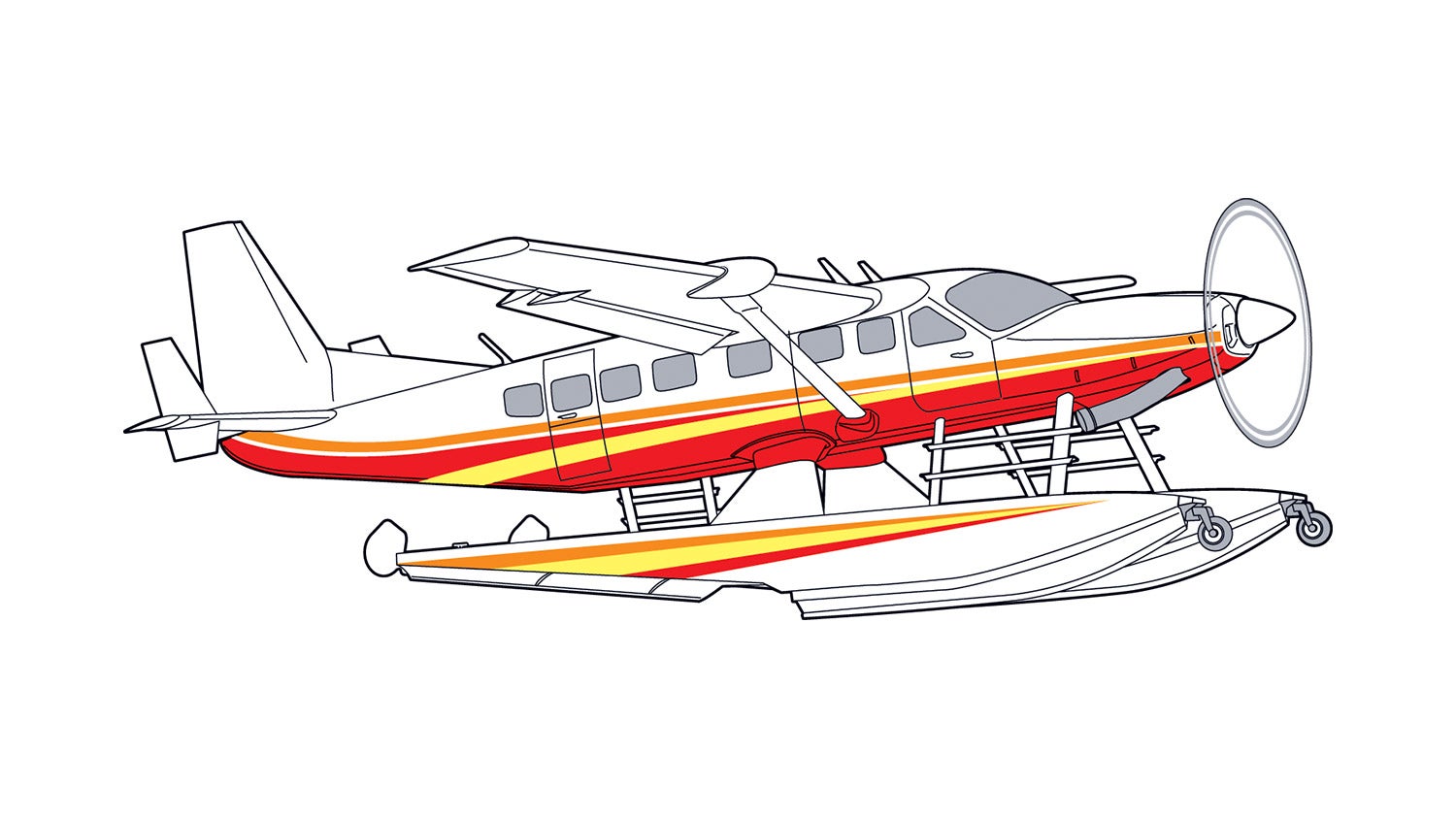
Floats look very much like small boats slung beneath the fuselage of an aircraft in place of the original wheels and landing-gear struts. Adding floats transforms a land-based machine into a multipurpose recreational water vehicle, opening the door to thousands of small bodies of water not accessible by traditional aircraft. Floatplanes also serve as vital lifelines to remote communities as their only source of food, water and two-way transportation.
How Seaplane Floats Work

Key Takeaways:
- Aircraft floats convert land-based planes into versatile water vehicles, crucial for recreation and accessing remote areas, available as amphibious (land and water) or straight (water-only) types.
- Floats are designed with multiple internal compartments for structural integrity and high buoyancy (exceeding FAA requirements by 80%), necessitating pilots to regularly remove any accumulated water.
- Operating floatplanes involves specific considerations like using specialized "climb props" for takeoff (leading to slower cruise speeds), diligent post-flight cleaning in saltwater to prevent corrosion, and safety systems for amphibious gear management to prevent landing mishaps.
Key takeaways sponsored by Aviator Pro | Start Your Training ->
See a mistake? Contact us.

