













Register

When Reverse Sensing Already Is

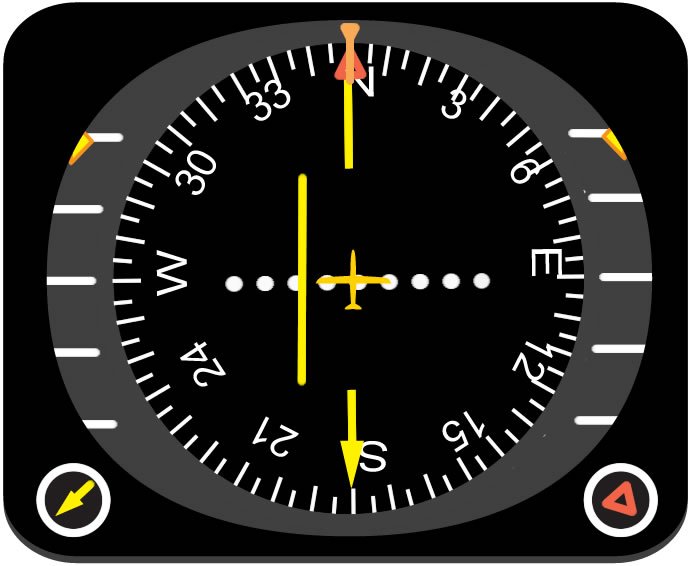
Many pilots struggle to properly use an HSI when flying a localizer. If youre inbound to a VOR on a given course, pass the station and proceed outbound, you dont change the OBS, right? Likewise, when outbound on a localizer, dont change the OBS, HSI or not. So, similarly, if youre flying the front course-inbound or past the runway-you select the front course by convention for situational awareness, even though a localizer doesnt care where the OBS is.

Gemini Sparkle

Key Takeaways:

  • For localizer front courses, set the HSI or OBS to the front course for situational awareness, irrespective of direction.
  • When flying a localizer back course, always set the indicator's course selector (OBS or HSI) to the *front course* of the runway.
  • On a back course, a conventional VOR/LOC indicator requires correcting by turning *away* from the deviation needle, whereas an HSI automatically provides reverse sensing, allowing pilots to steer *towards* the depicted CDI.
  • Regardless of the indicator type (conventional or HSI), autopilots must be engaged in a "back course" mode for proper reverse sensing on a back course approach.
See a mistake? Contact us.

Many pilots struggle to properly use an HSI when flying a localizer. If you’re inbound to a VOR on a given course, pass the station and proceed outbound, you don’t change the OBS, right? Likewise, when outbound on a localizer, don’t change the OBS, HSI or not. So, similarly, if you’re flying the front course—inbound or past the runway—you select the front course by convention for situational awareness, even though a localizer doesn’t care where the OBS is.


Ready to Sell Your Aircraft?

List your airplane on AircraftForSale.com and reach qualified buyers.

List Your Aircraft
AircraftForSale Logo | FLYING Logo
Pilot in aircraft
Sign-up for newsletters & special offers!

Get the latest stories & special offers delivered directly to your inbox.

SUBSCRIBE