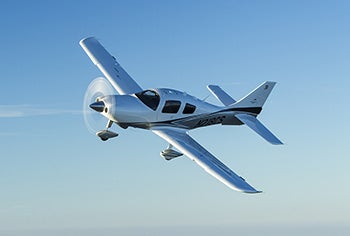
Cessna's TTx is powerful, sleek and high-flying.
But wait — they forgot to retract the gear!
Key Takeaways:
Historically deemed essential for high-speed aircraft, the performance advantage of retractable landing gear is now less clear, with modern fixed-gear designs and homebuilts often achieving comparable speeds due to improved aerodynamics and other design factors.
Effective fixed landing gear designs, utilizing components like thin steel legs and well-faired wheel pants, can significantly reduce aerodynamic drag, challenging the assumption that retractables are always superior for speed.
Landing gear serves to cushion impact and dissipate energy; advanced systems like oleo struts offer superior shock absorption and bounce prevention compared to simpler spring-only designs.
The decision between retractable and fixed gear involves trade-offs in manufacturing, maintenance, and insurance costs versus perceived aerodynamic gains, with the author admitting a personal aesthetic bias towards retractables despite these practical considerations.
“Landing gears are made retractable in all modern high-speed airplanes. The drag of fixed ‘under-carriages’ used in old-type, and still in small and slow airplanes, is avoided in this manner.”
Thus wrote Sighard Hoerner, the great compiler of drag data, in 1951.
CREATE A FREE ACCOUNT
Sign up to keep reading
Create a free account to continue. Already a member? Sign in below.
Peter Garrison taught himself to use a slide rule and tin snips, built an airplane in his backyard, and flew it to Japan. He began contributing to FLYING in 1968, and he continues to share his columns, ""Technicalities"" and ""Aftermath,"" with FLYING readers.