













Distracted To Death

The first rule of aviation is to ‘fly the airplane,’ even in the face of distractions.

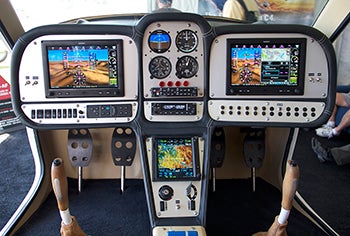
** Flight Designs C4**
Gemini Sparkle

Key Takeaways:

  • The maxim "fly the airplane" emphasizes that a pilot's primary focus must always be on controlling the aircraft and maintaining situational awareness, regardless of other challenges or distractions.
  • Historic accidents, such as Eastern Airlines Flight 401, illustrate how crew preoccupation with non-critical issues (e.g., a landing gear light) can lead to a loss of basic flight monitoring and catastrophic outcomes.
  • A recent Cessna 414 accident further highlights the dangers of distraction, where a pilot, focused on a non-critical radio anomaly and potentially impaired, stalled during a landing approach due to a failure to maintain airspeed and angle of attack.
  • Aviation safety guidelines recommend proactively managing distractions during critical flight phases, recognizing potent distracters, and prioritizing the core task of aviating to prevent similar accidents.
See a mistake? Contact us.

“Fly the airplane” is a time-honored maxim among pilots at all experience levels. It’s something that flight instructors should drill into their students from Day One, and which often is forgotten at some point in an accident sequence. The idea is that—no matter what challenge we may be facing—a flight’s successful outcome depends on keeping the dirty side down and the aircraft headed where you want it to go. The corollary is that we can’t let distractions divert our attention from the basic task of aviating.

A poster-child accident highlighting the constant, basic need to fly the airplane comes courtesy of Eastern Airlines Flight 401, a nearly new Lockheed L-1011-1 TriStar, which impacted the Florida Everglades on December 29, 1972, killing 101 passengers and crew. Seventy-five people survived.


While preparing for landing at the end of a scheduled flight from New York to Miami, the flight crew became preoccupied with a failed nose landing gear indicator light. While his crew trouble-shot the problem, the captain bumped the yoke on the aircraft, causing the autopilot to go into control-wheel steering (CWS) mode in the pitch axis. The yoke was bumped nose down, allowing a slight descent to begin once the autopilot’s CWS mode engaged at the new pitch angle. Because no one on the flight deck was monitoring the airplane’s flight path, the altitude loss was not noticed.

Eastern Flight 401 certainly was not the first time an airplane crashed because its crew was distracted. There’s a much more recent accident in which cockpit distraction played a role.

Background

On January 18, 2023, at 1307 Pacific time, a Cessna 414 was destroyed when it stalled and spun before colliding with terrain while maneuvering to land near Modesto, California. The solo instrument-rated commercial pilot (male, 80) was fatally injured. 

The airplane departed Runway 10L at Modesto City-County Airport-Harry Sham Field (KMOD) at 1259. Data from ADS-B show the airplane climbed to 3200 feet pressure altitude (PA) as it made a right turn and departed to the northwest. At 1301, Modesto tower instructed the pilot to contact approach control. The pilot responded that he was switching frequencies, but his subsequent radio transmissions were on the tower frequency. The pilot made several more transmissions indicating his radio was not changing frequencies. The tower then asked the pilot if he wanted to return to KMOD, which he did. The pilot was then instructed to make a left 180-degree turn and enter a left downwind pattern for Runway 28R.

The airplane made a left turn to the southeast and paralleled the runway about three miles west of the airport before descending and flying a non-standard traffic pattern for Runway 28R. At 1305, ADS-B data showed the airplane had descended to a PA of about 1500 feet (about 1400 feet agl) and slowed to a groundspeed of 96 knots, and was abeam the Runway 28R threshold. After indicating he had the runway in sight, the tower cleared the pilot to land. The airplane then made a left base turn directly toward the runway threshold.

During the left base turn, the airplane angled further left toward a point about 1000 feet beyond the Runway 28R threshold at a groundspeed of about 90 knots and continued to descend until it reached 200 feet PA (about 100 feet agl) about 0.5 miles from the runway. The airplane then entered a right turn to about a 090-degree heading before it started a left turn to the north. During the left turn, groundspeed decreased from about 72 knots to 53, and altitude had dropped to 100 feet PA when the last ADS-B return was recorded at 1306:56.

Investigation

The airplane impacted soft terrain and was resting about 80 degrees nose-down on a 240-degree heading. Both the left and right engines and propellers were fully buried, with just the aft portions of the engines at ground level. Both the left and right wings were impact-separated near the outboard edges of the wing flaps on each wing. The flap system was observed with the left flaps in the extended position and the right flaps impact-damaged. The landing gear was extended.

All major structural components of the airplane were identified at the accident site. Post-accident examination of the airframe and left engine revealed no evidence of any pre-impact mechanical malfunctions or failures that would have precluded normal operation.

Dash camera video showed the final seconds of the flight. The video showed the airplane’s bank angle increase, the nose drop and the airplane enter a near-vertical left spin. Another witness observed the airplane’s departure and the flight’s final moments. He reported the engines sounded normal as the airplane departed and returned, and he heard the engines’ rpm increase as the airplane descended in the spin.

The airplane’s annual inspection was completed at KMOD on January 4, 2023, and it remained at KMOD until the pilot picked it up on the day of the accident. Records indicate the airplane was fueled with 73.5 gallons of 100LL avgas before the accident flight.

Data recovered from an engine monitor generally showed the #1 engine produced higher performance numbers than the #2 powerplant during the accident flight. The disparity was more evident when the data reflected both engines were operating at lower power settings. No anomalous data was observed when viewing the data for each engine individually.

Toxicology testing performed by the FAA detected the sedating antihistamine, diphenhydramine, commonly marketed as Benadryl. According to the FAA, “you should not fly for 60 hours after taking the last dose” of Benadryl.

Probable Cause

The NTSB determined the probable cause(s) of this accident to include: “The pilot’s exceedance of the airplane’s critical angle of attack and failure to maintain proper airspeed during a turn to final, resulting in an aerodynamic stall and subsequent impact with terrain. Contributing to the accident was the pilot’s distraction due to a non-critical radio anomaly.”

It’s unclear why the pilot was unable to change frequencies. Presumably, he was able to obtain the ATIS at KMOD, talk to ground control and to the tower, each of which are on a separate frequency. We don’t know what avionics were installed. The problem could have been with the airplane’s audio panel. It could have been something else, including work performed during the just-completed annual inspection. At any rate, it’s hard to fault the pilot’s decision to return to the departure airport.

But it all started to fall apart as the airplane maneuvered to land. Instead of extending the downwind pattern leg well beyond the Runway 28R threshold, the pilot turned toward it at a relatively low altitude, but at a healthy airspeed. Then, according to the NTSB, “The airplane’s airspeed decreased to about 53 knots (kts) during the left turn and video showed the airplane’s bank angle increased before the airplane aerodynamically stalled and impacted terrain.”

The NTSB’s probable cause statement correctly identified distraction as a contributing factor. It also correctly stated he was distracted by “a non-critical radio anomaly.”


Preventing Cockpit Distractions

Distractions and interruptions can severely compromise flight safety if they occur during critical phases of flight,” according to the FAA’s FAASTeam fact sheet, Managing Distractions. Among other actions, the fact sheet recommends:

  • Recognize that conversation is a powerful distracter.
  • Recognize that head-down tasks greatly reduce your ability to monitor the status of the aircraft.
  • Schedule or reschedule activities to minimize conflicts, especially during critical phases of flight.
  • When two tasks must be performed at the same time, avoid letting your attention linger too long on either task.
  • Remember that your job as pilot in command is to fly the aircraft. That is your primary focus.
  • Treat interruptions as red flags.

Other FAASTeam fact sheets are available online.

Ready to Sell Your Aircraft?

List your airplane on AircraftForSale.com and reach qualified buyers.

List Your Aircraft
AircraftForSale Logo | FLYING Logo
Pilot in aircraft
Sign-up for newsletters & special offers!

Get the latest stories & special offers delivered directly to your inbox.

SUBSCRIBE