











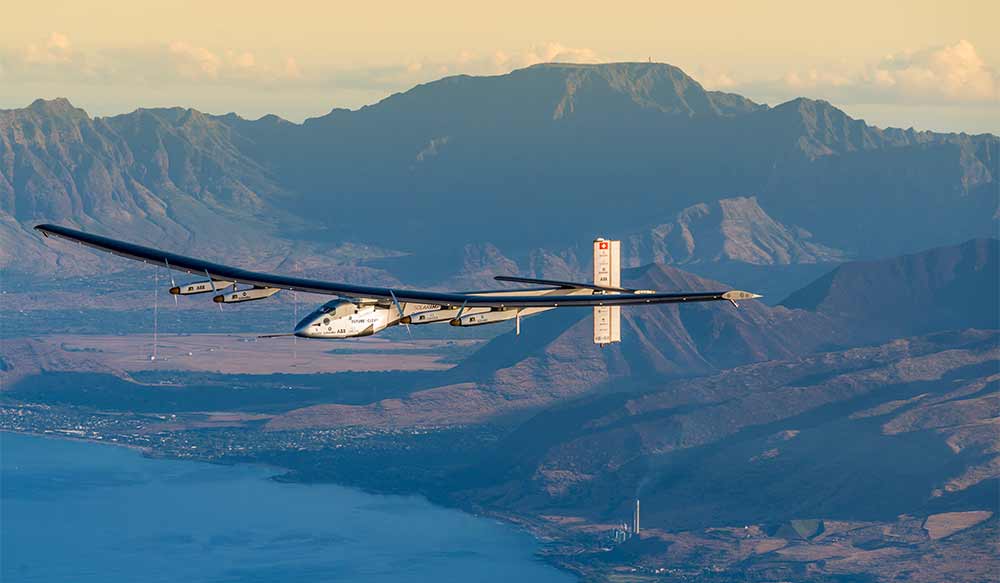
Critics thought flying a solar-powered aircraft around the world was impossible, but Nova’s PBS documentary premiering January 31 chronicles the successful adventure from beginning to end. The Solar Impulse II began its around-the-world flight on March 9, 2015, following 13 years of work by aerospace engineers, meteorologists and flight controllers who designed, built and flew the airplane. The aircraft carried no fuel, only an array of solar panels used to charge the on-board lithium-ion polymer batteries using the rays of the sun.
Nova: The Impossible Flight

Key Takeaways:
- The Solar Impulse II, a solar-powered aircraft, successfully completed a historic around-the-world flight, defying critics who deemed it impossible.
- This groundbreaking achievement relied on 17,000 ultrathin solar cells and high-capacity lithium-ion polymer batteries to power the aircraft without any fuel, even through hours of darkness.
- Piloted by Bertrand Piccard and Andre Borschberg, the journey set a new world solo flight record of five non-stop days between Japan and Hawaii, despite facing challenges such as battery damage.
Key takeaways sponsored by Aviator Pro | Start Your Training ->
See a mistake? Contact us.

