











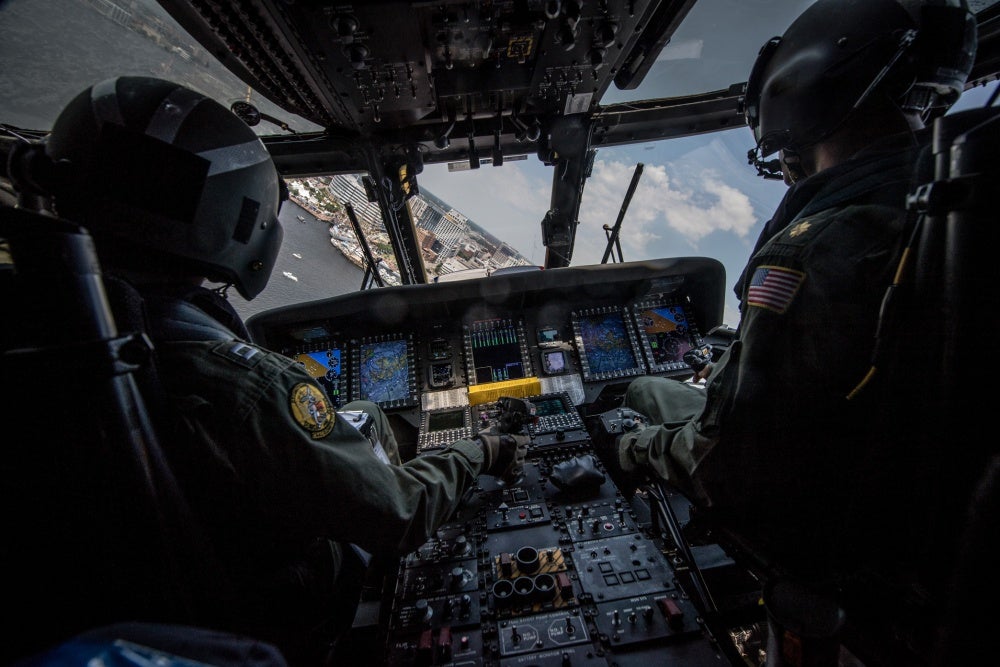
U.S. Coast Guard Search and Rescue (SAR) pilots provide assistance to individuals in distress in maritime environments, and also perform drug interdiction and national security missions. The HH-65 Dolphin and MH-60 Jayhawk helicopters are the Coast Guard’s primary Search and Rescue platforms; fixed-wing aircraft are also utilized. Lt. Cmdrs. Mike Baird and Ron Bledsoe, both Dolphin SAR pilots currently assigned to the Office of Aviation Forces at the U.S. Coast Guard headquarters in Washington, D.C., outlined the demanding path to becoming a Coast Guard Search and Rescue pilot. First, Baird says, “You have to earn your Coast Guard wings.”
Coast Guard Search and Rescue Pilot Careers

Key Takeaways:
- Becoming a U.S. Coast Guard Search and Rescue (SAR) pilot requires a bachelor's degree, an officer's commission, and a demanding training path that includes primary flight school and specialized SAR qualifications.
- SAR pilots operate HH-65 Dolphin and MH-60 Jayhawk helicopters for missions ranging from maritime distress assistance to drug interdiction and national security.
- Maintaining SAR proficiency necessitates rigorous, ongoing training in challenging environments, attendance at advanced rescue schools, and annual recurrency requirements like survival and egress training.
- Coast Guard SAR pilots earn competitive salaries based on rank and service time, supplemented by Aviation Career Incentive Pay, and possess highly transferable skills leading to diverse post-service aviation careers.
Key takeaways sponsored by Aviator Pro | Start Your Training ->
See a mistake? Contact us.

