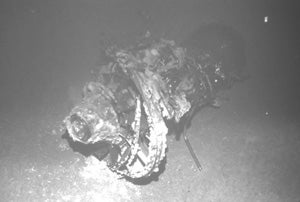
** Part of the wreckage of Air France 447
found on the floor of the Atlantic.**
Key Takeaways:
Air France 447 did not experience a "deep stall" but was rather in a conventional stalled glide, contrary to widespread discussion.
A true deep stall is a specific, difficult-to-recover condition where the horizontal stabilizer loses pitch control authority due to the wing's turbulent wake, typically associated with T-tailed aircraft.
Flight 447's descent was attributed to the pilots' failure to recognize and recover from a standard stall—which the aircraft was capable of by pushing the nose down—amidst confusing information and turbulence.
The release of preliminary flight data and cockpit voice recorder data from the miraculously recovered “black boxes” of Air France 447 opened the floodgates of press and online discussion. Amid all this chatter, the term “deep stall” often popped up.
Did Air France 447 experience a deep stall?
CREATE A FREE ACCOUNT
Sign up to keep reading
Create a free account to continue. Already a member? Sign in below.
Peter Garrison taught himself to use a slide rule and tin snips, built an airplane in his backyard, and flew it to Japan. He began contributing to FLYING in 1968, and he continues to share his columns, ""Technicalities"" and ""Aftermath,"" with FLYING readers.