













Register

I Learned About Flying From That: When an Engine Explodes

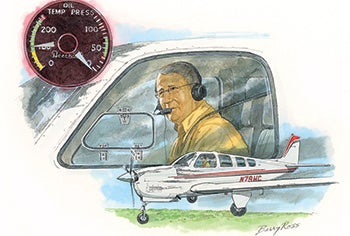
** To see more of Barry Ross' aviation art, go
to barryrossart.com.**
Gemini Sparkle

Key Takeaways:

  • The author experienced a sudden and complete engine failure mid-flight, necessitating an emergency forced landing.
  • During the final approach, the engine violently exploded, filling the cockpit with smoke and oil, yet the pilot successfully landed the aircraft.
  • A split piston caused the oil loss and engine failure, with the pilot's earlier decision to fly at a higher altitude proving crucial for reaching the airport safely against strong hurricane-related headwinds.
See a mistake? Contact us.

A number of years ago, I attended an Aircraft Owners and Pilots Association flight-instructor refresher class as a newly licensed CFI-I. The instructor asked a roomful of about 60 CFIs if anyone had lost an engine and made a forced landing. I have never forgotten that day, when almost half the people in the room raised their hands. Surely this would never happen to me.

On a crisp, clear September morning in 2003, my wife dropped our three cats and me off at the Asheville, North Carolina, airport to fly home to Orlando. My wife much preferred driving 12 hours over flying with us in our A36 Bonanza for the 2:45 flight. I checked the weather, and other than Hurricane Isabel churning 300 miles off the coast of north Florida, skies were clear all the way to Orlando. I would learn later that morning why this was important.


Ready to Sell Your Aircraft?

List your airplane on AircraftForSale.com and reach qualified buyers.

List Your Aircraft
AircraftForSale Logo | FLYING Logo
Pilot in aircraft
Sign-up for newsletters & special offers!

Get the latest stories & special offers delivered directly to your inbox.

SUBSCRIBE