











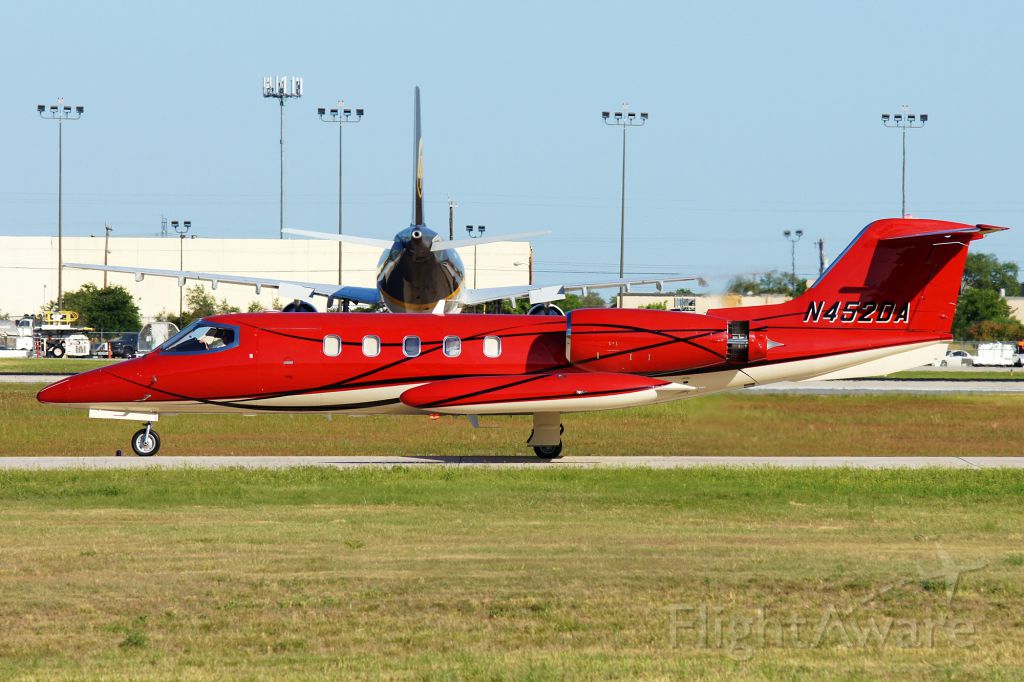
The National Transportation Safety Board’s preliminary report of the May 15 crash of a Learjet 35A at Teterboro Airport in New Jersey looked at the strength of the surface winds during the final moments of the flight. At the time of the accident, winds were reported as 320 at 20 knots gusting to 30, a few scattered clouds at 4,500 feet and visibility of more than 10 miles. The business jet “departed controlled flight” and crashed a half mile from the runway threshold of Runway 1. The NTSB investigation final report expected sometime next year will try to determine precisely why the crew lost control of the aircraft.
Teterboro Winds Just One Likely Factor in Learjet Crash

Key Takeaways:
- The NTSB's preliminary report on the Learjet 35A crash at Teterboro Airport highlighted strong surface winds (320 at 20 knots, gusting to 30) as a significant environmental factor during the flight's final moments.
- The aircraft was executing an ILS Runway 6, circle to land Runway 1 approach, a maneuver made challenging by the strong winds, the aircraft's late departure from the localizer, and the resulting requirement for a tight, low-altitude turn.
- Witnesses described the aircraft banking steeply, with wings "wobbling," before the left wing dropped and it descended, suggesting a potential loss of control or stall during the critical turning phase.
Key takeaways sponsored by Aviator Pro | Start Your Training ->
See a mistake? Contact us.

