











By the fall of 1978 I’d worked for Piper Aircraft in Lakeland, Florida, for three years. I was the assistant chief engineer-technical, which meant I had the people in the structures, aerodynamics, power plants, systems, electrical/avionics and flight-test groups all working for me. At the time, we were working extremely hard to certify the new Piper Cheyenne III. I was, however, also responsible for support of the twin-engine Navajo Chieftain assembled at Lakeland.
ILAFFT: When Paying Attention Pays Off

Key Takeaways:
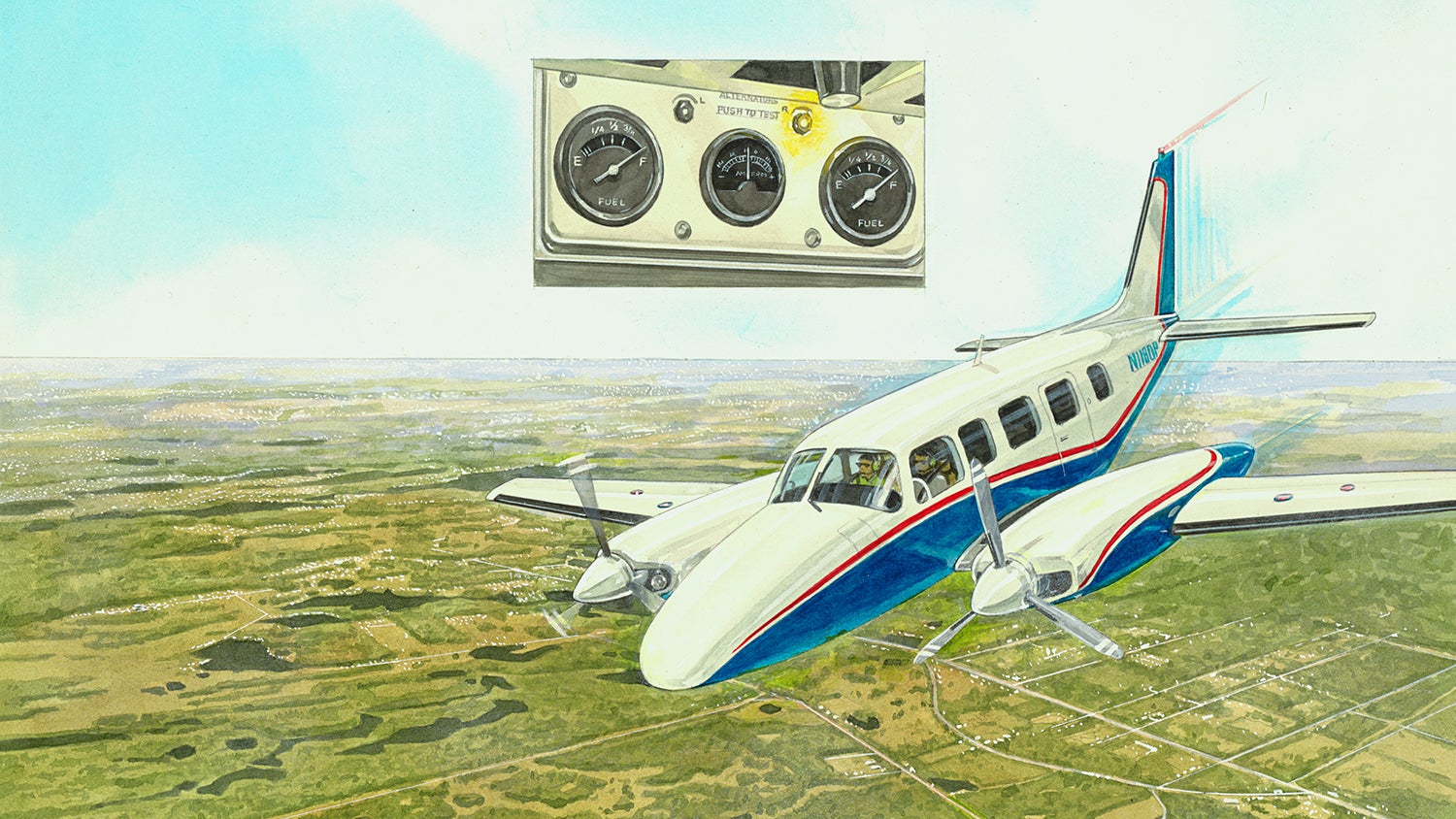
- During a single-engine test flight, the operating engine's alternator failed, leading to a dead battery, loss of electrical power (including radios), and inability to restart the intentionally feathered engine.
- Faced with a high-risk, no-radio, single-engine landing at an uncontrolled airport, the pilots sought an alternative to the precarious situation.
- Recalling technical discussions about prop feathering mechanics, they executed a high-speed dive to successfully unfeather and airstart the previously shut-down engine.
- This allowed for a safe, normal landing and reinforced the importance of situational awareness, attentive listening to expert insights, and led to improved placement of critical warning lights in future aircraft designs.
Key takeaways sponsored by Aviator Pro | Start Your Training ->
See a mistake? Contact us.

