















Register

What’s Space Worth?

Gemini Sparkle

Key Takeaways:

  • The article examines the complex perception of space travel's safety and cost following the Space Shuttle Columbia disaster, noting how statistics can be framed differently and highlighting the program's age and high operational expenses.
  • Attempts to develop new space vehicles through private-public partnerships (e.g., VentureStar, X-34) frequently failed due to insurmountable costs, technical hurdles, or disagreements among partners, raising questions about the future funding and purpose of space exploration.
  • Shifting focus, the article details how Eclipse Aviation rejected the Williams EJ22 engine because the Eclipse jet itself became heavier than intended, not due to the engine's performance failing expectations.
  • It concludes that despite the allure of small jet engines, their inherent limitations regarding weight, high-altitude operation, and fuel consumption make reciprocating engines generally more practical and suitable for most everyday general aviation applications.
See a mistake? Contact us.

On several occasions after the breakup of the Space Shuttle Columbia on February 1st, I found myself in conversations about the safety of the space program. Actually, my knowledge is limited to much lower altitudes and speeds and much more prosaic equipment. On a few occasions, nevertheless, I felt obliged to put in my two cents when someone commented that the Shuttle was obviously unsafe, given its record of one fatality for every 10 or so flights.

It’s hard to define an expected level of safety for something like the Space Shuttle. Considering the extreme difficulty of what it does, it has succeeded very well, though, like Concorde, it has been an economic failure. The appearance of safety depends a lot on the numbers that you select to represent it. The one-in-10 figure sounds awful; if you say one accident per 60 launches it sounds a bit better. But try putting it in terms of passenger miles. A week-long Shuttle flight with seven aboard racks up some 20 million passenger miles, and if you think of 1.2 billion passenger miles per disaster, it starts to sound almost good. That’s the equivalent of 4,000 transcontinental flights of a half-empty 757.
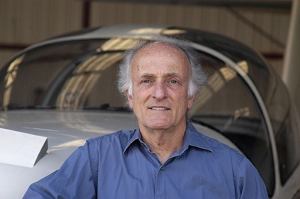

Peter Garrison

Peter Garrison taught himself to use a slide rule and tin snips, built an airplane in his backyard, and flew it to Japan. He began contributing to FLYING in 1968, and he continues to share his columns, ""Technicalities"" and ""Aftermath,"" with FLYING readers.

Ready to Sell Your Aircraft?

List your airplane on AircraftForSale.com and reach qualified buyers.

List Your Aircraft
AircraftForSale Logo | FLYING Logo
Pilot in aircraft
Sign-up for newsletters & special offers!

Get the latest stories & special offers delivered directly to your inbox.

SUBSCRIBE
