













Register

The Very Best Speed to Fly

Gemini Sparkle

Key Takeaways:

  • The article defines the "Carson speed" as an optimal cruising speed for aircraft that balances both speed and fuel economy, rather than just maximizing range, by valuing speed itself in the efficiency calculation (e.g., speed x mpg).
  • While theoretically derived as 1.32 times the best L/D speed, practical factors often lead to a higher actual Carson speed. The "best" speed can also be customized based on a pilot's subjective weighting of speed versus cost.
  • Building on this, Carson developed a universal method, based on Gabrielli and von Kármán's work, to compare the efficiency of all types of conveyances (from airplanes to pedestrians) by normalizing their performance against a theoretical efficiency limit.
  • This robust framework provides a way not only to assess existing vehicles but also to serve as a preliminary design tool for new aircraft, enabling the derivation of design parameters from target efficiency and performance.
See a mistake? Contact us.

I’ve noticed lately that I fly more and more slowly and pay more and more attention to fuel flow. Clearly this behavior is related to the rising cost of fuel; as it goes up, the best speed to fly goes down. But that relationship – speed divided by fuel flow – must be corrected by a scaling effect related to one’s impatience, anxiety regarding disposable income, age, number of children in college and so on. No doubt one could construct a long equation, loaded with fractional exponents whose values would vary from day to day, and whose solution is the reading on my airspeed indicator.

At a first glance you might suppose that by slowing down I was doing nothing more complicated than trying to maximize my airplane’s specific range, or what in common parlance is called its gas mileage. If that is the case I’m not doing a very good job of it, because that number, which is about 25 nautical miles per gallon for Melmoth 2 at 12,000 feet – I usually cruise as high as I can without needing oxygen – is achieved at an indicated airspeed of 100 knots. I’m going slower, but I’m not going that slow.
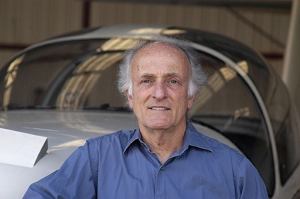

Peter Garrison

Peter Garrison taught himself to use a slide rule and tin snips, built an airplane in his backyard, and flew it to Japan. He began contributing to FLYING in 1968, and he continues to share his columns, ""Technicalities"" and ""Aftermath,"" with FLYING readers.

Ready to Sell Your Aircraft?

List your airplane on AircraftForSale.com and reach qualified buyers.

List Your Aircraft
AircraftForSale Logo | FLYING Logo
Pilot in aircraft
Sign-up for newsletters & special offers!

Get the latest stories & special offers delivered directly to your inbox.

SUBSCRIBE
