











The visual approach slope indicator (VASI) and precision approach path indicator (PAPI) are light systems on the side of a runway threshold that provide visual descent guidance information during approach. Here are the particulars of the different types of path-lighting systems:
Everything Explained: VASI Light Systems

Key Takeaways:
- Visual approach slope indicator (VASI) and precision approach path indicator (PAPI) are runway-side light systems that provide pilots with visual descent guidance for a safe approach and obstruction clearance.
- Two-bar VASI systems offer a single 3-degree glidepath, while three-bar VASIs provide two glidepaths, with the upper one intended for high-cockpit aircraft.
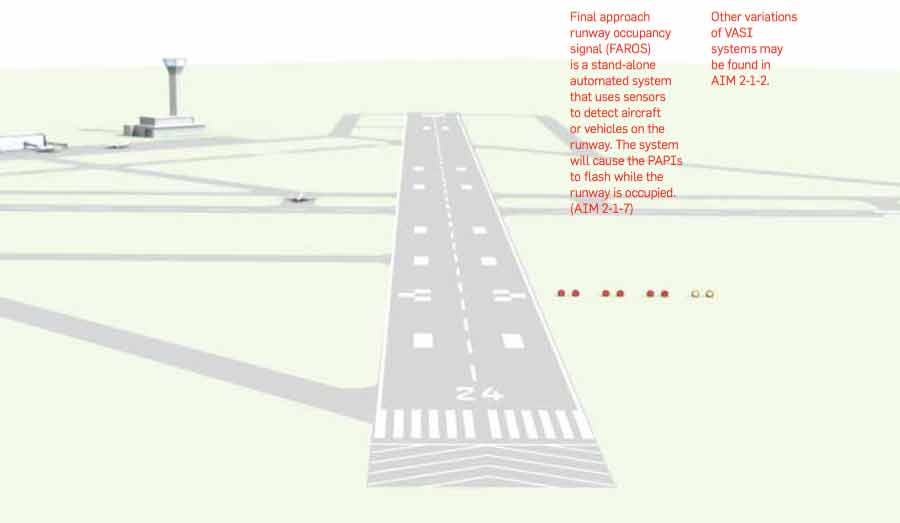
- PAPI systems use a single row of two or four lights, functioning similarly to VASI by indicating the approach path with an effective range of 5 miles by day and 20 miles at night.
- Other systems include Tricolor indicators, which use red, amber, and green lights for below, above, and on-glidepath indications, and Pulsating (PVASI) systems that use steady or pulsating white/red lights to show deviations from the desired glideslope.
Key takeaways sponsored by Aviator Pro | Start Your Training ->
See a mistake? Contact us.

