











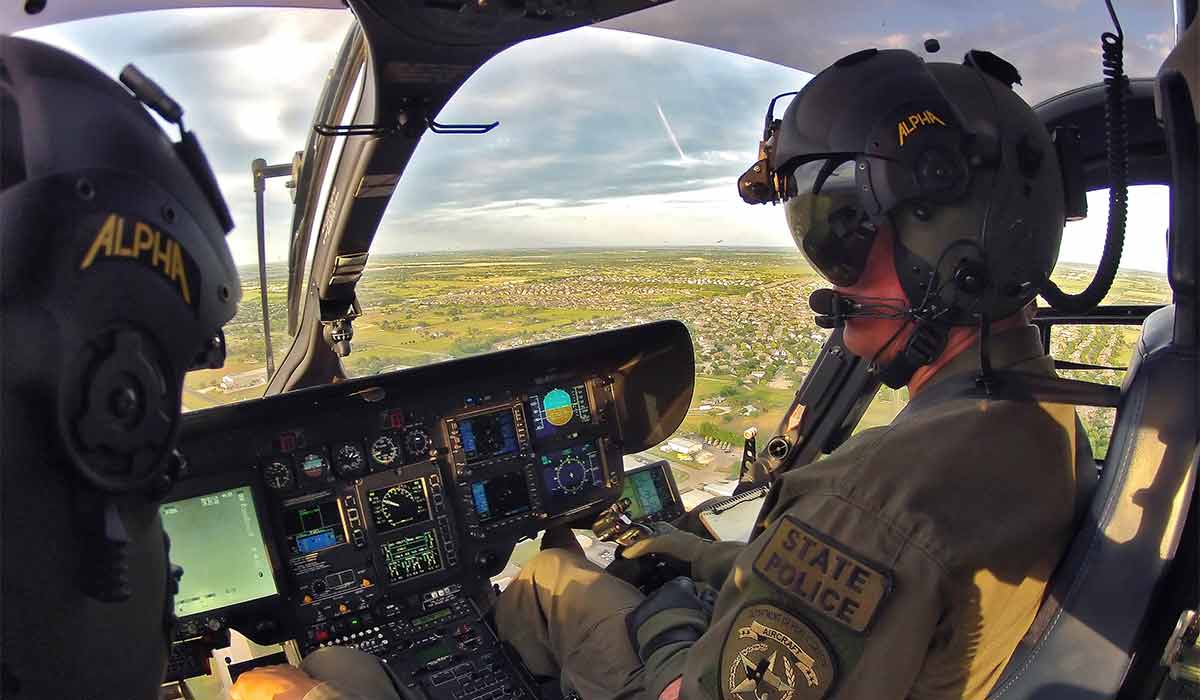
Airborne law enforcement (ALE) officers work within police and other agencies’ aviation units, using aircraft to conduct and assist operations, ranging from routine patrols to search-and-rescue (SAR). The Department of Justice estimates about 350 of the 18,000 law enforcement agencies in the U.S. use airborne assets daily, but many don’t disclose aircraft and personnel numbers for security reasons. Daniel Schwarzbach, a senior officer and helicopter pilot with the Houston Police Department, and executive director/CEO of the Airborne Law Enforcement Association (ALEA), explains the path to these exciting careers.
How to Become an Airborne Law Enforcement Officer

Key Takeaways:
- Airborne law enforcement (ALE) officers utilize aircraft for diverse police operations, including patrols, search-and-rescue, and ground support, with crews typically comprising a pilot and a Tactical Flight Officer.
- Becoming an ALE officer generally requires being a sworn police officer with prior ground patrol experience (often 3-5 years), and while aviation experience is beneficial, departments may provide pilot training for those who commit to service.
- ALE units adhere to accreditation standards, requiring pilots to hold at least a commercial license despite operating under public-use exemptions, and the field is expanding with the integration of Unmanned Aerial Systems (UAS).
Key takeaways sponsored by Aviator Pro | Start Your Training ->
See a mistake? Contact us.

