














Register

Aftermath: Complacency on the Ground and in the Air

Gemini Sparkle

Key Takeaways:

  • A night VFR flight crashed into Superstition Mountain near Phoenix, killing all six occupants, with the NTSB citing pilot complacency and lack of situational awareness as the cause.
  • The accident was significantly influenced by the FAA's controversial 2007 redesign of Phoenix Class B airspace, which lowered the floor and placed a hazardous, unlit mountain just outside the Class B boundary, where VFR pilots often struggled to obtain transit clearances.
  • The incident highlighted systemic complacency, both in the cockpit (e.g., habitual flight paths, lack of modern terrain warnings) and among ground authorities who failed to mitigate the known hazard of the unlit mountain.
See a mistake? Contact us.

In the third week of November 2011, a Rockwell 690 made a night VFR round trip from Safford in eastern Arizona to Falcon Field in Mesa, just east of Phoenix. On the return leg, the pilot turned right immediately after taking off from Falcon’s Runway 04R, remained at 4,500 feet until emerging from under Phoenix Class B and continued direct to Safford.

Two days later, the same pilot made the same 111 nm trip in a different 690, again at night and again under VFR, to pick up several passengers from Mesa. In this case, there were two pilots in the front seats, colleagues in the company that owned the airplane. They swapped positions at Mesa. The turnaround was quick; the 690 departed just 12 minutes after landing. This time, however, the local controller asked the pilot flying to maintain runway heading after takeoff until advised. When the 690 was a little more than a mile from the departure end of the runway, the controller cleared the pilot to begin his right turn. After a brief delay, he again turned east-southeastward and again climbed to 4,500 feet, where he remained until he passed the edge of Class B and began a shallow climb. A few seconds later, the 690 slammed into Superstition Mountain at 190 knots and exploded into fragments and flames.

Peter Garrison

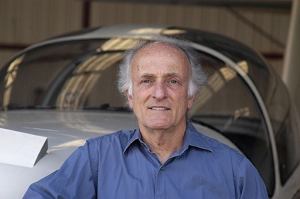
Peter Garrison taught himself to use a slide rule and tin snips, built an airplane in his backyard, and flew it to Japan. He began contributing to FLYING in 1968, and he continues to share his columns, ""Technicalities"" and ""Aftermath,"" with FLYING readers.

Ready to Sell Your Aircraft?

List your airplane on AircraftForSale.com and reach qualified buyers.

List Your Aircraft
AircraftForSale Logo | FLYING Logo
Pilot in aircraft
Sign-up for newsletters & special offers!

Get the latest stories & special offers delivered directly to your inbox.

SUBSCRIBE
