











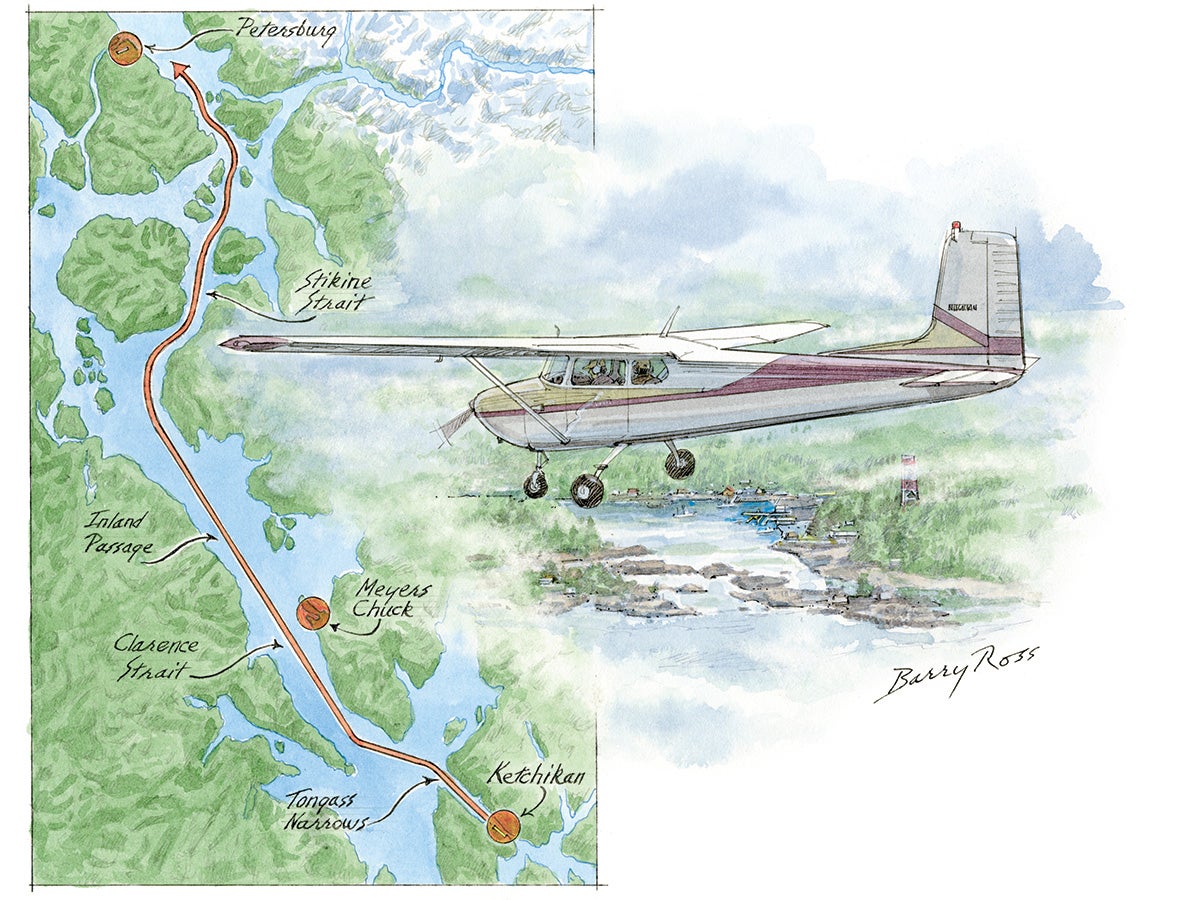
My best friend, Mike, and I woke to the subtle muttering of raindrops and realized that beyond the curtains of our Ketchikan, Alaska, motel room there was only gray, dismal sky. Damn. At that moment a scenario began that could have ended up as an NTSB accident report, starting with unquantifiable indicators and an irrational discussion.
I Learned About Flying From That: 30 Seconds to Impact

Key Takeaways:
- Two VFR pilots in a Cessna 172 made a series of poor decisions, choosing to fly into marginal and worsening weather in Alaska, influenced by external factors and irrational optimism.
- Navigating in extremely low visibility (at times under 1 mile) and low altitude (200 feet above water), they relied on a handheld GPS and manual calculations, further complicated by a forgotten magnetic variation.
- The flight was plagued by critical in-air incidents, including carburetor icing at low altitude leading to a loss of situational awareness, and the near-miss of unseen power lines.
- Despite numerous errors and harrowing moments, they eventually emerged from the hazardous conditions and landed safely, concluding that they had taken immense and unnecessary risks.
Key takeaways sponsored by Aviator Pro | Start Your Training ->
See a mistake? Contact us.

