














Register

The Search for a Fuel-Efficient Aircraft

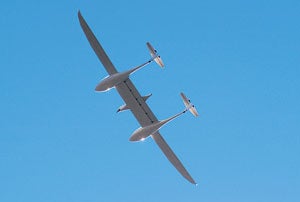
** Despite the huge advantage of four seats,
Pipistrel's purpose-built Taurus G4 barely
edged Stuttgart U's two-seat e-Genius.**
Gemini Sparkle

Key Takeaways:

  • The Green Flight Challenge, organized by the CAFE Foundation, successfully spurred innovation in aviation efficiency, awarding $1.35 million for an electric aircraft that achieved an impressive 400 passenger-miles per gallon.
  • The competition demonstrated the superior propulsive efficiency of electric motors, with the winning Pipistrel Taurus G4 and other electric entrants significantly outperforming conventional aircraft designs.
  • Despite the high efficiency of electric power, the challenge highlighted that the considerable weight and cost of batteries remain a major practical limitation for electric aircraft, particularly concerning payload capacity and scalability.
See a mistake? Contact us.

(January 2012) The news cycle is like a carousel whose riders are ever changing. For a brief moment in September, the Green Flight Challenge swept past: NASA handed a prize of $1.35 million to an airplane that had achieved an efficiency of 400 passenger-miles per gallon. Huh? said the world — and then along came Jen and Angie.

The contest that had produced this surprising but ephemeral result was set in motion by the CAFE (Comparative Aircraft Flight Efficiency) Foundation, which for the past three decades has encouraged innovation and refinement in general aviation with a series of programs and competitions. It started with the CAFE races, efficiency contests that took place in northern California from 1981 to 1990. Based on an evolving formula combining speed, fuel consumption and payload, they had quite an impact: Several airplanes, including Burt Rutan‘s Catbird, were specially designed as CAFE racers. But toward the end it seemed as though the universe of hyperefficient CAFE winners had shrunk to the VariEzes of two monomaniacal modifiers, Gary Hertzler and Klaus Savier.
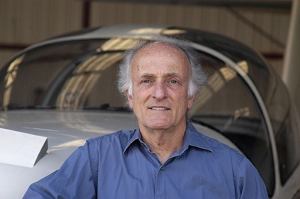

Peter Garrison

Peter Garrison taught himself to use a slide rule and tin snips, built an airplane in his backyard, and flew it to Japan. He began contributing to FLYING in 1968, and he continues to share his columns, ""Technicalities"" and ""Aftermath,"" with FLYING readers.

Ready to Sell Your Aircraft?

List your airplane on AircraftForSale.com and reach qualified buyers.

List Your Aircraft
AircraftForSale Logo | FLYING Logo
Pilot in aircraft
Sign-up for newsletters & special offers!

Get the latest stories & special offers delivered directly to your inbox.

SUBSCRIBE
