
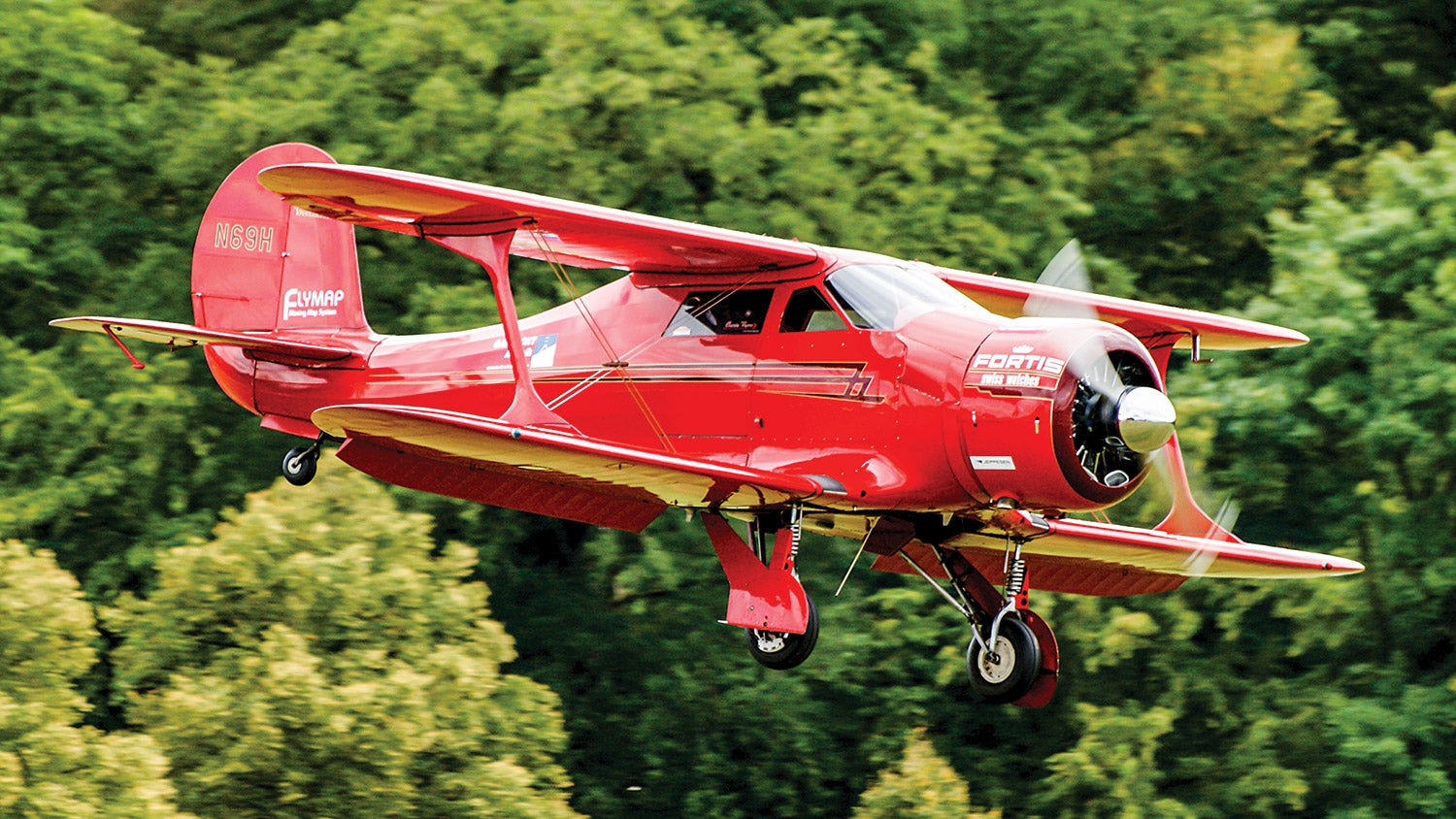
Late in 1932, the newborn Beech Aircraft Co. flew its first product, a five-seat biplane with a 420 hp radial engine and fixed landing gear enclosed in huge fairings. Walter Beech gave it model number 17, since the last model built by the Travel Air company, which he had founded in 1925 with an all-star cast of Clyde Cessna and Lloyd Stearman and sold in 1929 to Curtiss-Wright, had been its 16th.
The Staggerwing was the Climax, and the End, of an Era

Key Takeaways:
- The Beech Model 17, known as the "Staggerwing," was a unique biplane introduced in 1932, distinguished by its lower wing being set ahead of the upper wing, a design likely implemented for improved pilot visibility and to facilitate retractable landing gear.
- Designed by Ted Wells, the Staggerwing incorporated advanced aerodynamic features for its time, including a fully enclosed NACA cowling and GALCIT-developed wing root fairings, resulting in a remarkably low-drag and fluidly streamlined aircraft.
- Despite its high performance, role as a charismatic personnel transport during WWII, and stylish design, the Staggerwing was paradoxically considered "obsolete when new" as it was launched amidst the rise of all-metal cantilever monoplanes that would shape the future of aviation.
Key takeaways sponsored by Aviator Pro | Start Your Training ->
See a mistake? Contact us.