

On a cloudless morning in April of this year, a C-5B transport of the 436th Airlift Wing took off from Dover AFB in Delaware, bound for Ramstein Air Base in Germany on a routine supply mission. The C-5 is the United States Air Force’s largest transport; this one’s takeoff weight was 742,000 pounds, including a quarter-million pounds of fuel. Aboard were 17 people; the crew included three pilots and three flight engineers, collectively representing more than 26,000 hours and 92 years of C-5 flight experience.
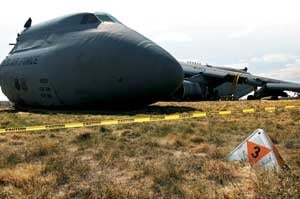
Shortly after takeoff the crew observed an intermittent warning light for an unlocked thrust reverser on the number two engine, the inboard engine on the left side of the aircraft. An unlocked reverser is a potential hazard-there is a chance of unexpected deployment in flight-and so after due deliberation and cross-checks the crew secured the engine and turned back to Dover. They did not declare an emergency, but did request an expedited approach. They anticipated a routine landing, though at a higher than usual weight; they had, after all, three good engines and a perfectly functional aircraft. A few minutes later, the C-5 lay, a mangled wreck, a third of a mile short of the Dover runway. Thankfully fire did not break out and all aboard survived, although some were seriously injured. Newspaper reports the next day hailed the fatality-free crash as a miracle.