











uAvionix Earns Approval for Portable, Low-Power ADS-B Transceiver
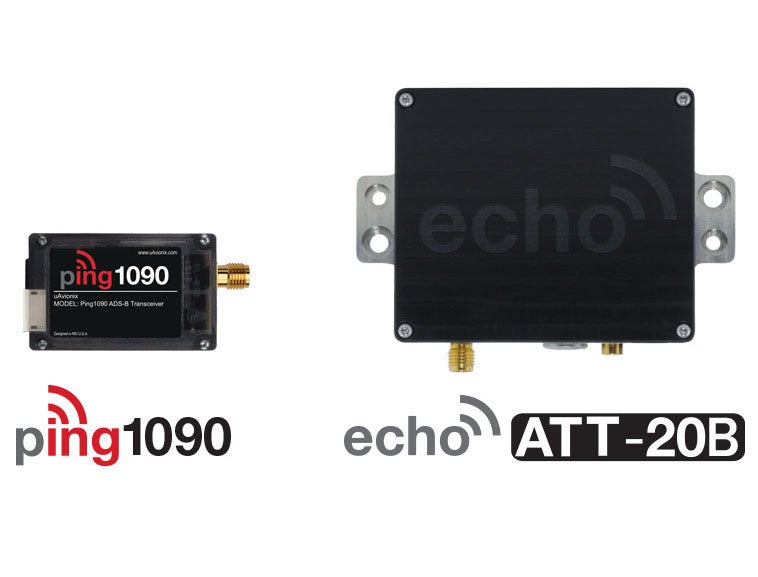
The U.K's Civil Aviation Authority has granted approval for use of the Ping 1090 and Echo ATT-20B under the new Electronic Conspicuity program. uAvionix
Gemini Sparkle

Key Takeaways:

  • uAvionix received UK CAA approval for two new portable, low-power ADS-B transceivers (Ping1090 for drones and SkyEcho for general aviation) under the new Electronic Conspicuity (EC) program.
  • The EC program aims to provide low-cost, voluntary ADS-B equipage, particularly in areas without advanced air traffic information systems like the US TIS-B.
  • While technologically capable, these devices do not currently meet the US ADS-B mandate due to certification differences, though uAvionix is working towards broader worldwide approvals.
  • This approval is the first under CAA CAP 1391, an international collaborative program establishing standards for low-power, portable ADS-B transceivers.
See a mistake? Contact us.

uAvionix recently earned approval from the U.K.’s Civil Aviation Authority (CAA) under the new Electronic Conspicuity (EC) program for two new portable, low-power ADS-B transceivers providing both ADS-B In and Out capabilities. EC is an umbrella term for a range of technologies that, in their most basic form, transmit the position of the host aircraft to other airspace users operating compatible equipment.

uAvionix’s Ping1090 20W ADS-B unit, weighing just 20 grams, is designed to be added to small unmanned aircraft, or drones, and the Echo ATT-20B “SkyEcho” is aimed at the general aviation marketplace. Additionally, the SkyEcho is equipped with a Wi-Fi chip that allows it to sync with compatible apps to display nearby air traffic in the cockpit on an iPad or similar device.

Flying asked uAvionix vice president of business development Christian Ramsey whether all the tech talk also meant a pilot could pop a SkyEcho into an LSA to meet the upcoming ADS-B mandate. Unfortunately, Ramsey says no.

“The U.S. is not working on a portable solution. The concept of EC devices evolved in the U.K. because they don’t have the equivalent of the TIS-B system we use here in the states, so the EC device idea was created in order to achieve similar benefits and a low-cost standard to spur voluntary ADS-B equipage.”

However, he added, this is all really a simple matter of certification, not the technology. “Right now we are working through certification processes that would eventually allow our equipment to meet the requirements of the various worldwide mandates,” Ramsey said. “In the meantime, the Echo ATT-20B SkyEcho can be used for any registered and non-registered U.K. Annex II aircraft, non-complex EASA aircraft of less than 5,700 kilograms and for gliders and balloons within controlled U.K. airspace. Its UAT counterpart, the Echo ATU-20, can be used in experimental aircraft in the U.S.”

Approval for both of these devices represents the first time such EC devices have been approved under CAA Civil Aviation Publication (CAP 1391), a collaborative worldwide program organized by the CAA, NATS, the Light Aircraft Association (LAA) and the Aircraft Owners and Pilots Association (AOPA) to define standards for low-power and portable ADS-B transceivers.

Rob Mark

Rob Mark is an award-winning journalist, business jet pilot, flight instructor, and blogger.

Ready to Sell Your Aircraft?

List your airplane on AircraftForSale.com and reach qualified buyers.

List Your Aircraft
AircraftForSale Logo | FLYING Logo
Pilot in aircraft
Sign-up for newsletters & special offers!

Get the latest stories & special offers delivered directly to your inbox.

SUBSCRIBE



