











How to Become an Airborne Law Enforcement Pilot
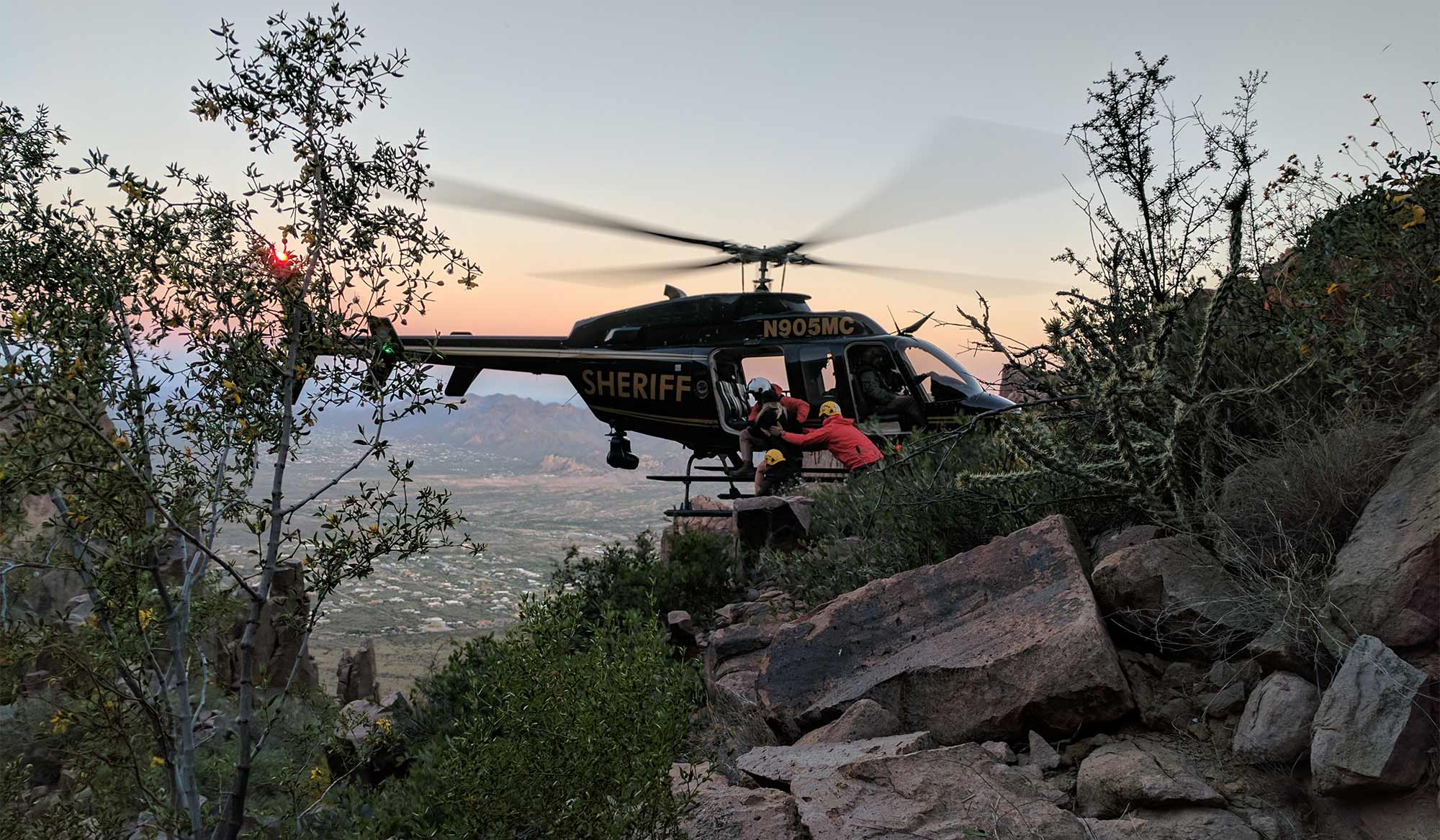
A Bell 407 is among the fixed and rotor wing aircraft operated by the Maricopa County Sheriff’s Office in Arizona. APSA
Gemini Sparkle

Key Takeaways:

  • Airborne law enforcement (ALE) is evolving into "public safety aviation," expanding its missions beyond traditional police work to include emergency response, homeland security, search and rescue, and firefighting.
  • This shift is officially recognized by the industry's primary association, which rebranded from the Airborne Law Enforcement Association (ALEA) to the Airborne Public Safety Association (APSA) to reflect its broader, more inclusive scope.
  • ALE pilot positions typically require a bachelor's degree, prior law enforcement experience, and specific flight qualifications; while job growth is currently static, pilots find high satisfaction in the impactful nature of public service missions.
See a mistake? Contact us.

Today’s airborne law enforcement (ALE) pilots perform more than police work. At the California Highway Patrol (CHP), law enforcement is halfway down the list of aircrews’ seven missions, superseded by emergency response, homeland security and rural roadway patrol. “All these missions are about public service,” says Lt. Mike Sedam, commander of CHP’s Office of Air Operations, whose 88 pilots operate 15 fixed-wing and 15 rotor aircraft.

“That’s an emerging trend,” says Sgt. David Hall, of Colorado State Patrol’s (CSP) Aircraft Section, speaking of efforts among many ALE forces to “break down the silos” and use their assets to meet a variety of state needs. “Ten years from now, the term will be public-safety aviation rather than law enforcement,” says Hall, whose five pilots provide state transportation as well as police services with their fixed-wing fleet.

It’s happening already. The venerable Airborne Law Enforcement Association will change its name on January 1, 2018, to the Airborne Public Safety Association (APSA), in order “to be more inclusive” of its variety of missions and the sister agencies ALE pilots often work alongside, says APSA’s executive director and CEO Daniel Schwarzbach, a senior officer and helicopter pilot with the Houston Police Department. ALE operators have “added hoists [for EMS], buckets for firefighting, and search-and-rescue [capabilities]” to pilots’ work scopes, Schwarzbach notes.

CHP
CHP’s fixed-wing fleet includes nine Cessna T206As, like this aircraft. CHP

The number of ALE pilot jobs is unknown. A decade ago, a groundbreaking Census of Law Enforcement Aviation Units found about 200 agencies in 46 states and the District of Columbia operated more than 900 law enforcement aircraft and employed some 1,700 pilots. APSA, which has some 3,500 individual members, estimates today about 400 law enforcement agencies — state and municipal departments, along with federal agencies such as Customs and Border Protection, the FBI and Department of Justice — operate manned aircraft. Even the National Park Service has ALE pilots among its park ranger police force.

Most state and municipal ALE operators require applicants to have a bachelor’s degree and at least two years of law enforcement experience within the department. Flying qualifications vary but may mandate an instrument rating and commercial license. Such candidates often aren’t hard to find.

“There’s a surprising number of private pilots in the Colorado State Patrol — not flying as a career but as a hobby,” says Hall, who got his pilot’s license in 2006. “The type of people attracted to law enforcement are attracted to aviation.”

NPS
The ranks of National Park Service rangers include ALE pilots, like this one on patrol in Alaska. NPS

Nonetheless, some flight time requirements constrict the pool of potential ALE pilots, and APSA and the Helicopter Association International are working with insurance companies — which often set these requirements — to ensure they are appropriate.

Employment opportunities typically parallel state budgets, and thus are now basically static. Given the satisfactions that come with public-safety missions, once hired, pilots are reluctant to relinquish these positions. CHP’s Sedam could be talking of ALE pilots anywhere when he says, “They can change the trajectory of somebody’s life for the better from tragedy, and affect entire generations in a matter of moments.”

More information on ALE pilot jobs is available here.

Ready to Sell Your Aircraft?

List your airplane on AircraftForSale.com and reach qualified buyers.

List Your Aircraft
AircraftForSale Logo | FLYING Logo
Pilot in aircraft
Sign-up for newsletters & special offers!

Get the latest stories & special offers delivered directly to your inbox.

SUBSCRIBE



