












Register

Miracle on the Potomac: Samuel Langley Never Received Enough Credit as Aviation Pioneer

American scientist developed some of the world’s first flying machines.

A years-long string of setbacks had deprived Samuel Langley of all but a shred of hope when, in May 1896, his pertinacity was finally rewarded. [Credit: Library of Congress]
Gemini Sparkle

Key Takeaways:

  • Samuel Pierpont Langley conducted pioneering aeronautical research starting in 1889, including experiments on lift and drag and publishing "Langley's Law."
  • Years before the Wright brothers, Langley successfully flew a stable, engine-powered unmanned model aerodrome in 1896, demonstrating the feasibility of heavier-than-air flight.
  • Despite this earlier success and developing a groundbreaking 52 hp radial engine for his full-scale design, his man-carrying "Great Aerodrome" failed catastrophically in launch attempts in 1903.
  • The article argues that history has unfairly reduced Langley to a "blundering mediocrity," overlooking his substantial contributions and early breakthroughs in powered flight due to his public failure and the Wright brothers' subsequent triumph.
See a mistake? Contact us.

Fall 1903 was a fateful season. Its closing days would anoint a pair of obscure bicycle shop owners named Wright kings of flight, and would reduce Samuel Pierpont Langley, the head of the Smithsonian Institution and an esteemed physicist and astronomer, to a status somewhat below that of court jester.

Today, no account of comically misguided attempts at manned flight omits the ignominious plunge of Langley’s Great Aerodrome into the Potomac. Unfortunately immortalized on film, it is invariably sandwiched among short clips of inept ornithopters, venetian-blind wings, and people setting their pants on fire while attempting to fly on rocket-propelled bicycles.
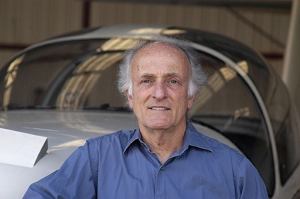

Peter Garrison

Peter Garrison taught himself to use a slide rule and tin snips, built an airplane in his backyard, and flew it to Japan. He began contributing to FLYING in 1968, and he continues to share his columns, ""Technicalities"" and ""Aftermath,"" with FLYING readers.

Ready to Sell Your Aircraft?

List your airplane on AircraftForSale.com and reach qualified buyers.

List Your Aircraft
AircraftForSale Logo | FLYING Logo
Pilot in aircraft
Sign-up for newsletters & special offers!

Get the latest stories & special offers delivered directly to your inbox.

SUBSCRIBE


