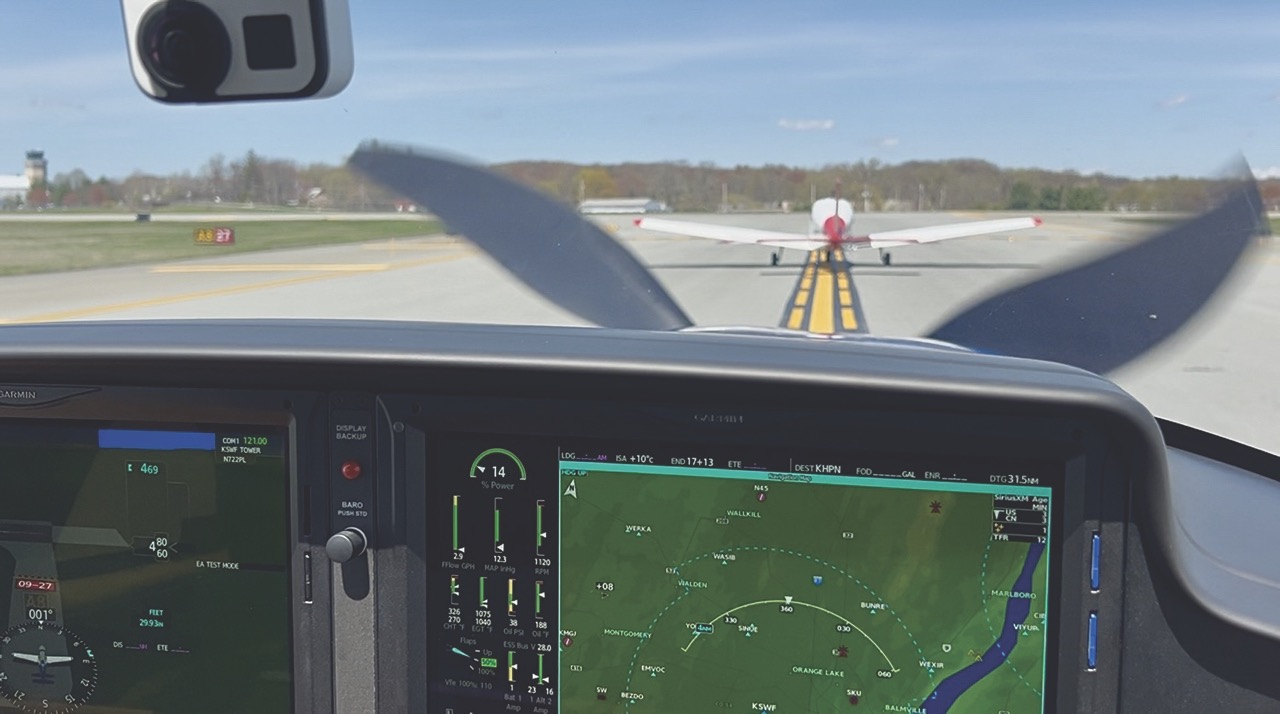
Runway separation is incredibly important for successive VFR/VFR departures. [Credit: Larry Anglisano]
Key Takeaways:
Air traffic controllers (ATCs) prioritize aircraft separation and safety over a strict "first come, first served" rule when managing departure queues.
ATCs categorize departures (VFR/VFR, IFR/VFR, IFR/IFR) and apply specific separation rules based on aircraft type and flight rules, often launching faster aircraft first to optimize flow.
Various tools are employed by ATCs to expedite departures, such as utilizing multiple runways, offering intersection departures, using line up and wait (LUAW), and employing "fan headings," all while maintaining strict safety standards.
Pilots are encouraged to be flexible with ATC suggestions, like intersection departures, when safe to do so, understanding that ATC decisions are always made with flight safety as the primary concern.
Most of us have experienced taxing out, running up (if needed), then waiting a long time for the tower to clear you. If you’re IFR, you may think, “What is taking so long?”
But what if you’re flying a C182 instead of the C560? “Now all the jets are going ahead! What the heck?!?” (I’ve actually heard this on frequency.)
CREATE A FREE ACCOUNT
Sign up to keep reading
Create a free account to continue. Already a member? Sign in below.