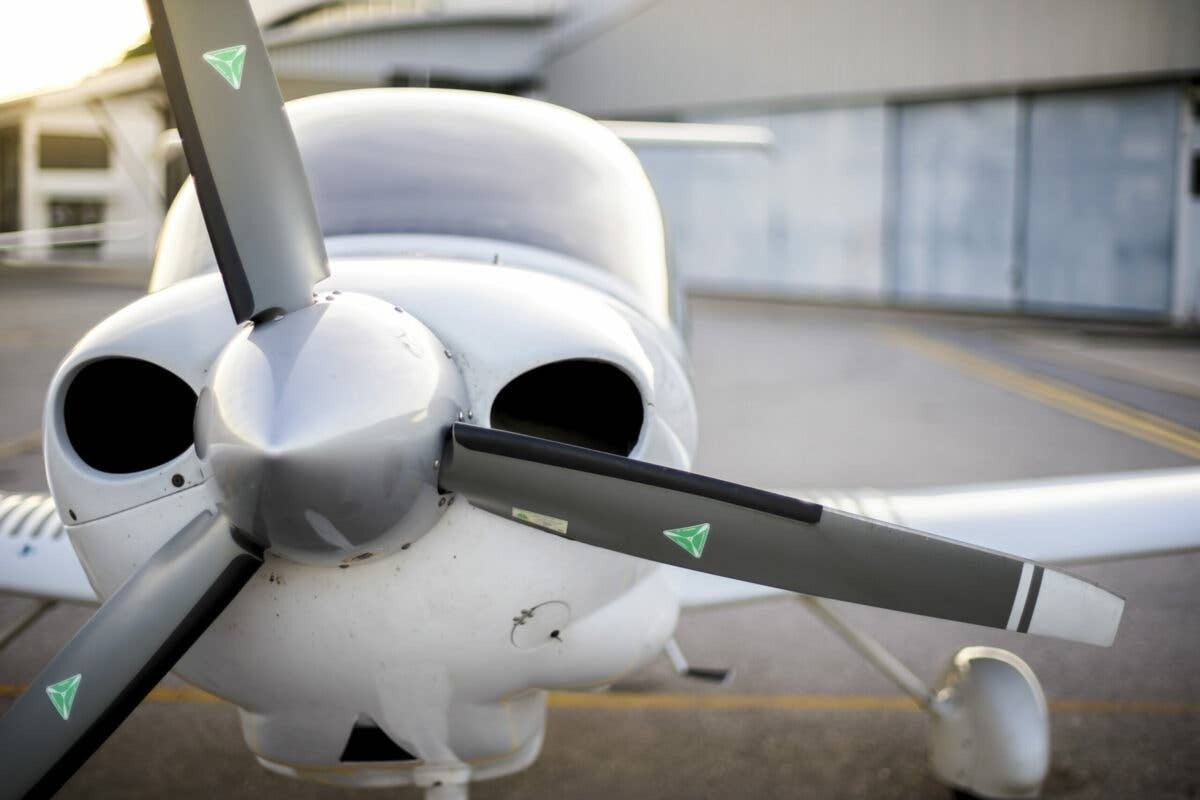
The front of a turboprop aircraft. [Credit: Shutterstock]
Key Takeaways:
Researchers at the University of Maryland are developing haptic technology, such as vibrating flight suits or vests, to help pilots avoid spatial disorientation.
Spatial disorientation is a significant cause of fatal aviation accidents, often occurring in challenging weather and poor visibility.
The haptic system provides touch-based sensory cues, which are processed faster than visual or auditory input, offering an additional way for pilots to reorient themselves.
Early simulator tests have shown positive results, with pilots reacting faster to haptic feedback and relying less on visual cues, particularly in low-visibility conditions.
Researchers at the University of Maryland are developing new technology meant to help pilots avoid disorientation while flying.
Spatial disorientation in aviation occurs when pilots can no longer determine their position or accurately judge motion, in some cases due to challenging weather conditions and poor visibility.
CREATE A FREE ACCOUNT
Sign up to keep reading
Create a free account to continue. Already a member? Sign in below.
Zach Vasile is a writer and editor covering news in all aspects of aviation. He has reported for and contributed to the Manchester Journal Inquirer, the Hartford Business Journal, the Charlotte Observer, and the Washington Examiner, with his area of focus being the intersection of business and government policy.