











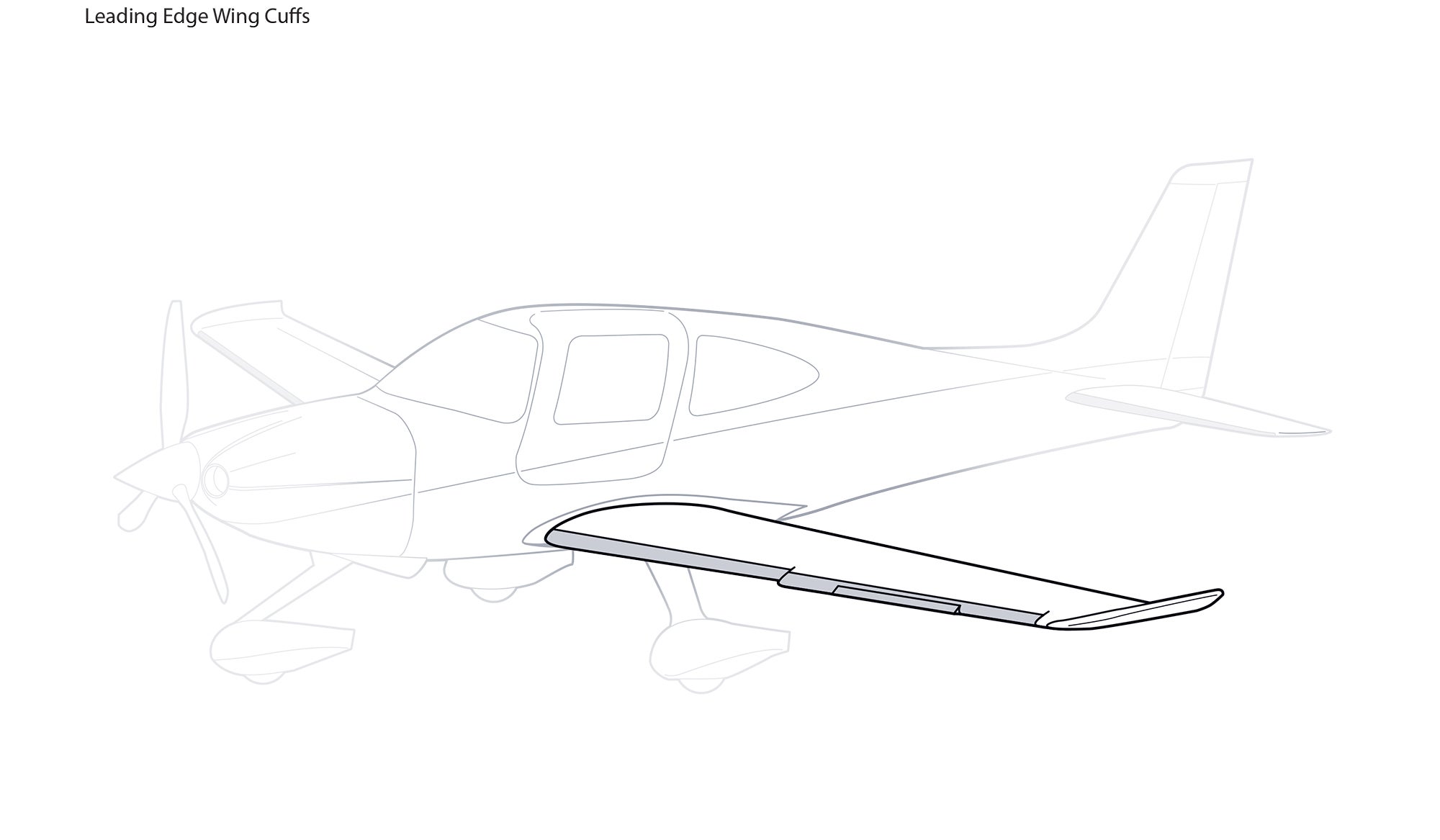


“Stalls and spins represent the largest single factor in fatal general aviation accidents.” Surprisingly, this quote wasn’t pulled from the latest FAA news release, but rather from a NASA Langley Research Center newsletter dated April 1977. Forty years later, stall-spins and loss of control remain pinned to the top of the National Transportation Safety Board’s Most Wanted List of safety improvements. That doesn’t mean no one has tried to reduce the number of LOC-I fatalities.

How Wing Cuffs Work
Key Takeaways:
- Stall-spins and loss of control (LOC-I) have remained the leading cause of fatal general aviation accidents for over 40 years.
- The leading-edge wing cuff is a simple, low-cost modification designed to improve stall-spin resistance and reduce GA accident numbers.
- This modification works by causing the inner wing to stall before the outer section, maintaining lift and aileron control at high angles of attack, thus preventing abrupt wing drops and making inadvertent spins more benign and recoverable.
- Developed by NASA in the late 1970s, the wing cuff concept is now used in modern aircraft like the Cirrus SR20/SR22 and the Quest Kodiak, and contributed to a new category of spin-resistant aircraft certification.
See a mistake? Contact us.
