














At midday on a Monday in March 2024, a family of five, with children aged 12, 10, and 7, set out from Brampton, Ontario, in a Piper PA-32 Turbo Lance. They were bound for Nashville, Tennessee. Perhaps to calm the impatience of his children, the father, who was the pilot, broke the 540 nm trip into three segments. The first leg, of just one hour, brought the family to Erie, Pennsylvania. The distance is less than 100 nm, which the Lance would normally cover in 40 minutes, but they may have made a dogleg rather than fly directly across Lake Erie.
At Erie he added 22 gallons of fuel, and they continued to Mount Sterling, Kentucky, a 300 nm hop. At Mount Sterling he added 52 gallons and departed in the twilight for Nashville, 175 nm distant. An hour and a half later, they approached Nashville in darkness. The sky was clear; the wind was 150 at 8.
If you're not already a subscriber, what are you waiting for? Subscribe today to get the issue as soon as it is released in either Print or Digital formats.
Subscribe NowThe pilot checked in with John C. Tune Airport (KJWN) tower and was cleared to land on Runway 20. The Lance’s track was aligned with the runway, but rather than begin a descent it remained at 2,000 agl. A mile from the threshold the pilot asked to overfly the runway and go around.
The tower controller, who had several aircraft inbound behind the Lance, instructed the pilot to contact departure for sequencing, which he did. After some initial confusion—the tower controller had not advised the departure controller that he was handing the Lance back to him—the departure controller asked the pilot whether he still had KJWN in sight, and the pilot replied that his engine had “shut down.”
A moment later he said, “My engine turned off. I’m at 1,600. I’m going to be landing. I don’t know where.” Witnesses west of KJWN reported that the engine was popping and sputtering or, later, making no sound at all, but the Lance continued flying southwestward, away from the airport, after the irregular engine sounds began, before finally turning back. The controller declared an emergency and repeatedly cleared the pilot to land on Runway 2, but he said he was too far out to make it.
The Lance crashed into an embankment along Interstate 40, several miles from KJWN. It burst into fuel-fed flames, and motorists who stopped to help could not approach it. All aboard perished.
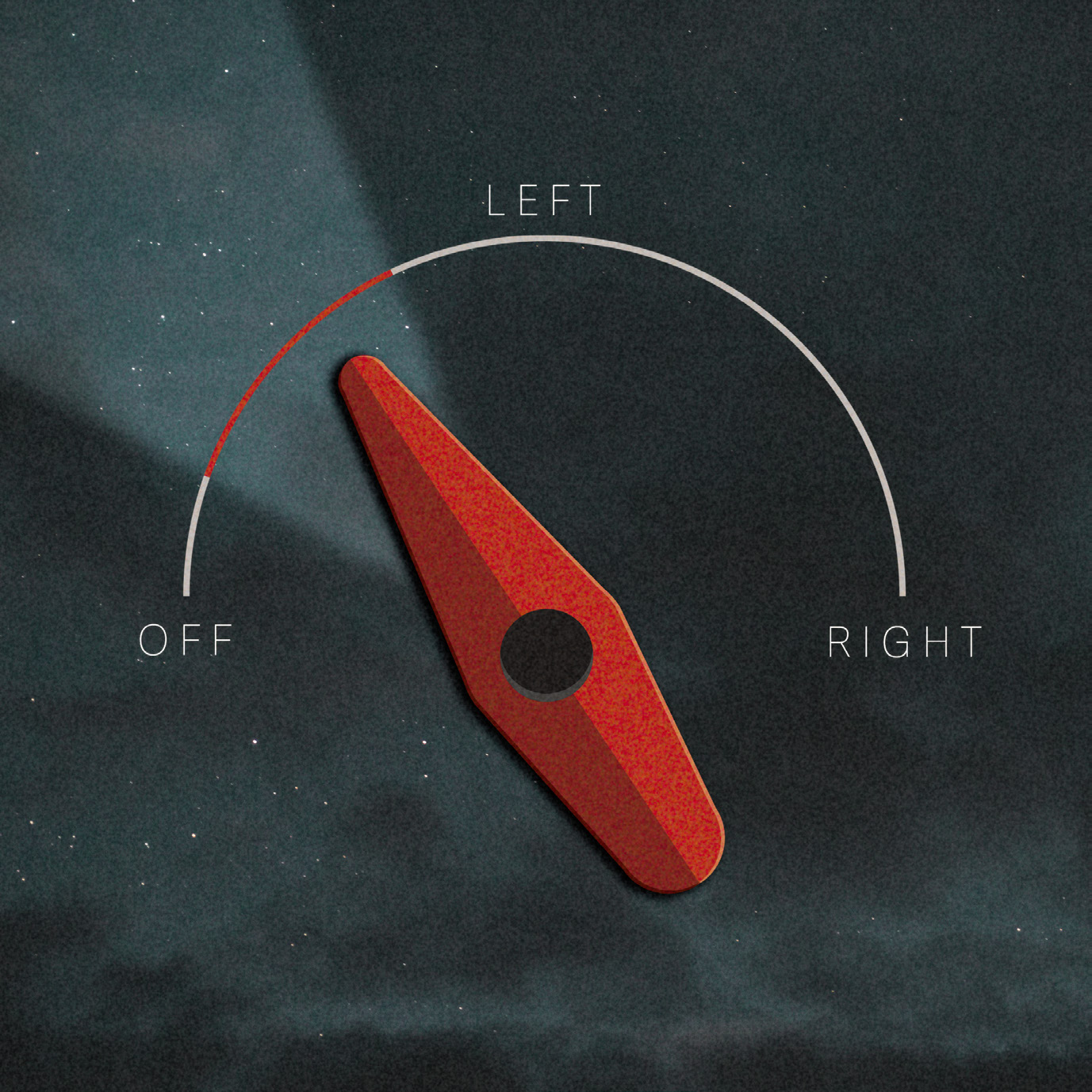
National Transportation Safety Board (NTSB) investigators found an electronic data recorder, but it was badly fire-damaged and nothing could be recovered from it. They performed a thorough autopsy on the engine and each of its accessories. Nothing was found to account for its apparent failure. Both fuel tanks had been breached in the crash, so the amount of fuel they had contained was unknown, but, based on fueling records, there must have been plenty. There was one clue: The fuel valve was in a position between LEFT and OFF, and no fuel could pass through it.
The NTSB concluded that the probable cause of the accident was the “pilot’s failure to ensure the proper placement of the fuel selector during the approach and landing, which resulted in fuel starvation and a subsequent total loss of engine power.”
The Lance had two 49-gallon wing tanks, with 47 gallons usable. The tank selector, which operates the fuel valve remotely, is located on the console between the front seats, in the pilot’s plain view and easy reach. Its handle rotates through an arc, with OFF at the left end, LEFT at 12 o’clock, and RIGHT on the right. It is equipped with what the service manual calls a “spring-loaded detent to prevent accidental selection to the ‘OFF’ position.” The detent in question consists of a tab that must be pushed down to allow the selector handle to move past the left tank position. In other words, a conscious effort is required to shut off the fuel. If the handle is inadvertently placed between LEFT and RIGHT, it feeds from both, in indeterminate proportion.
The NTSB did not comment on the seeming incompatibility of that protective detent with its finding that the pilot “moved the fuel selector…but failed to fully seat the selector in position…” The phrase “fully seat” seems to imply that there was nothing more than a little click to indicate that the handle was in the proper position, but that was not the case. Nevertheless, the fact, first, that the fuel valve was found in an intermediate setting and, second, that no other reason for loss of power could be found does support the agency’s conclusion that the pilot somehow placed the tank selector handle in an improper position.
The pilot had 200 hours, including 43 in the PA-32, and about 18 hours of night experience. How much of his night experience, if any, was in the PA-32 is unknown. The reason for his decision to abort the landing approach and go around remained a mystery. Perhaps he had stayed too high for too long because of some distraction in the cabin. In any case, he apparently did not switch tanks until after he had passed the runway, though selecting the “proper” tank—meaning the fuller one—is the first item on the approach and landing checklist.
The instruction “Fuel on Proper Tank” found in every prelanding checklist is generally valid, but it should not compel a pilot to switch fuel tanks when there is no good reason to do so. If one tank is three-quarters full and the other one half, and you are feeding from the half-full tank, nothing is gained by switching.
As a general principle, tank switching should be gotten out of the way early in the approach sequence, while you still have altitude. If you make a mistake—I wrote a few months ago about a Bonanza pilot who waited too long to switch to the “proper tank,” ran an aux tank dry at low altitude, and crashed before he could restart the engine—you will have time and space to rectify it. An odd aspect of this accident is that the pilot apparently did not do what seems so natural that it is more like an instinct than a rule: If you switch tanks and the engine starts running rough, you switch back.
Flight rules in the United States make few distinctions between day and night flying. Nevertheless, if you have a choice between day and night, choose day. If the family had left Brampton a couple of hours earlier, they would have arrived at Nashville in time for the pilot to see, after his engine began to fail and he resigned himself to an emergency landing, that to his left, away from the interstate, were huge, flat fields where he could have put the Lance down safely. At night they were forbidding pools of black, and he instinctively headed toward the lights.
This column first appeared in the June Ultimate Issue 959 of the FLYING print edition.

